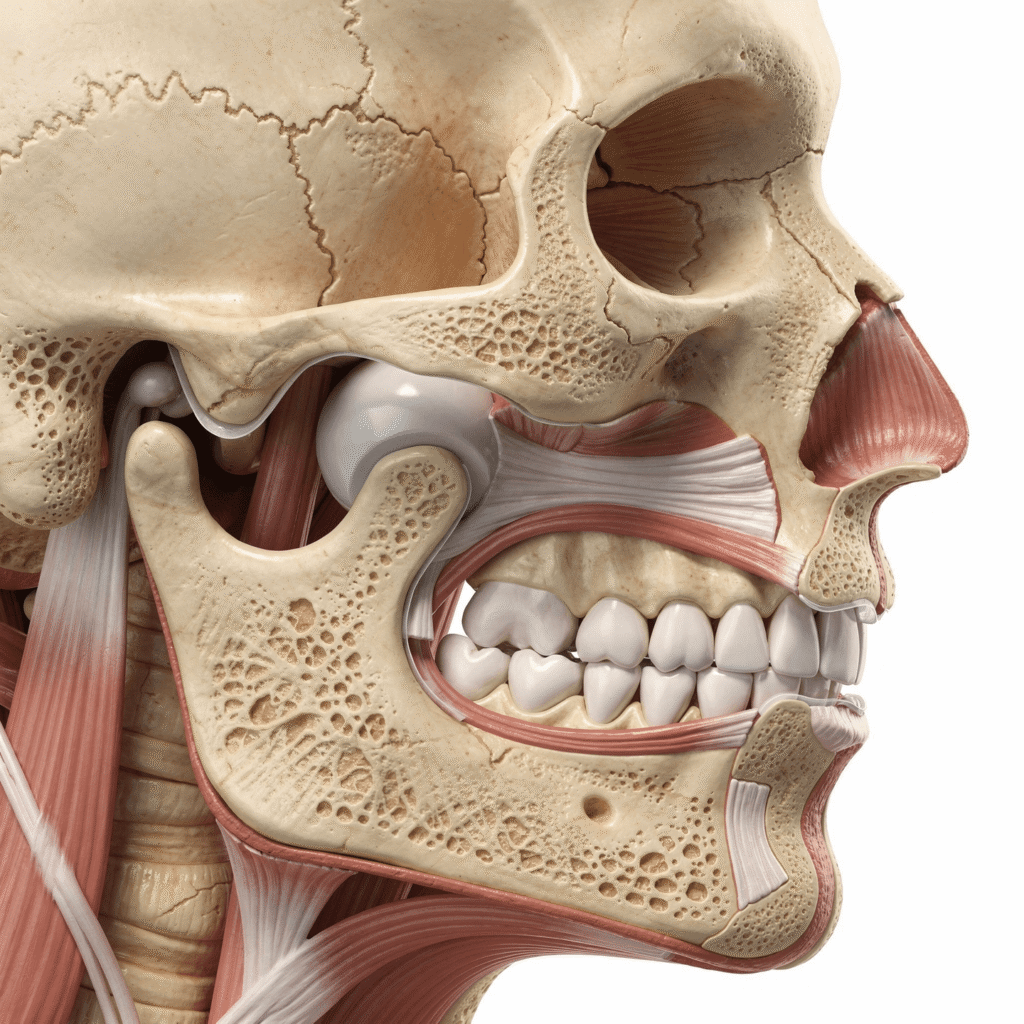
If you’re among the millions experiencing jaw tension, clicking, or pain, simple exercises could be your first step toward relief. TMJ exercises aren’t just about moving your jaw—they’re about retraining muscles, improving mobility, and breaking the cycle of tension that contributes to discomfort.
The good news? You don’t need special equipment or a professional appointment to start. Many effective TMJ exercises can be performed safely at home with just a few minutes daily commitment. In this comprehensive guide, we’ll walk you through 10 carefully selected exercises that target different aspects of TMJ health: from gentle stretches for tight muscles to strengthening movements for better joint support.
Important: Always start gently and never push through pain. If any exercise causes sharp pain, stop immediately. These exercises are most effective when combined with overall TMJ management strategies.
Section 1: Safety First: Precautions Before Starting
Before You Begin Checklist
- Consult your dentist or doctor if you have severe pain
- Avoid exercises during acute inflammation phases
- Start with only 1-2 exercises if you’re new to TMJ therapy
- Have a mirror handy to monitor form
- Set aside 5-10 minutes in a quiet space
Red Flags to Watch For
Stop immediately if you experience:
- Sharp, shooting pain
- Increased swelling
- Jaw locking
- Radiating pain to ears or temples
- Numbness or tingling
Optimal Timing
- Best time: After a warm shower or moist heat application
- Frequency: 1-2 times daily, not exceeding 10 minutes per session
- When to avoid: Right after eating or during pain flare-ups
Section 2: Warm-Up: Preparing Your Jaw Muscles
Moist Heat Application
- Soak a small towel in warm water
- Wring out excess water
- Apply to jaw joints for 5-7 minutes
- Gently massage in circular motions
Gentle Circulation Boost
- Place fingertips on jaw muscles (masseter)
- Apply light pressure in circular motions
- Move along jawline to temples
- Duration: 2-3 minutes
Section 3: Exercise 1: Goldfish Exercises (Partial Opening)
Purpose:
Improves joint mobility without strain
Step-by-Step Instructions:
- Sit or stand with good posture
- Place tongue gently on roof of mouth
- Place one index finger on TMJ joint (front of ear)
- Place other index finger on chin
- Slowly lower jaw halfway (partial opening)
- Hold for 3-5 seconds
- Close slowly
- Repetitions: 6 times
Visual Cues:
- Imagine saying the letter “O” with your mouth
- Keep teeth slightly apart during exercise
- Should feel gentle stretch, not pain
Common Mistakes to Avoid:
- Forcing jaw open too wide
- Moving too quickly
- Tensing neck and shoulders
Section 4: Exercise 2: Goldfish Exercises (Full Opening)
Purpose:
Increases range of motion safely
Step-by-Step:
- Same starting position as Exercise 1
- This time, open mouth to comfortable maximum
- Keep tongue on roof of mouth if possible
- Hold for 3-5 seconds
- Close slowly with control
- Repetitions: 6 times
Progression Tip:
Only attempt full opening if partial opening is pain-free for 3-4 days
Section 5: Exercise 3: Chin Tucks
Corrects forward head posture, reduces neck strain
Step-by-Step:
- Sit upright against a wall
- Keep eyes looking straight ahead
- Gently draw chin backward
- Create “double chin” appearance
- Hold for 3-5 seconds
- Release slowly
- Repetitions: 10 times
Visualization:
- Imagine trying to make back of neck longer
- Keep shoulders relaxed
- Breathe normally throughout
Section 6: Exercise 4: Resisted Mouth Opening
Purpose:
Strengthens jaw-opening muscles
Step-by-Step:
- Place thumb under chin
- Apply gentle upward pressure
- Slowly open mouth against resistance
- Open to comfortable width
- Hold for 3-5 seconds
- Close slowly
- Repetitions: 8-10 times
Resistance Level:
Start with light pressure (2/10 intensity), increase gradually
Section 7: Exercise 5: Resisted Mouth Closing
Purpose:
Strengthens jaw-closing muscles
Step-by-Step:
- Place two fingers on chin
- Apply gentle downward pressure
- Try to close mouth against resistance
- Don’t fully close teeth together
- Hold contraction for 3-5 seconds
- Relax slowly
- Repetitions: 8-10 times
Section 8: Exercise 6: Tongue-Up Stretch
Purpose:
Stretches tight jaw muscles, improves tongue posture
Step-by-Step:
- Place tip of tongue on roof of mouth
- Slowly open mouth as wide as comfortable
- Keep tongue in contact with roof
- Hold stretch for 10-15 seconds
- Close mouth slowly
- Repetitions: 5 times
Feeling:
Should feel stretch along jawline and under chin
Section 9: Exercise 7: Side-to-Side Jaw Movement
Purpose:
Improves lateral mobility
Step-by-Step:
- Place small object between front teeth (tongue depressor or clean popsicle stick)
- Slowly move jaw from side to side
- Keep movements small and controlled
- Duration: 1 minute continuous movement
- Alternative: Without object, just gentle side glides
Safety Note:
Never force side movement if there’s resistance
Section 10: Exercise 8: Forward Jaw Movement
Purpose:
Enhances protrusion movement
Step-by-Step:
- With teeth slightly apart
- Move lower jaw forward
- Keep upper teeth stationary
- Hold for 3 seconds
- Return to starting position
- Repetitions: 8 times
Alignment:
Bottom teeth should move forward, not upward
Section 11: Exercise 9: Smile Stretch
Purpose:
Relaxes facial muscles, reduces tension
Step-by-Step:
- Smile as widely as comfortable
- Place index fingers on corners of mouth
- Gently resist smile with fingers
- Hold for 5 seconds
- Relax completely
- Repetitions: 6 times
Section 12: Exercise 10: Relaxed Jaw Rest Position
Purpose:
Trains proper resting jaw posture
Step-by-Step:
- Let jaw hang loose
- Teeth slightly apart (2-3 mm space)
- Tongue resting gently on roof of mouth
- Lips lightly together
- Practice duration: Several times daily for 1-2 minutes
Daily Integration:
- Practice while working at computer
- Check position at stop lights
- Set phone reminders
Section 13: Creating Your Daily Routine
Beginner Routine (First 2 Weeks):
Morning (5 minutes):
- Warm-up: 2 minutes
- Goldfish Partial: 6 reps
- Chin Tucks: 10 reps
- Relaxed Position: 1 minute
Evening (5 minutes):
- Warm-up: 2 minutes
- Tongue-Up Stretch: 5 reps
- Smile Stretch: 6 reps
- Relaxed Position: 1 minute
Intermediate Routine (After 2 Weeks):
Add 1-2 strengthening exercises gradually
Progression Rules:
- Add only one new exercise every 3-4 days
- Increase reps by 2 each week (max 12 reps)
- If pain increases, return to previous level
Section 14: When to Skip Exercises
Temporary Pauses Needed When:
- Experiencing acute inflammation
- Post-dental procedure (consult dentist)
- During infection or illness
- After injury until medically cleared
Modifications for Specific Conditions:
- Arthritis: Focus on gentle range-of-motion only
- Recent Surgery: Follow surgeon’s specific guidelines
- Hyper mobility: Avoid stretching exercises
- Severe Pain: Gentle massage only, no movement
Section 15: Frequently Asked Questions
Q1: How soon will I see results from TMJ exercises?
A: Most people notice some improvement within 2-3 weeks with consistent daily practice.
Q2: Can I do these exercises multiple times daily?
A: Yes, but limit to 2 sessions daily maximum, with at least 4 hours between sessions.
Q3: Should exercises be painful?
A: No. You might feel gentle stretching or muscle fatigue, but sharp pain means stop immediately.
Q4: Can I do all 10 exercises on day one?
A: Not recommended. Start with 2-3 gentle exercises and gradually add more.
Q5: What if my jaw clicks during exercises?
A: Mild clicking without pain is usually okay. Painful clicking means reduce range of motion.
Q6: Are these exercises safe after jaw surgery?
A: Only with explicit approval from your surgeon, usually after initial healing phase.
Q7: Can I combine exercises with heat/ice?
A: Yes! Apply moist heat before exercises, ice after if there’s any inflammation.
Q8: How long should I hold each stretch?
A: Typically 3-5 seconds for dynamic exercises, 10-15 seconds for static stretches.
Q9: What’s the single most important exercise?
A: The relaxed jaw rest position—it retrains your default posture.
Q10: When should I see a professional instead?
A: If exercises worsen symptoms after 2 weeks, or if you experience locking, severe pain, or neurological symptoms.
Consistency is key with TMJ exercises. These 10 simple movements can significantly improve jaw function and reduce discomfort when practiced regularly and correctly. Remember that exercises are just one component of comprehensive TMJ management—combine them with stress reduction, proper nutrition, and professional guidance when needed.
Start slowly, listen to your body, and celebrate small improvements. Many people find that dedicating just 5-10 minutes daily to jaw health creates meaningful, lasting benefits. For more detailed guidance on complementary approaches, explore our articles on TMJ-friendly diets and stress management techniques.