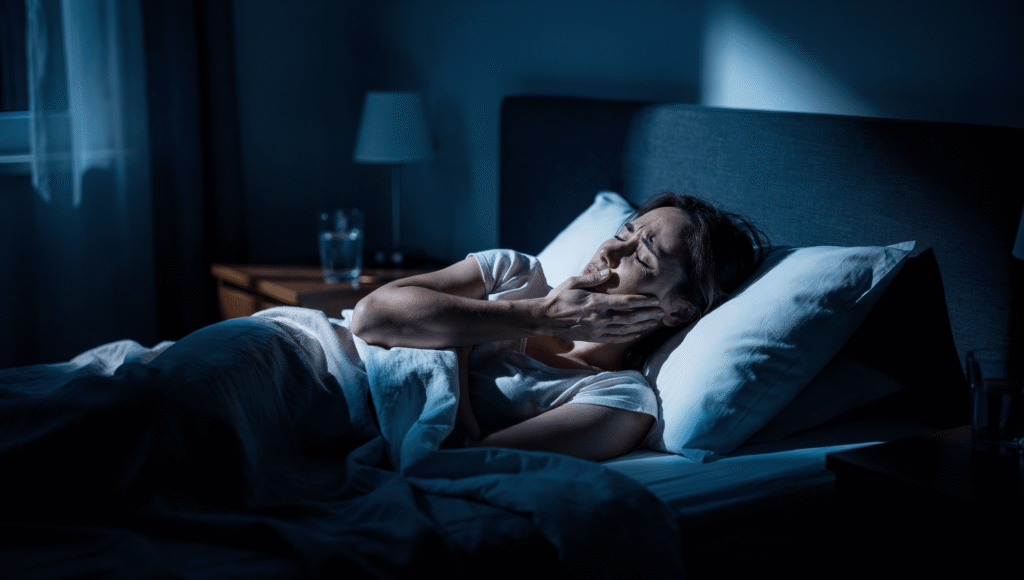
If you’ve been searching for ways to sleep better after 30, you’ve likely encountered the term “sleep hygiene.” But what does it really mean, and more importantly, which habits actually make a difference for adults navigating the unique sleep challenges of this life stage?
Sleep hygiene isn’t about cleanliness—it’s about creating habits and environments that promote consistent, uninterrupted, and restorative sleep. After 30, our bodies respond differently to sleep cues, making some traditional advice less effective and some new strategies particularly powerful.
In this practical guide, we’ll move beyond generic sleep tips to focus on 7 specifically tailored habits that address the physiological and lifestyle changes occurring in your 30s, 40s, and beyond. From timing your light exposure to optimizing your pre-sleep routine, each habit is backed by science and designed to work with—not against—your changing biology.
Whether you’re struggling with frequent awakenings, difficulty falling asleep, or simply not feeling rested, these 7 habits can help you reclaim the restorative sleep your body needs.
Section 1: What Makes Sleep Hygiene Different After 30?
Why Generic Advice Falls Short:
Many standard sleep tips were developed based on research with younger adults, but after 30, several key changes require adjusted approaches:
Key Biological Changes Requiring Different Strategies:
- Melatonin Production Decline: Requires more deliberate light management
- Deep Sleep Reduction: Makes sleep consistency even more critical
- Increased Sleep Fragility: Interruptions cause more significant disruption
- Changing Circadian Rhythm: Natural bedtime may shift earlier
- Metabolic Changes: Affect sleep-wake regulation
The 3 Pillars of Effective Sleep Hygiene After 30:
- Consistency: More important than ever due to reduced sleep resilience
- Environmental Optimization: Compensating for biological changes
- Timing Precision: Aligning with your changing circadian rhythm
Realistic Expectations:
- Improvement timeline: 2-4 weeks for noticeable changes
- Goal: Better sleep quality, not necessarily more sleep
- Focus: Reducing awakenings, improving sleep efficiency
- Measurement: How you feel during the day matters most
Section 2: Habit 1: Strategic Light Management
The Science Behind Light and Sleep After 30:
As melatonin production naturally declines, light exposure timing becomes crucial for signaling your circadian system.
Morning Light Protocol (Within 30 Minutes of Waking):
- Duration: 15-30 minutes of morning sunlight
- Timing: Within 30 minutes of waking (even on cloudy days)
- Method:
- Go outside without sunglasses if safe
- Look toward (not directly at) the sun
- Combine with light movement like walking
- Alternative: Light therapy lamp (10,000 lux for 20-30 minutes)
Daytime Light Optimization:
- Workplace: Position desk near window if possible
- Lunch break: Eat outside or near windows
- Afternoon slump: Brief outdoor break instead of caffeine
- Benefit: Reinforces natural circadian rhythm
Evening Light Reduction Protocol:
Starting 2 Hours Before Bed:
- Overhead lights: Dim or use lamps with warm bulbs (2700K or less)
- Screen management:
- Activate blue light filters (Night Shift, f.lux)
- Reduce brightness to minimum comfortable level
- Use apps that gradually warm screen color temperature
- Lighting transition:
- 2 hours before bed: Reduce overall light by 50%
- 1 hour before bed: Reduce by 75%
- 30 minutes before bed: Candlelight or very dim lamps only
Special Considerations for Shift Workers or Limited Sunlight:
- Light therapy lamps on strict schedule
- Blue-blocking glasses in evening
- Blackout curtains for daytime sleep
- Consistency in artificial light timing
Section 3: Habit 2: Temperature Optimization
Why Temperature Matters More After 30:
- Reduced thermoregulation efficiency
- Hormonal changes affect body temperature
- More sensitive to discomfort disrupting sleep
Ideal Bedroom Temperature:
- Range: 60-67°F (15.5-19.5°C)
- Personal sweet spot: May require experimentation
- Gender difference: Women often prefer slightly warmer (65-68°F)
The Bedtime Temperature Drop Technique:
- Warm bath/shower: 1-2 hours before bed (body cools afterward, signaling sleep)
- Bedroom cooling: Start 30 minutes before bedtime
- Bedding strategy: Cool room + warm bedding = optimal
- Foot warming: If feet are cold, wear socks (improves sleep onset)
Seasonal Adjustments:
Summer:
- Use fans for air movement
- Cooling mattress pads
- Lightweight, breathable bedding
- Close blinds during day to keep room cool
Winter:
- Humidifier to prevent dry air
- Warmer bedding instead of overheating room
- Heated mattress pad on timer (turns off after you fall asleep)
- Layered bedding for adjustable warmth
Temperature Regulation for Hot Flashes/Night Sweats:
- Moisture-wicking pajamas (bamboo, technical fabrics)
- Bedside fan on low
- Cooling pillow inserts
- Layered bedding for easy adjustment
- Chilled water at bedside
Section 4: Habit 3: The 90-Minute Digital Sunset
Why 90 Minutes?
Research shows this timeframe allows:
- Melatonin production to begin naturally
- Mind to transition from alert to relaxed state
- Reduction of cognitive stimulation
Phase 1: 90-60 Minutes Before Bed
- Work cutoff: No new work tasks
- Email/social media: Last check of the day
- Planning: Write tomorrow’s to-do list
- Transition activity: Begin relaxing hobby
Phase 3: 30-0 Minutes Before Bed
- Screen brightness: Reduce to minimum
- Blue light filters: Maximum setting
- Content type: Switch to calm, non-stimulating content
- Alternative activities:
- Reading physical books
- Gentle stretching
- Listening to calm music
- Conversation with partner
Phase 3: 30-0 Minutes Before Bed
- All screens off (including phones face-down)
- Final preparation:
- Teeth brushing
- Skincare routine
- Setting out tomorrow’s clothes
- Relaxation practice:
- 4-7-8 breathing
- Progressive muscle relaxation
- Gratitude reflection
Managing Exceptions:
- Essential notifications: Only allow critical contacts
- Reading devices: Use e-ink readers without backlight
- Sleep tracking: Use devices with red display or no display
- Alarm clocks: Traditional or with red display
The “Phone Bed” Strategy:
- Charge phone outside bedroom
- Use traditional alarm clock
- If phone must be in room: Face down, Do Not Disturb on, in drawer
Section 5: Habit 4: Consistent Sleep-Wake Timing
The 7-Day Consistency Challenge:
Step 1: Determine Your Natural Window
- Track for 3 days: When do you naturally feel sleepy?
- Note: This may be earlier than in your 20s
- Target bedtime: Natural sleepiness time minus 15 minutes
Step 2: Set Fixed Times
- Wake time: Same every day (maximum 60-minute weekend variation)
- Bedtime: Same every day (maximum 30-minute variation)
- Nap rule: Only if needed, before 3 PM, maximum 20 minutes
Step 3: The 15-Minute Rule
- In bed within 15 minutes of target bedtime
- Awake within 15 minutes of target wake time
- Consistency bonus: Regulates circadian rhythm more effectively than supplements
Weekend Strategy:
- Maximum variation: 60 minutes from weekday schedule
- Saturday/Sunday: Same wake time both days
- Social events: Plan around sleep schedule when possible
- Recovery: If up late, still wake at regular time, nap briefly next day
Travel and Time Zone Changes:
- Adjust gradually: 30-60 minutes per day toward new time
- Light exposure: Strategic morning/evening light at destination
- Melatonin: 0.5-1 mg at local bedtime for first 3 nights
- Hydration: Extra water to compensate for travel dehydration
The Power of the Wake Time:
- Most important anchor for circadian rhythm
- Even after poor sleep: Still get up at regular time
- Benefits: Strengthens sleep drive for following night
- Exception: Illness—allow extra sleep if needed
Section 6: Habit 5: Pre-Sleep Relaxation Protocol
Why Traditional Relaxation Methods May Not Work After 30:
- Increased mental responsibilities = harder to “turn off”
- Physical tension accumulates differently
- Need for more structured approach
The 20-Minute Wind-Down Sequence:
Minutes 20-15: Physical Transition
- Change clothes: Into sleepwear
- Warm compress: On neck/shoulders if tense
- Gentle stretching: 5 minutes focusing on areas of tension
- TMJ-specific: Jaw relaxation exercises if applicable
Minutes 15-10: Mental Clearing
- Brain dump: Write down thoughts, worries, to-dos
- Gratitude practice: List 3 specific things from the day
- Letting go: Visualize placing concerns in a box until morning
- Positive anticipation: One thing to look forward to tomorrow
Minutes 10-5: Sensory Calming
- Aromatherapy: Lavender, chamomile, or cedarwood
- Sound environment: White noise, nature sounds, or silence
- Lighting: Dim to very dim
- Temperature: Adjust to ideal range
Minutes 5-0: Final Relaxation
- 4-7-8 breathing: 4 cycles
- Progressive relaxation: Starting at toes, moving upward
- Visualization: Peaceful scene or feeling of sinking into bed
- Sleep cue: Consistent phrase like “time to rest”
Customizing Your Protocol:
- Experiment with different elements
- Track what works best
- Adjust based on daily needs
- Keep even when traveling
When You Can’t Sleep:
- 20-minute rule: If not asleep in 20 minutes, get up
- Relaxation station: Pre-planned quiet activity
- Return to bed: Only when sleepy again
- Repeat as needed
Section 7: Habit 6: Daytime Behaviors That Support Nighttime Sleep
Morning Foundation (First 60 Minutes):Fundação Matinal (Primeiros 60 Minutos):
- Light exposure: 15-30 minutes natural light
- Movement: 5-10 minutes gentle activity
- Hydration: Glass of water
- Protein breakfast: Within 1 hour of waking
- Caffeine timing: Wait 90 minutes if possible
Daytime Movement Strategy:
Exercise Timing:
- Best: Morning or early afternoon
- Acceptable: Up to 3 hours before bed if gentle
- Avoid: Intense exercise within 3 hours of bedtime
Movement Types That Improve Sleep:
- Aerobic exercise: 150 minutes weekly improves sleep quality
- Strength training: 2x weekly reduces nighttime awakenings
- Yoga/tai chi: Particularly beneficial for stress-related sleep issues
- Walking: Simple but effective, especially after meals
Nutrition Timing for Better Sleep:
Daily Pattern:
- Breakfast: Within 1 hour of waking
- Lunch: Consistent time daily
- Dinner: 3-4 hours before bedtime
- Evening snack: Only if needed, 1 hour before bed
Sleep-Supportive Foods to Include:
- Magnesium-rich: Spinach, almonds, avocado
- Tryptophan sources: Turkey, eggs, seeds
- Complex carbs: Oats, sweet potatoes, quinoa
- Herbal teas: Chamomile, passionflower, valerian
Substances to Time Carefully:
- Caffeine cutoff: 2 PM for most, noon for sensitive
- Alcohol limit: 1 drink, finished 3+ hours before bed
- Nicotine: Avoid within 4 hours of bedtime
- Water: 80% of daily intake before 7 PM
Stress Management Integration:
- Mini-breaks: 5-minute breathing exercises 2x daily
- Work-life boundaries: Clear end to work day
- Digital detox: Scheduled screen-free periods
- Connection: Quality social time reduces stress hormones
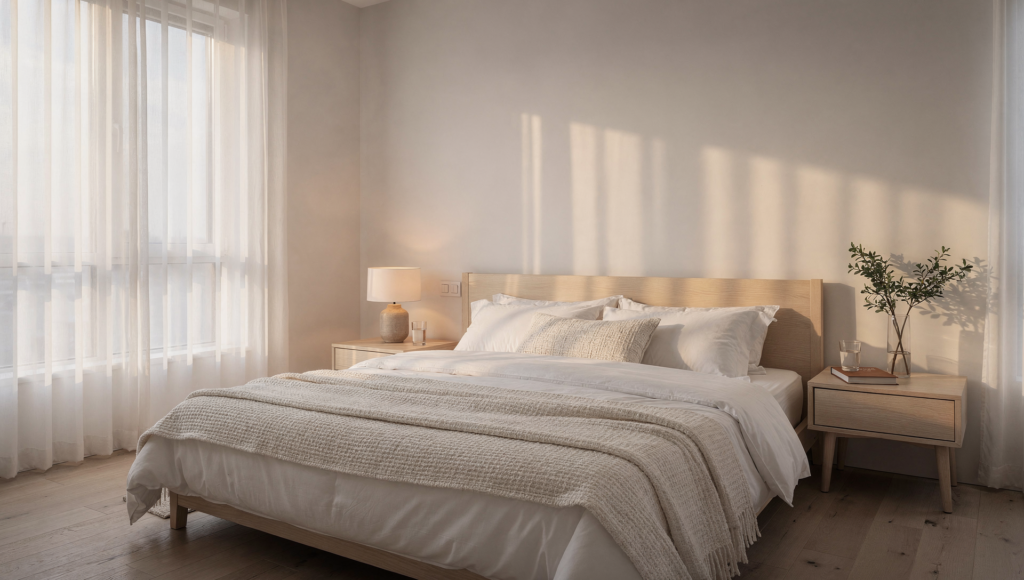
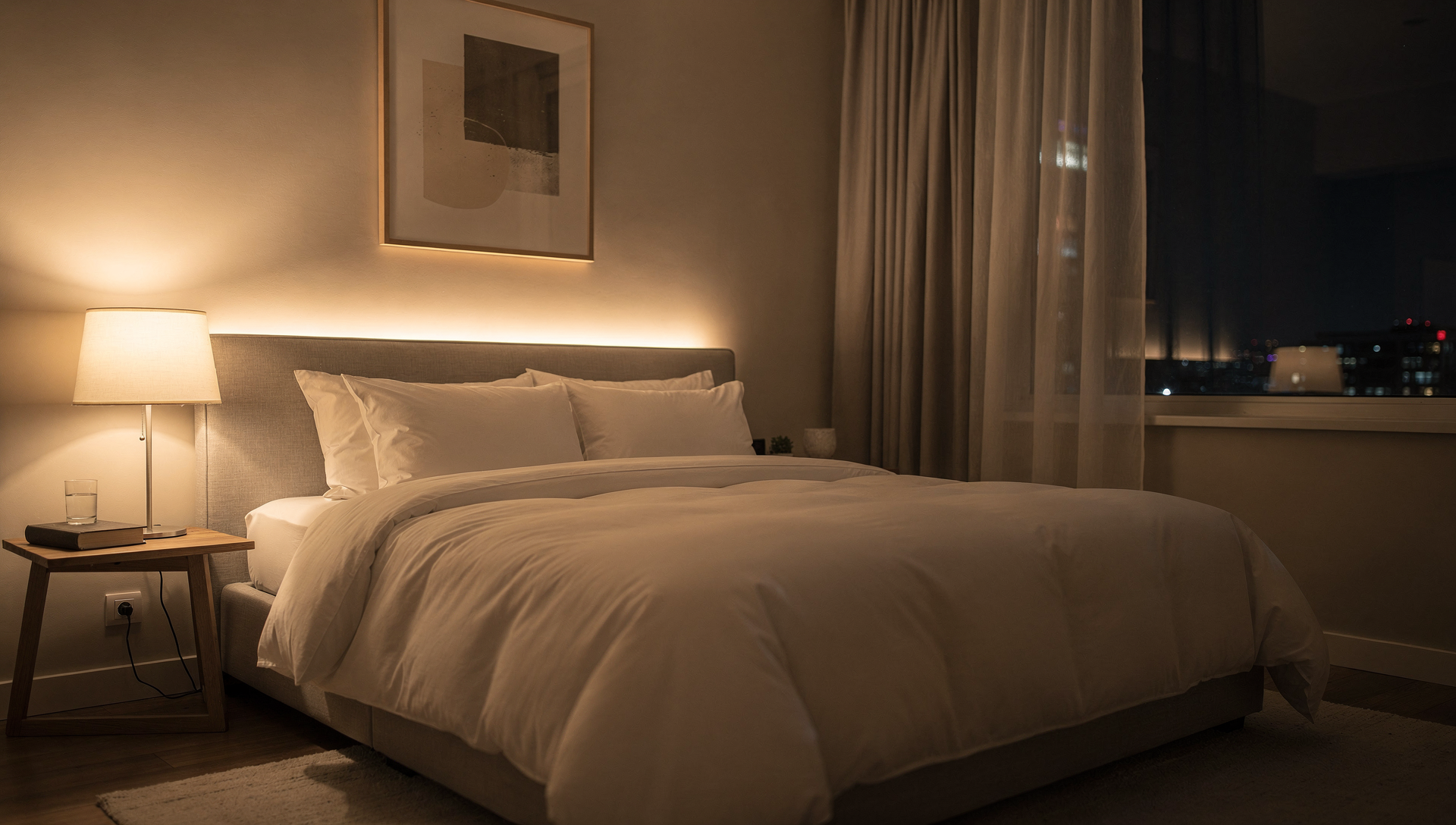
Section 8: Habit 7: Sleep Environment Perfection
The Bedroom-Only Rule Reinforcement:
- Bed is for sleep and intimacy only
- No work, screens, or stressful conversations in bed
- If not sleeping, get up after 20 minutes
- Strengthens bed-sleep association
Sensory Optimization Checklist:
Visual:
- Blackout curtains or sleep mask
- No electronic lights (cover or remove)
- Calming color scheme (blues, greens, neutrals)
- Clutter-free surfaces
- Clock facing away from bed
Auditory:
- White noise machine or app
- Earplugs if needed
- Soundproofing for noisy environments
- Consistent sound environment
Olfactory:
- Clean bedding weekly
- Air purifier if needed
- Subtle calming scents (lavender, chamomile)
- No strong artificial fragrances
Tactile:
- Comfortable mattress (7-10 year replacement)
- Supportive pillows (replace every 1-2 years)
- Breathable, comfortable bedding
- Appropriate weight for season
Special Considerations for Partners:
- Different schedules: Separate blankets, eye masks, earplugs
- Different temperature preferences: Dual-zone bedding
- Snoring/sleep apnea: Encourage evaluation, consider separate rooms if needed
- Movement: Motion-isolating mattress if easily disturbed
Seasonal Adjustments:
- Summer: Lightweight cotton/linen, cooling pads, fans
- Winter: Flannel/cotton blends, heavier blankets, humidifier
- Allergy seasons: Hypoallergenic bedding, air purifier, frequent washing
The “Sleep Sanctuary” Mindset:
- Your bedroom should feel like a retreat
- Invest in quality sleep essentials
- Regular maintenance (washing, replacing)
- Personal touches that promote relaxation
Section 9: Creating Your Personalized Sleep Hygiene Plan
Step 1: Assessment Week
- Track current habits (use sleep diary)
- Identify biggest challenges
- Note natural sleep/wake tendencies
- Rate current sleep quality (1-10)
Step 2: Prioritize 2-3 Habits
Don’t try all 7 at once! Start with:
- Most impactful for your specific issues
- Easiest to implement given your lifestyle
- Addresses root cause of your sleep problems
Sample Starter Plans:
For Difficulty Falling Asleep:
- 90-Minute Digital Sunset
- Temperature Optimization
- Pre-Sleep Relaxation Protocol
For Frequent Night Awakenings:
- Consistent Sleep-Wake Timing
- Sleep Environment Perfection
- Daytime Behaviors That Support Sleep
For Early Morning Awakening:
- Strategic Light Management
- Consistent Sleep-Wake Timing
- Temperature Optimization
Step 3: Implementation Schedule
- Week 1-2: Implement first habit
- Week 3-4: Add second habit
- Week 5-6: Add third habit
- Week 7+: Refine and maintain
Step 4: Progress Tracking
- Sleep diary (simplified version)
- Morning energy rating (1-10)
- Weekly review of what’s working
- Adjustments as needed
Step 5: Long-Term Maintenance
- Monthly check-in on habits
- Seasonal adjustments to routine
- Troubleshooting when life changes occur
- Celebration of improvements
Section 10: Troubleshooting Common Sleep Hygiene Challenges
Challenge 1: “I Travel Frequently”
- Solution: Portable sleep kit (mask, earplugs, white noise app, familiar pillowcase)
- Strategy: Maintain home time zone sleep schedule when possible
- Tip: Use melatonin (0.5-1 mg) for first few nights in new time zone
Challenge 2: “My Partner Has Different Sleep Needs
- Solution: Separate bedding systems, dual-zone mattress if possible
- Strategy: Compromise on room temperature, use personal solutions
- Tip: Communicate needs and find mutual solutions
Challenge 3: “I Work Night Shifts
- Solution: Blackout curtains, strict light management, consistent schedule even on days off
- Strategy: Melatonin at “bedtime” (when you need to sleep during day)
- Tip: Light exposure before “morning” (start of wake period)
Challenge 4: “I Have Young Children
- Solution: Take turns with partner for nighttime duties
- Strategy: Nap when possible, adjust expectations temporarily
- Tip: Maintain consistent bedtime routine for yourself when possible
Challenge 5: “My Mind Won’t Shut Off
- Solution: Scheduled worry time earlier in evening, brain dump journal
- Strategy: Progressive muscle relaxation, 4-7-8 breathing
- Tip: If awake >20 minutes, get up and do quiet activity until sleepy
Challenge 6: “I Have Chronic Pain
- Solution: Pain management before bed, comfortable sleep positions
- Strategy: Mattress/pillow optimization for your specific pain
- Tip: Gentle stretching before bed, heat/cold therapy as needed
Challenge 7: “I Can’t Maintain Consistency on Weekends
- Solution: Maximum 60-minute variation, earlier social events when possible
- Strategy: Nap briefly next day if up late
- Tip: Remember that consistency is cumulative—one off night won’t ruin progress
Section 11: Frequently Asked Questions
Q1: How long until I see improvements from sleep hygiene?
A: Most people notice some improvement within 1-2 weeks, with significant changes after 4-6 weeks of consistent practice.
Q2: Do I need to follow all 7 habits?
A: No. Start with 2-3 that address your specific issues. Consistency with a few habits is better than inconsistency with all.
Q3: What if I miss a night or break my routine?
A: Return to your routine the next day. One night won’t undo progress. Consistency over time matters most.
Q4: Are sleep hygiene habits enough if I have a sleep disorder?
A: They help but may not be sufficient for disorders like sleep apnea or insomnia. Use alongside professional treatment.
Q5: How do I know which habits to start with?
A: Identify your biggest sleep challenge and choose habits that specifically address it. For example, if light bothers you, start with light management.
Q6: Can I adjust these habits for my specific schedule?
A: Absolutely. The principles matter more than exact times. Adjust while maintaining consistency.
Q7: What if I’m a night owl but need to wake early?
A: Gradually shift your schedule earlier using light exposure in the morning and avoiding evening light. Be patient—it can take weeks.
Q8: Are naps allowed with good sleep hygiene?
A: Yes, if kept short (20-30 minutes) and early (before 3 PM). Avoid if you have insomnia.
Q9: How important is the sleep environment compared to habits?
A: Both matter. A perfect environment won’t overcome poor habits, but good habits are harder in a poor environment. Optimize both.
Q10: Can sleep hygiene help with TMJ-related sleep issues?
A: Yes, particularly temperature optimization, relaxation protocols, and consistent timing. Combine with TMJ-specific management.
Mastering sleep hygiene after 30 isn’t about rigid rules or perfection—it’s about creating sustainable habits that work with your changing biology and lifestyle. These 7 habits provide a framework, but your personalized approach matters most. Start small, be consistent, and adjust based on what works for you.
Remember that sleep is a skill that improves with practice. Some nights will be better than others, and that’s normal. What matters is your overall trajectory toward better sleep quality and daytime energy.
As you implement these habits, you’ll likely discover that better sleep creates positive ripple effects throughout your life: improved mood, sharper thinking, better stress management, and enhanced overall well-being. For those dealing with TMJ or other health concerns, quality sleep becomes an essential component of your management strategy.