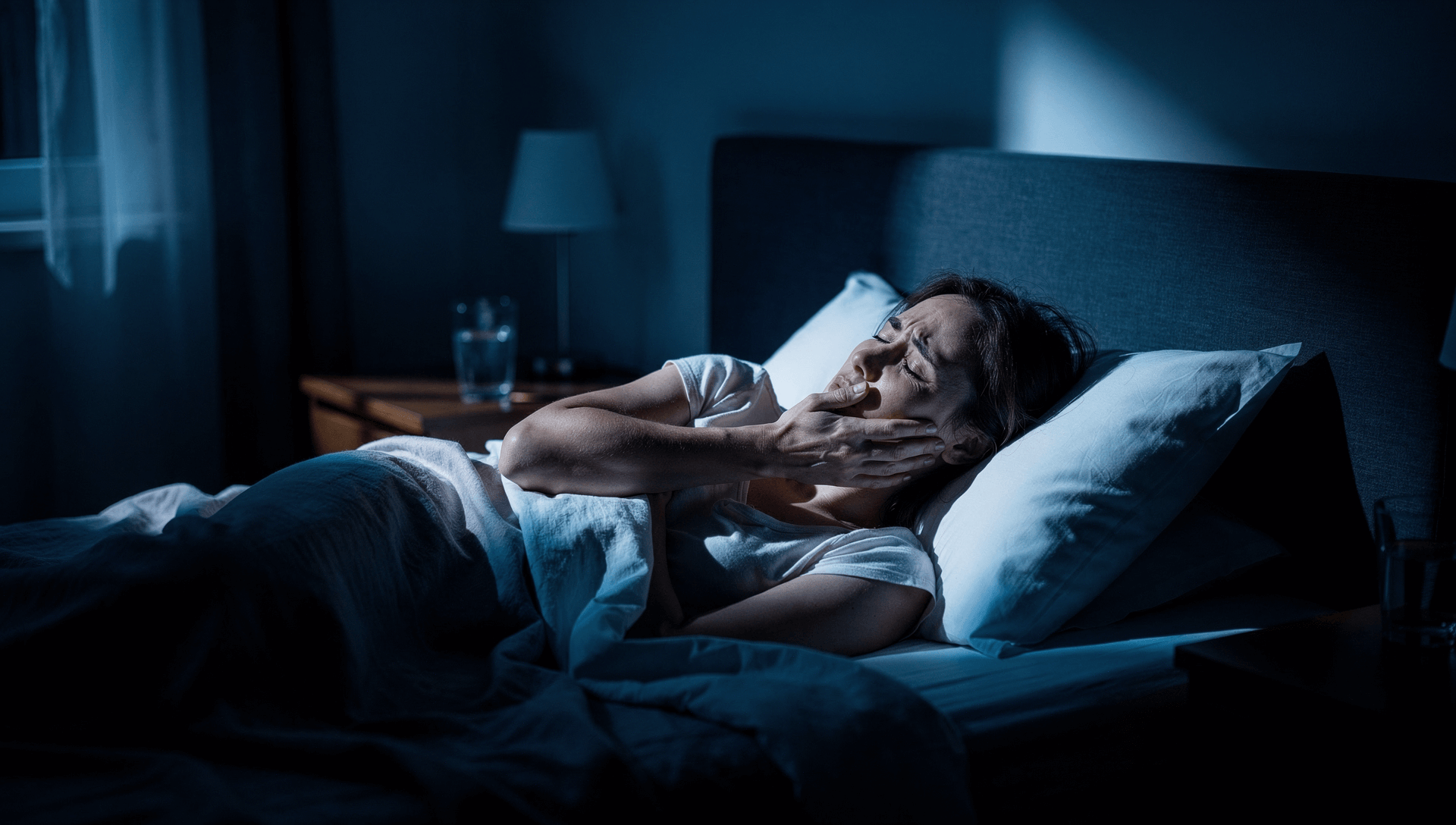
If you’re caught in the frustrating cycle where poor sleep worsens TMJ Pain, and TMJ pain leads to worse sleep, you’re experiencing what sleep specialists call a “bidirectional relationship”—a self-perpetuating loop that can feel impossible to escape.
This connection isn’t just anecdotal; it’s scientifically documented and clinically significant. Understanding how sleep and TMJ pain influence each other is the first step toward breaking this damaging cycle. From physiological mechanisms to psychological factors, multiple pathways connect these two common problems.
In this comprehensive guide, we’ll explore the science behind the sleep-TMJ connection, identify the specific mechanisms at play, and provide practical, actionable strategies to interrupt this cycle at multiple points. Whether you’ve noticed your jaw pain worsens after sleepless nights or your TMJ discomfort keeps you awake, this article will help you understand why—and more importantly, what you can do about it.
Section 1: The Bidirectional Relationship: Understanding the Cycle
The Vicious Cycle Diagram:
Poor Sleep Quality
    ↓
Increased Pain Sensitivity
    ↓
More TMJ Pain & Discomfort
    ↓
Difficulty Falling/Staying Asleep
    ↓
Worse Sleep Quality
    ↑
←←←←←←←←←←←←←←←←←←←←
Key Statistics:
- 70-85% of TMJ patients report sleep disturbances
- Sleep-deprived individuals experience 20-40% more pain
- TMJ sufferers average 60+ minutes longer to fall asleep
- Each influences the other in 3-5 distinct physiological ways
The Two-Way Street:
Sleep → TMJ Pain:
- Increased inflammation
- Reduced pain threshold
- More muscle tension
- Worse bruxism (teeth grinding)
TMJ Pain → Sleep:
- Physical discomfort prevents sleep
- Pain wakes you up
- Anxiety about pain increases arousal
- Medication side effects disrupt sleep
Why This Cycle Matters:
- Self-perpetuating: Each makes the other worse
- Diagnostic confusion: Is it primarily sleep or TMJ problem?
- Treatment implications: Must address both simultaneously
- Quality of life: Affects both night and day functioning
Section 2: Mechanism 1: Sleep Deprivation Increases Pain Sensitivity
The Science of Sleep and Pain Perception:
Brain Changes:
- Prefrontal cortex impairment: Reduced pain modulation
- Amygdala hyperactivity: Increased emotional response to pain
- Dopamine system disruption: Altered pain reward pathways
- Endogenous opioid reduction: Natural painkillers decrease
Specific Findings:
- 1 night poor sleep = 25% increase in pain sensitivity
- Chronic insomnia = 40-60% lower pain tolerance
- Deep sleep deprivation most strongly correlates with pain
The Gate Control Theory Modification:
During sleep deprivation:
- “Pain gates” open wider
- Filtering mechanism becomes less effective
- Normal signals interpreted as painful
- Actual pain feels more intense
TMJ-Specific Implications:
- Normal jaw movements may feel painful
- Mild discomfort becomes moderate pain
- Pain lasts longer after stimuli removed
- Lower threshold for pain medication needed
Research Evidence:
- Study: Sleep-restricted TMJ patients reported 37% more pain
- Finding: Each hour of lost sleep increased pain ratings by 8%
- Conclusion: Sleep affects TMJ pain more than previously recognized
Section 3: Mechanism 2: Poor Sleep Quality Increases Muscle Tension
The Muscle-Sleep Connection:
Physiological Changes:
- Sympathetic nervous system dominance: “Fight or flight” mode
- Cortisol dysregulation: Stress hormone patterns disrupted
- Reduced GABA activity: Primary inhibitory neurotransmitter
- Increased inflammatory cytokines: Muscle inflammation markers
Muscle-Specific Effects:
- Masseter muscles: 40% more tense after poor sleep
- Temporalis muscles: Increased resting tone
- Neck/shoulder muscles: Compensatory tension
- Overall: Reduced ability to relax muscles voluntarily
The Clenching Cascade:
Poor Sleep → Increased Stress → Unconscious Clenching → Muscle Fatigue → More Clenching → Pain
Sleep Architecture Matters:
Deep Sleep (N3) Deficiency:
- Muscle repair happens during deep sleep
- Growth hormone release for tissue repair
- Lactic acid clearance from muscles
- Result: Muscles don’t fully recover overnight
REM Sleep Disruption:
- Muscle atonia: Natural paralysis prevents acting out dreams
- Disruption causes: Partial muscle activation
- TMJ impact: Jaw muscles may clench during REM
- Result: Morning jaw soreness without memory of clenching
Practical Implications for TMJ:
- Morning assessment: Jaw more tense after poor sleep nights
- Daytime management: Harder to relax jaw muscles
- Exercise response: Jaw exercises less effective
- Treatment resistance: May need higher intervention levels
Section 4: Mechanism 3: TMJ Pain Directly Disrupts Sleep Architecture
How Pain Interferes with Sleep Stages:
Sleep Onset:
- Time increased: 30-90 minutes longer to fall asleep
- Reason: Pain signals compete with sleep signals
- Position difficulty: Finding comfortable jaw position
- Medication timing: Pain meds may interfere with sleep onset
Sleep Maintenance:
- Awakenings: 3-8x more frequent in TMJ patients
- Duration: Longer awake periods (10-30 minutes)
- Reason: Pain crosses sleep threshold
- Pattern: Often around 90-minute sleep cycle transitions
Sleep Architecture Disruption:
- Deep sleep reduction: 20-40% less in chronic pain
- REM sleep fragmentation: Shorter, more interrupted REM periods
- Sleep efficiency: 70-80% vs. normal 85-90%
- Total sleep time: Often reduced by 60-90 minutes
The Pain-Sleep Threshold:
- Individual variation: Different pain levels disrupt sleep
- Adaptation: Some develop tolerance over time
- Breakthrough pain: Sudden spikes cause awakenings
- Positional pain: Specific positions may trigger pain
TMJ-Specific Sleep Disruptors:
- Position-related pain: Side sleeping compresses joint
- Bruxism episodes: Grinding/clenching cause micro-awakenings
- Referred pain: Ear, temple, headache pain wakes you
- Medication effects: Some TMJ meds disrupt sleep
The Secondary Insomnia Risk:
TMJ Pain → Sleep Difficulty → Sleep Anxiety → More Arousal → Worse Sleep → More Pain Sensitivity
- Key: Pain causes initial insomnia, anxiety maintains it
- Treatment: Must address both pain and sleep anxiety
- Outcome: Pain improves but sleep problems may persist
Section 5: Mechanism 4: Stress: The Common Amplifier
The Stress Triad: Sleep, Pain, and TMJ:
How Stress Amplifies Both:
- Physiological: Cortisol increases inflammation and arousal
- Behavioral: Stress leads to poor sleep habits and increased clenching
- Cognitive: Anxiety about pain/sleep creates more stress
- Emotional: Frustration/depression worsen perception of both
The Cortisol Connection:
Normal Pattern:
- High morning: Wakes you up
- Gradual decline: Through day
- Low evening: Allows sleep
- Disrupted in: Poor sleep and chronic pain
Dysregulated Pattern in TMJ/Sleep Issues:
- Flatter curve: Less variation
- Evening elevation: Prevents sleep onset
- Morning blunting: Hard to wake up
- Overall higher levels: More inflammation, more pain
The Anxiety Feedback Loop:
TMJ Pain → Sleep Anxiety → Increased Arousal → Worse Sleep → More Pain → More Anxiety
Common Anxieties:
- Sleep anxiety: “Will I be able to sleep tonight?”
- Pain anxiety: “Will the pain wake me up?”
- Next-day anxiety: “How will I function tomorrow?”
- Treatment anxiety: “Will this ever get better?”
Breaking the Stress Component:
Immediate Interventions:
- Cognitive restructuring: Challenge catastrophizing thoughts
- Mindfulness: Present-moment focus reduces future anxiety
- Breathing exercises: Activate parasympathetic system
- Scheduled worry time: Designated time for concerns
Long-term Strategies:
- Stress management training: CBT for pain and insomnia
- Lifestyle adjustments: Work-life balance, boundaries
- Support systems: Family, friends, support groups
- Professional help: Therapy when needed
Section 6: The Bruxism-Sleep Connection
Bruxism: The Physical Bridge Between Sleep and TMJ:
Types of Bruxism:
- Awake bruxism: Daytime clenching, often stress-related
- Sleep bruxism: Nighttime grinding, sleep disorder classification
- Mixed: Both patterns present
Prevalence in TMJ Patients:
- 60-70% of TMJ patients have sleep bruxism
- 40-50% have awake bruxism
- Often: Both types coexist
How Bruxism Disrupts Sleep:
Direct Effects:
- Tooth grinding noise: May wake partner (or yourself)
- Jaw muscle activity: Causes micro-arousals
- Pain from grinding: Wakes you up
- Dental damage concerns: Anxiety about teeth
Sleep Architecture Impact:
- More Stage 1 sleep: Light, easily disturbed
- Less deep sleep: Reduced physical restoration
- Fragmented REM: Dream sleep interrupted
- Overall: Less restorative sleep
How Poor Sleep Worsens Bruxism:
Mechanisms:
- Increased stress hormones: More muscle tension
- Reduced sleep quality: More sleep stage transitions (bruxism often occurs during transitions)
- Medication effects: Some sleep aids increase bruxism
- Sleep position: Certain positions increase grinding
Research Findings:
- Poor sleepers: 3x more likely to have severe bruxism
- Sleep apnea connection: 25% of bruxism cases related to airway issues
- Treatment implication: Improving sleep often reduces bruxism
The Bruxism-TMJ Pain Cycle:
Poor Sleep → More Bruxism → TMJ Pain → Worse Sleep → More Bruxism
Breaking This Specific Cycle:
- Night guards: Protect teeth, may reduce muscle activity
- Sleep improvement: Directly reduces bruxism
- Stress management: Reduces both awake and sleep bruxism
- Position adjustment: Certain positions reduce grinding
Section 7: Breaking the Cycle: Sleep-First Strategies
Prioritizing Sleep Improvement:
The Rationale:
- Sleep affects pain more immediately than pain affects sleep
- Sleep improvements often easier to achieve initially
- Better sleep increases pain treatment effectiveness
- Sleep success builds confidence for pain management
Sleep-Specific Interventions for TMJ Patients:
Sleep Environment Optimization:
- TMJ-friendly pillows: Proper neck/jaw support
- Position training: Back sleeping preferred
- Temperature control: Cool room reduces inflammation
- White noise: Masks grinding sounds if bothersome
Sleep Schedule Adjustments:
- Consistent bedtime: Even with pain
- Wake time consistency: Most important anchor
- Nap management: Short naps only, early afternoon
- Wind-down routine: 60-90 minutes before bed
Sleep Hygiene for Pain Management:
- Pain medication timing: Coordinate with sleep schedule
- Evening pain management: Heat, gentle stretches
- Sleep medication caution: Some worsen bruxism or next-day pain
- Hydration balance: Enough to prevent dryness, not cause awakenings
The Sleep-Pain Diary:
Tracking for Insight:
- Sleep quality rating (1-10)
- TMJ pain rating (1-10) morning and evening
- Bruxism awareness: Partner report or morning symptoms
- Sleep duration: Hours in bed vs. hours asleep
- Pattern identification: Which comes first, sleep or pain worsening?
Using Data:
- Identify triggers: Specific sleep problems preceding pain
- Measure progress: Small improvements in sleep may reduce pain
- Adjust treatments: What helps sleep helps pain
- Communicate with providers: Concrete data for doctors
When Sleep Improves First:
Expected Timeline:
- Week 1-2: Slight sleep improvement, little pain change
- Week 3-4: Noticeable sleep improvement, slight pain reduction
- Week 5-8: Good sleep pattern, moderate pain reduction
- Month 3+: Sustained sleep improvement, significant pain reduction
Managing Expectations:
- Pain may lag behind sleep improvement
- Some nights still bad despite overall trend
- Setbacks normal: Illness, stress affect both
- Celebrate sleep wins even if pain persists
Section 8: Breaking the Cycle: TMJ-First Strategies
When Pain Demands Immediate Attention:
Situations for TMJ-First Approach:
- Severe pain: Preventing sleep entirely
- Acute flare-up: Recent injury or worsening
- Dental urgency: Need for immediate treatment
- Patient preference: Pain feels more urgent
Pain Management That Supports Sleep:
Evening Pain Protocol:
- Heat therapy: 20 minutes before bed
- Gentle stretching: Jaw and neck relaxation
- Medication timing: Coordinate peak effect with bedtime
- Position preparation: Arrange supports before lying down
Nighttime Pain Interruption Management:
- Bedside kit: Heat pack, water, medication if prescribed
- Quick relaxation: 4-7-8 breathing during awakenings
- Position adjustment: Don’t stay in painful position
- Pain journal: Brief note if awake >10 minutes
TMJ Treatments That Improve Sleep:
Direct Impact Treatments:
- Night guards: Reduce bruxism damage and may improve sleep quality
- Physical therapy: Evening exercises improve sleep onset
- Trigger point injections: Reduce nighttime muscle spasms
- Medication adjustments: Some TMJ meds aid sleep
Indirect Impact Treatments:
- Stress reduction: TMJ-focused relaxation improves sleep
- Posture correction: Daytime posture affects nighttime position
- Dietary changes: Anti-inflammatory diet reduces nighttime inflammation
- Exercise routine: Regular activity improves both TMJ and sleep
The Pain-Sleep Feedback Adjustment:
Reframing the Relationship:
- Not “either/or” but “both/and”
- Small pain reductions can yield sleep improvements
- Sleep-focused pain management differs from daytime
- Goal: Reduce pain enough to sleep, sleep enough to reduce pain
Practical Adjustments:
- Accept some pain: Perfect pain relief not required for sleep
- Focus on comfort: Not elimination but management
- Distraction techniques: For mild pain at bedtime
- Sleep as therapy: Viewing sleep as part of treatment
Section 9: Integrated Approach: Simultaneous Solutions
The Most Effective Strategy: Dual Focus:
Why Integration Works Best:
- Addresses root causes of both problems
- Creates positive reinforcement between improvements
- Prevents “whack-a-mole” treating one while other worsens
- More sustainable long-term
Daily Integrated Routine Example:
Morning (15 minutes):
- Jaw check: Gentle movement assessment
- Light exposure: 10 minutes sunlight
- Gentle stretching: Neck and jaw
- Hydration: Glass of water
- Planning: Identify potential stressors
Daytime Integration:
- Posture checks: Hourly computer breaks
- Stress management: Mini-breaks with breathing
- Movement: Regular position changes
- Nutrition: Anti-inflammatory foods
Evening (60 minutes):
- Digital sunset: Reduce screens
- Pain management: Heat, gentle exercises
- Relaxation: Progressive muscle relaxation
- Sleep preparation: Environment optimization
- Mindset: Positive sleep/pain expectations
Bedtime:
- Position setup: TMJ-friendly arrangement
- Last check: Pain level, comfort adjustments
- Sleep onset: Focus on breathing, not pain
- Awakening plan: If pain wakes you
Integrated Treatment Planning:
Healthcare Provider Coordination:
- Sleep specialist + TMJ specialist: Collaborative approach
- Primary care physician: Overseeing integrated plan
- Physical therapist: Sleep-position training
- Mental health professional: Pain-sleep anxiety
Treatment Timing:
- Simultaneous starts: Don’t wait for one to improve
- Priority based: Which is more severe currently
- Progress tracking: Both sleep and pain metrics
- Adjustment frequency: Monthly reviews of both
The Synergy Effect:
When Both Improve Together:
- Faster progress: Each supports the other
- Increased motivation: Success breeds success
- Reduced medication: May need less of both types
- Better compliance: Seeing benefits encourages consistency
Managing Setbacks:
- Expect fluctuations: Both have good and bad periods
- Don’t abandon both: If one worsens
- Reassess regularly: What’s working, what’s not
- Professional guidance: When stuck in cycle
Section 10: Tracking Your Progress: The Sleep-TMJ Diary
Purpose of Tracking:
- Objectivity: Move beyond “feeling like” nothing helps
- Pattern identification: Discover personal triggers
- Motivation: See small improvements over time
- Communication: Concrete data for healthcare providers
Daily Tracking Template:
Morning Record (within 30 minutes of waking):
- Sleep quality: 1-10 scale
- Hours slept: Estimate if not tracking
- TMJ pain level: 1-10 scale
- Jaw stiffness: None/mild/moderate/severe
- Notable events: Grinding awareness, position issues
Evening Record (before bed):
- Daytime TMJ pain: Worst level today
- Stress level: 1-10 scale
- Sleep preparedness: How ready for sleep feel
- Evening pain management: What did/didn’t help
- Sleep intention: Plan for tonight
Weekly Summary:
- Average sleep quality: For week
- Average pain levels: Morning and evening
- Patterns noticed: e.g., “Better sleep when…”
- Successes: What worked well
- Challenges: What to improve next week
Technology-Assisted Tracking:
Apps and Devices:
- Sleep trackers: Fitbit, Oura, Whoop
- Pain tracking apps: Manage My Pain, PainScale
- Combination apps: Some designed for chronic pain
- Simple spreadsheets: Google Sheets or Excel
What to Look For:
- Correlations: Sleep quality vs. next-day pain
- Lags: Pain improvements after several good sleep nights
- Thresholds: Sleep quality needed for pain reduction
- Interventions: What helps both simultaneously
Using Data Effectively:
Monthly Review Questions:
- What’s my baseline for sleep and pain?
- What interventions correlate with improvements?
- What makes both worse simultaneously?
- What’s one small change to try next month?
- When should I seek additional help?
Avoiding Data Overload:
- Start simple: 3-4 data points
- Consistency matters: Daily, even if brief
- Focus on trends: Not daily fluctuations
- Use for insight: Not self-criticism
Section 11: When to Seek Professional Help
Red Flags Requiring Professional Evaluation:
Sleep-Specific:
- Chronic insomnia: >3 months despite self-care
- Excessive daytime sleepiness: Affecting safety
- Loud snoring with pauses: Possible sleep apnea
- Restless legs: Severely disrupting sleep
- Sleep walking/talking: New or worsening
TMJ-Specific:
- Severe pain: Preventing eating or speaking
- Locking jaw: Cannot open or close fully
- Significant swelling: In jaw area
- Dental damage: From bruxism
- Neurological symptoms: Numbness, tingling
Both/Integration Issues:
- Cycle worsening: Despite self-management
- Medication concerns: For sleep or pain
- Mental health impact: Depression, anxiety
- Quality of life: Significant impairment
- Work/social functioning: Affected
Healthcare Providers Who Can Help:
For Sleep Issues:
- Sleep specialist: Board-certified in sleep medicine
- Pulmonologist: For sleep apnea
- Neurologist: For restless legs, narcolepsy
- Psychiatrist: For insomnia with anxiety/depression
For TMJ Issues:
- TMJ specialist: Dentist or oral surgeon with TMJ focus
- Physical therapist: Specialized in jaw/neck
- Pain management specialist: For chronic pain
- Rheumatologist: If autoimmune component
For Integrated Approach:
- Primary care physician: Coordinating care
- Pain psychologist: Specialized in pain-sleep cycle
- Integrative medicine: Holistic approaches
- Chronic pain programs: Multidisciplinary
What to Bring to Appointments:
Documentation:
- Sleep-TMJ diary: 2-4 weeks of tracking
- Symptom timeline: When problems started, worsened
- Previous treatments: What helped/didn’t
- Medication list: Current and past
- Questions: Prioritized list
Communication Tips:
- Be specific: “Pain level 7/10” not “hurts a lot”
- Describe impact: “Cannot work after poor sleep night”
- Ask about integration: “How will this affect my sleep/TMJ?”
- Request collaboration: Between your providers
Treatment Expectations:
Realistic Timeline:
- Initial evaluation: 1-2 appointments
- Diagnostic tests: May take weeks
- Treatment start: Often gradual
- Improvement: 4-12 weeks for noticeable change
- Maintenance: Ongoing for chronic issues
Success Measures:
- Improved function: Not necessarily elimination
- Better coping: Even with some symptoms
- Reduced cycle intensity: Fewer severe episodes
- Increased self-management: Less dependent on providers
Section 12: Frequently Asked Questions
Q1: Which should I address first: sleep or TMJ pain?
A: Start with whichever is more severe or easier to improve. Often, small sleep improvements yield pain reduction, making sleep a good starting point.
Q2: How long does it take to break the cycle?
A: Most people notice some improvement within 2-4 weeks, with significant cycle breaking in 2-3 months of consistent effort.
Q3: Can treating just one break the cycle?
A: Sometimes, but addressing both simultaneously is more effective and faster. Improvements in one often lead to improvements in the other.
Q4: Are there medications that help both sleep and TMJ?
A: Some medications (like certain muscle relaxants or low-dose antidepressants) can help both, but should be prescribed by a doctor familiar with both conditions.
Q5: What if improving my sleep doesn’t help my TMJ pain?
A: You may have structural TMJ issues needing specific treatment. However, better sleep will still help you cope with pain and respond better to treatments.
Q6: How do I know if my TMJ is causing poor sleep or vice versa?
A: Track both for 2 weeks. Which comes first? Which is more severe? Often it’s bidirectional, but patterns may emerge suggesting primary issue.
Q7: Can sleep position alone break the cycle?
A: For some people with position-sensitive TMJ, yes. For most, position is one component of a comprehensive approach.
Q8: What’s the most common mistake in trying to break this cycle?
A: Focusing only on pain relief at night with medications that disrupt sleep architecture, or using sleep aids that increase bruxism.
Q9: Is this cycle permanent?
A: No. While some predisposition may remain, the cycle can be broken and managed effectively with proper strategies.
Q10: When should I consider seeing a sleep specialist versus a TMJ specialist?
A: If sleep problems are more severe or began first, start with sleep specialist. If TMJ pain is dominant, start there. Many patients benefit from both.
The connection between poor sleep and TMJ pain represents one of the most challenging yet treatable cycles in chronic pain management. Understanding that these issues fuel each other is the first step toward effective intervention. Rather than viewing them as separate problems, recognizing their bidirectional relationship allows for more comprehensive and effective treatment approaches.
Breaking this cycle requires patience, consistency, and often a multifaceted strategy. Small improvements in sleep can lead to reduced pain, which leads to better sleep—creating a positive cycle to replace the negative one. Whether you start with sleep improvements, pain management, or an integrated approach, the key is sustained effort and tracking progress.
Remember that professional help is available when self-management isn’t sufficient. Many healthcare providers now recognize this connection and can offer targeted treatments. With the right strategies and support, you can transform this vicious cycle into a manageable pattern and reclaim both restful sleep and reduced pain.