Have you ever experienced a loud clicking sound while chewing, or woken up with an aching, stiff jaw? You are not alone. Between 10% and 15% of adults live with temporomandibular joint (TMJ) discomfort daily.
Because this complex joint controls everything from eating to speaking, ignoring early signs can turn temporary stress into chronic pain.
In this comprehensive guide, we will break down what TMJ disorder really is, how to identify your specific symptoms, the primary triggers, and the most effective at-home and professional treatments.
⚡ Quick Check: TMJ vs. TMD (What’s the Difference?)
- TMJ (Temporomandibular Joint): The actual hinge joint on each side of your face connecting your jawbone to your skull.
- TMD (Temporomandibular Disorder): The medical condition that occurs when this joint or its surrounding muscles become inflamed, misaligned, or injured.
1. Understanding the Complex Jaw Joint
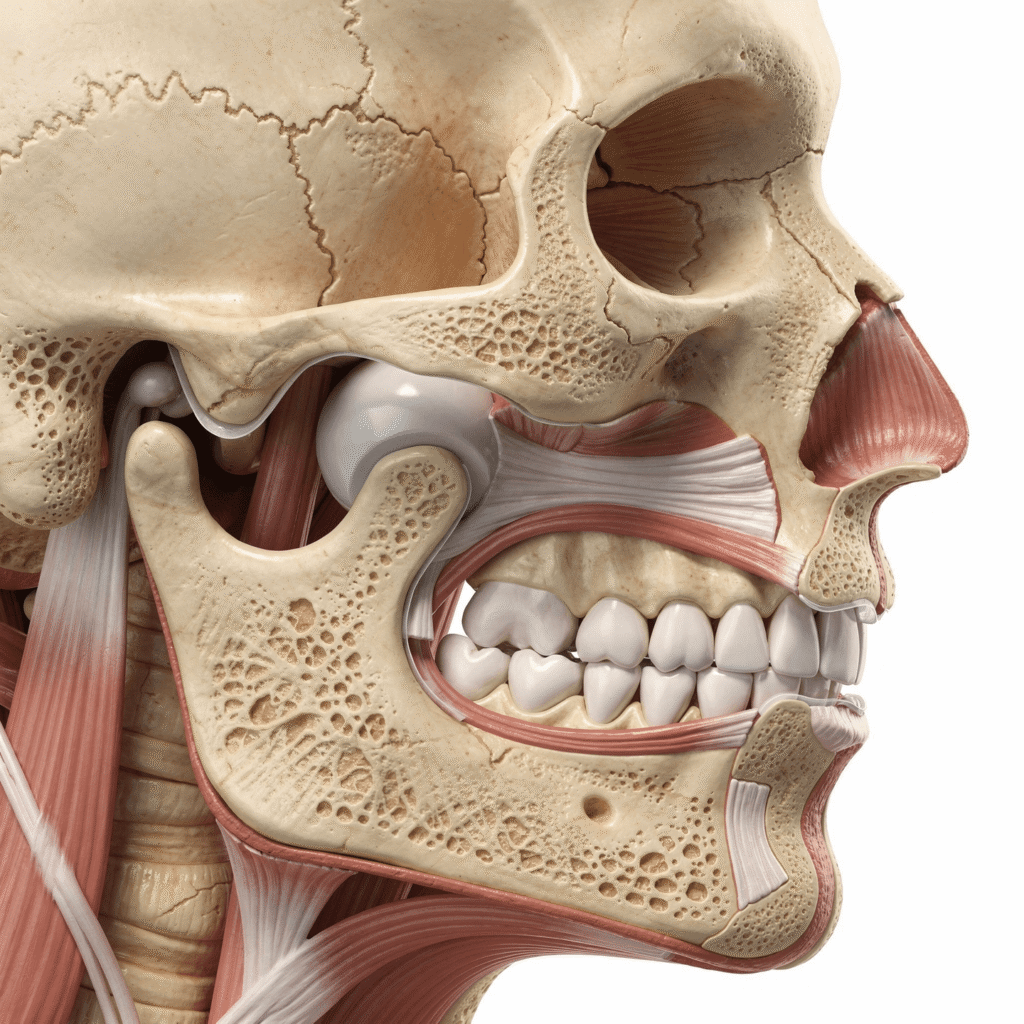
The temporomandibular joint is one of the most hardworking and complex joints in the human body. Located just in front of your ears, it operates as a dual-action mechanism: it hinges open and slides forward, backward, and side-to-side simultaneously.
       [ Temporal Bone (Skull) ]
                 │
           ( CUSHION DISC )  <-- Absorbs shock & smooths motion
                 │
         [ Mandible (Jawbone) ]
Inside each joint lies a small cartilaginous disc that acts as a shock absorber. When muscle strain, trauma, or stress causes this disc to shift out of alignment, TMD symptoms develop.
2. Common Symptoms: Are You Experiencing These?
TMD manifests differently for everyone. Use this checklist to identify your symptoms:
Primary Jaw Symptoms
- 🛑 Jaw Pain & Tenderness: Dull ache radiating through the jaw, cheeks, or temples.
- 🔊 Clicking or Popping: Audible sounds when opening or closing your mouth.
- 🔒 Jaw Locking: Getting stuck in an open or closed position.
- 📐 Limited Range of Motion: Difficulty chewing or opening your mouth wide.
Secondary Symptoms (Often Overlooked)
| Area Affected | Common Symptom |
| Ears | Ear pain, fullness, or persistent ringing (tinnitus). |
| Head & Neck | Tension headaches behind the eyes or radiating neck pain. |
| Teeth | Tooth sensitivity without any underlying dental decay. |
💡 Pro Tip for Readers: Keep a symptom diary for 1–2 weeks. Note down when the pain spikes (e.g., upon waking up or during stressful work hours) to help your provider pinpoint the root cause.
3. Primary Causes and Risk Factors
Why does TMJ pain happen? It usually stems from a combination of mechanical strain and lifestyle habits.
The Main Triggers:
- Bruxism (Teeth Grinding): Unconscious nighttime clenching exerts massive pressure on the joint. (Read our full [Ultimate Guide to Magnesium for Sleep and Relaxation] to learn how to calm nighttime tension).
- Stress & Anxiety: High mental tension leads to subconscious muscle contractions in the neck and jaw. (See our [Holistic TMJ Treatment: Mind-Body Connection] guide).
- Postural Strain: A forward-head desk posture strains the cervical spine, directly altering jaw alignment.
[ High Stress / Anxiety ] ──> [ Subconscious Clenching ] ──> [ Joint Disc Strain ] ──> [ TMJ Pain ]
- Risk Factors: Women aged 20–40 are 2 to 3 times more likely to develop TMD. Pre-existing conditions like arthritis, fibromyalgia, or sleep apnea also increase risk.
4. When to Seek Professional Care
While mild jaw fatigue often resolves with simple rest, certain warning signs require evaluation.
🚨 Red Flags (Seek Immediate Care):
- Sudden, complete inability to open or close your mouth.
- Severe, debilitating pain that prevents eating or drinking.
- Visible, significant facial swelling accompanied by a fever.
📅 When to Schedule a Routine Assessment:
- Symptoms persisting for more than 2 to 3 weeks.
- Pain that progressively worsens despite home care.
- Noticeable shifts in how your upper and lower teeth fit together.
5. Treatment Roadmap: From Conservative to Advanced
Always start with non-invasive, conservative therapies. Most cases of TMD respond exceptionally well without needing invasive procedures.
  [ STEP 1: At-Home Care & Stress Management ]  <-- Start Here (80% Success Rate)
                       │
  [ STEP 2: Custom Splints & Physical Therapy ]
                       │
  [ STEP 3: Targeted Medical Injections ]
                       │
  [ STEP 4: Surgical Intervention ]             <-- Last Resort Only
1. Conservative Treatments (First-Line)
- Custom Night Guards: Protect teeth and reduce pressure on the joint during sleep.
- Physical Therapy: Soft tissue massage, gentle joint mobilization, and postural training.
- Targeted Supplements: High-absorption minerals like Magnesium Glycinate or Magnesium L-Threonate to soothe tight masseter muscles.
2. Advanced Medical Interventions
- Trigger Point Injections: To release stubborn muscle knots.
- Arthrocentesis: A minimally invasive flushing of the joint space to clear debris and inflammation.
- Surgery: Reserved exclusively as a last resort for severe, debilitating structural damage.
6. Daily At-Home Relief Protocol
If you are dealing with active flare-ups, implement these immediate relief steps:
- 🧊 Ice Packs (First 48 Hours): Apply cold therapy to acute, sharp inflammation.
- ♨️ Moist Heat (Chronic Stiffness): Use warm compresses for 15–20 minutes to relax tight facial muscles.
- 🥗 Soft Food Shift: Avoid hard, crunchy, or overly chewy foods to give the joint rest.
- 💤 Ergonomic Sleep: Sleep on your back with a supportive contour pillow to avoid jaw pressure.
7. Frequently Asked Questions (FAQ)
Q: Can TMJ disorder go away on its own?
A: Mild flare-ups caused by temporary stress often improve within a few weeks using gentle self-care and jaw rest.
Q: Should I use heat or ice for jaw pain?
A: Use ice packs for acute, sharp joint inflammation (within the first 48 hours). Switch to moist heat to soothe long-term muscle tightness and stiffness.
Q: Can stress really cause my jaw to hurt?
A: Yes. Stress triggers your fight-or-flight response, leading to subconscious daytime clenching and nighttime bruxism, which overworks the masseter muscles.
📌 Next Steps for Your Healing Journey:
- Discover our step-by-step breakdown: TMJ Relief Guide: 7 Natural Approaches That Really Work
- Learn how to calm your nervous system overnight: Magnesium for Sleep and Relaxation: The Ultimate Guide