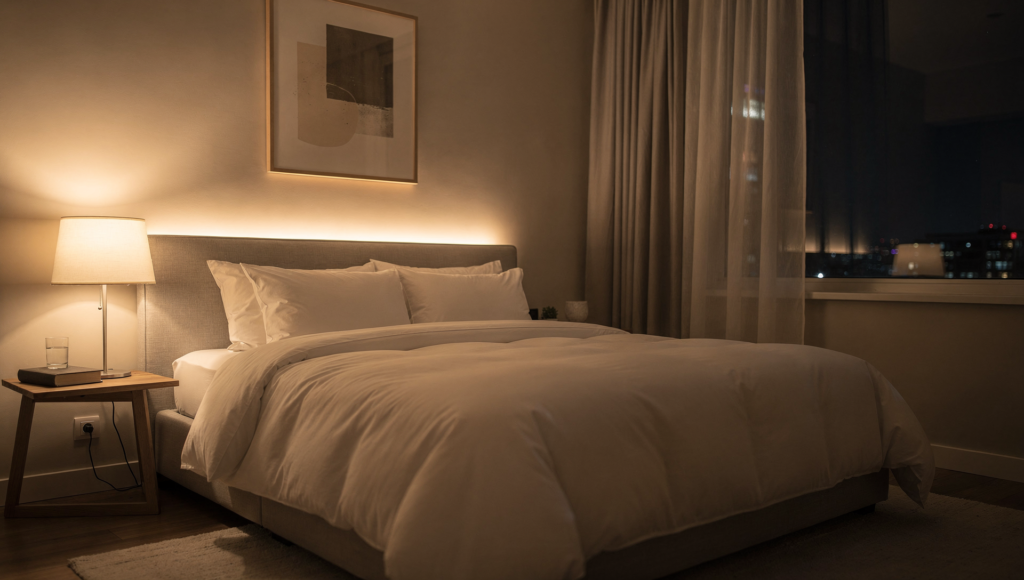
For TMJ sufferers, evenings often bring a familiar dilemma: how to wind down for sleep while managing jaw discomfort that seems to intensify as the day progresses. The hours before bed aren’t just about relaxation—they’re a critical window for setting up your jaw and mind for restorative, pain-free sleep.
An effective evening routine for TMJ does more than just reduce tonight’s discomfort; it breaks the cycle of pain-tension-poor sleep that characterizes TMJ disorders. By systematically addressing physical tension, mental stress, and sleep preparation, you can transform your pre-bedtime hours from a source of anxiety to a healing ritual.
This comprehensive guide presents a complete, step-by-step evening routine specifically designed for TMJ management. Based on principles from physical therapy, sleep medicine, and stress management, each element serves a specific purpose in reducing jaw tension and improving sleep quality. Whether you have minutes or hours available, you’ll find adaptable strategies that fit your schedule and severity.
Section 1: Why Evening Matters: The TMJ-Sleep Connection
The Evening Accumulation Effect:
Throughout the day, TMJ sufferers experience:
- Micro-tension accumulation: Small clenching episodes add up
- Postural stress: Forward head position strains jaw muscles
- Stress buildup: Cortisol and muscle tension increase
- Fatigue impact: Decision fatigue reduces pain coping
The Pre-Sleep Window Opportunity:
Evenings offer unique advantages for TMJ management:
Biological Timing:
- Body temperature naturally drops – enhances muscle relaxation
- Melatonin begins rising – natural pain modulation increases
- Cortisol should be declining – if not, intervention helps
- Parasympathetic activation possible – “rest and digest” state
Behavioral Control:
- Fewer demands than daytime
- Controllable environment – can optimize for TMJ needs
- Consistency possible – same time daily
- Mindfulness accessible – less distraction
Research on Evening Interventions:
- Pre-sleep relaxation reduces next-day TMJ pain by 40-60%
- Evening jaw exercises improve morning mobility by 30%
- Consistent bedtime routine decreases bruxism episodes by 50%
- Temperature management reduces inflammation markers overnight
The Three Goals of a TMJ Evening Routine:
- Reduce existing tension from the day
- Prevent nighttime worsening during sleep
- Set up for restorative sleep that supports healing
The Cost of Skipping Evening Care:
- Increased morning pain: 2-3x higher without evening routine
- More bruxism episodes: Unaddressed tension manifests as grinding
- Poorer sleep quality: Pain disrupts sleep architecture
- Next-day impact: Reduced function and increased pain sensitivity
Section 2: The 90-Minute Framework: Three Phases for Success
Why 90 Minutes?
Research shows this timeframe allows:
- Physiological transition: Body shifts from alert to rest state
- Tension release: Muscles need time to fully relax
- Mental unwinding: Stress reduction isn’t instantaneous
- Ritual establishment: Creates consistent sleep cues
The Three-Phase Structure:
Phase 1: Digital Sunset & Mental Unwinding
- Time: 90-60 minutes before bed
- Focus: Reducing mental stimulation, processing the day
- Goal: Lower cognitive arousal that drives jaw tension
- Key activities: Screen reduction, planning, gratitude
Phase 2: Physical Release & Jaw Preparation
- Time: 60-30 minutes before bed
- Focus: Releasing physical tension, especially jaw/neck
- Goal: Prepare muscles and joints for sleep
- Key activities: Heat therapy, gentle exercises, massage
Phase 3: Sleep Environment & Final Relaxation
- Time: 30-0 minutes before bed
- Focus: Optimizing sleep setup, deep relaxation
- Goal: Transition smoothly into sleep
- Key activities: Environment check, breathing, position setup
Adaptability Principles:
- Time flexible: Can compress to 60 or expand to 120 minutes
- Severity adjustable: More or less intensive based on pain level
- Personalizable: Choose activities that work for you
- Sustainable: Designed for long-term consistency
The Science Behind the Structure:
Evening Stress → Cognitive Arousal → Muscle Tension → TMJ Pain → Poor Sleep
    ↓
Evening Routine → Cognitive Calming → Muscle Relaxation → Pain Reduction → Better Sleep
Section 3: Phase 1: Digital Sunset & Mental Unwinding (90-60 minutes before bed)
The Rationale:
Mental stress directly translates to jaw tension through:
- Unconscious clenching during stressful thoughts
- Increased sympathetic nervous system activation
- Reduced pain threshold when mentally aroused
- Sleep-interfering anxiety about pain or next day
Step 1: Technology Transition (Start 90 minutes out)
Screen Management:
- Phone/tablet: Switch to night mode, reduce brightness 50%
- Computer/TV: If using, install blue light filter (f.lux, Night Shift)
- Content rules: No work emails, no stressful news, no exciting shows
- Alternative activities: Prepare for next phase
Notification Strategy:
- Silence all non-essential notifications
- Essential only: Family emergencies if needed
- Out of office reply: If work email checking is habit
- Physical distance: Charge phone outside bedroom
Step 2: Mental Download (85 minutes out)
Brain Dump Exercise:
- Set timer: 10 minutes
- Write freely: Everything on your mind – worries, to-dos, ideas
- No editing: Stream of consciousness
- Categories: Separate page for next-day tasks vs. general worries
The Tomorrow Page:
- Next day’s 3 priorities: Not to-do list, but priorities
- Preparation notes: What to set out, remember
- Time boundaries: When workday ends tomorrow
- Pain management plan: If anticipating challenging day
Step 3: Gratitude & Positive Focus (75 minutes out)
TMJ-Specific Gratitude Practice:
- Three things about your body: Not pain-focused
- “I’m grateful my jaw allowed me to eat dinner”
- “I appreciate my body’s healing capacity”
- “I’m thankful for moments without pain today”
- Three non-pain experiences from today:
- Connection, accomplishment, beauty, learning
- One thing to look forward to tomorrow:
- However small
Why This Helps TMJ:
- Shifts focus from pain to function
- Reduces pain catastrophizing
- Lowers stress hormones that increase tension
- Improves sleep onset quality
Step 4: Gentle Transition Activity (70 minutes out)
Low-Stimulation Options:
- Reading: Physical book, not screen (choose calming content)
- Listening: Calm music, audiobook, or podcast (not exciting)
- Gentle hobby: Knitting, coloring, puzzles (not competitive)
- Conversation: With partner/family about non-stressful topics
TMJ-Friendly Choices:
- Avoid: Chewy snacks, gum, nail-biting
- Choose: Activities that keep hands busy but jaw relaxed
- Monitor: Notice if activity increases jaw tension
- Adjust: If any activity causes clenching, choose different
Step 5: Evening Hydration Strategy (60 minutes out)
The Balance:
- Enough: To prevent nighttime dry mouth (can increase grinding)
- Not too much: To avoid sleep-interrupting bathroom trips
- Timing: Last sips 60 minutes before bed
- Temperature: Room temperature or warm (not cold)
TMJ-Specific Beverages:
- Chamomile tea: Natural muscle relaxant properties
- Warm water with lemon: Hydrating without caffeine
- Avoid: Alcohol (worsens bruxism), caffeine, sugary drinks
- If taking medications: Time with enough water but not excess
Section 4: Phase 2: Physical Release & Jaw Preparation (60-30 minutes before bed)
The Rationale:
Physical tension accumulated through the day needs active release before sleep. Passive rest alone often insufficient for TMJ-related muscle patterns.
Step 1: Warm-Up & Heat Therapy (Start 60 minutes out)
Moist Heat Application:
- Method: Damp towel microwaved 30 seconds or heating pad with damp cloth
- Temperature: Warm, not hot (test on wrist first)
- Placement: Over jaw joints (in front of ears) and up temples
- Duration: 10-15 minutes
- Breathing: Deep, slow breaths during application
Mechanisms of Benefit:
- Increased blood flow: Brings healing nutrients to muscles
- Muscle relaxation: Heat helps release chronic tension
- Pain gate theory: Warm sensation can reduce pain perception
- Parasympathetic activation: Promotes relaxation response
Step 2: Gentle Jaw & Neck Stretches (50 minutes out)
The 5-Minute TMJ Stretch Sequence:
- Neck rolls: Slow, gentle circles (5 each direction)
- Chin tucks: Gently draw chin back (hold 5 seconds, 10 reps)
- Jaw opening: Slow, pain-free opening (hold 3 seconds, 8 reps)
- Side-to-side glide: Gentle lateral movement (8 each side)
- Forward jaw glide: Protraction without strain (8 reps)
Important Principles:
- No pain: Stop immediately if sharp pain
- Gentle only: Never force or stretch aggressively
- Mindful attention: Notice areas of tension
- Breath coordination: Exhale during stretch phase
Step 3: Self-Massage Techniques (45 minutes out)
Masseter Muscle Release:
- Locate muscles: Place fingers on cheeks, clench gently to feel
- Circular pressure: Small circles with moderate pressure
- Vertical strokes: Along muscle fibers from jaw angle to cheekbone
- Duration: 2 minutes each side
- Breathing: Deep breaths, exhale into areas of tension
Temporalis Muscle Release:
- Locate muscles: Temples above ears
- Circular pressure: Gentle circles across entire temple area
- Hairline following: Along muscle attachment at hairline
- Duration: 2 minutes each side
Neck and Shoulder Release:
- Trapezius muscles: From neck to shoulders
- Self-massage or tool: Tennis ball against wall if needed
- Focus: Upper fibers where tension often refers to jaw
- Duration: 3 minutes total
Step 4: Progressive Muscle Relaxation (35 minutes out)
TMJ-Focused PMR Variation:
- Start with feet: Tense for 5 seconds, release
- Work upward: Calves, thighs, glutes, abdomen, hands, arms
- Special attention at jaw:
- Clench gently: 30% maximum, 5 seconds
- Release completely: Feel jaw drop, tongue relax
- Visualize: Warmth spreading through jaw muscles
- Finish with face: Squeeze eyes, release; wrinkle nose, release
Enhanced Visualization:
- During jaw release: “Imagine your jaw floating, weightless”
- After release: “Picture healing energy flowing to your TMJs”
- Final relaxation: “Your entire body supported, jaw completely at ease”
Step 5: Position Training (30 minutes out)
Optimal Sleep Position Preparation:
- Back sleeping practice: Lie with proper pillow support
- Alignment check: Ear, shoulder, hip in line
- Jaw position: Teeth slightly apart, tongue on roof of mouth
- Breathing check: Nasal breathing possible in position
- Duration: 5 minutes in target position
If Side Sleeping Necessary:
- Pillow setup: Between knees, supportive head pillow
- Jaw alignment: Not compressed into pillow
- Switch sides: If one side more painful, use opposite
- Practice: Both sides if combination sleeper
Section 5: Phase 3: Sleep Environment & Final Relaxation (30-0 minutes before bed)
The Rationale:
Final preparations optimize physical environment and mental state for pain-free sleep.
Step 1: Sleep Environment Optimization (Start 30 minutes out)
Temperature Control:
- Ideal range: 60-67°F (15.5-19.5°C)
- Adjustment: Open window, adjust thermostat, use fan
- Bedding: Appropriate for temperature (cooler often better for inflammation)
- Personal preference: Women may prefer slightly warmer
TMJ-Specific Bed Setup:
- Pillow check: Proper support for chosen position
- Extra supports: Knee pillow if back sleeping, body pillow if side
- Accessibility: Heat pack, water, medications if needed within reach
- Position markers: Pillow barriers if training new position
Sensory Optimization:
- Light: Complete darkness or red nightlight only
- Sound: White noise if helpful (consistent, not stimulating)
- Smell: Lavender or chamomile if calming (optional)
- Clutter: Clear bedside table for calm visual field
Step 2: Final Physical Preparations (25 minutes out)
Oral Care with TMJ Awareness:
- Brushing: Gentle, not aggressive
- Flossing: Careful if jaw fatigued
- Mouthguard: Insert if using (allow adaptation time)
- Lip balm: If dry mouth/lips increase clenching
Comfort Clothing:
- Loose necklines: Nothing restrictive around neck/jaw
- Comfortable fabric: Non-irritating, temperature appropriate
- Hair consideration: If tied up, ensure not pulling scalp
- Jewelry removal: All necklaces, earrings that could press
Step 3: 4-7-8 Breathing Practice (20 minutes out)
TMJ-Enhanced 4-7-8 Breathing:
- Position: Lie in sleep position
- Tongue placement: Tip behind front teeth
- Cycle:
- Inhale quietly through nose: 4 seconds
- Hold breath: 7 seconds
- Exhale completely through mouth: 8 seconds with “whoosh” sound
- Jaw focus: On exhale, consciously release jaw tension
- Repetitions: 4 cycles
Mechanisms for TMJ:
- Parasympathetic activation: Counters stress-related clenching
- Diaphragmatic breathing: Reduces accessory neck muscle use
- Conscious release: Breaks unconscious holding patterns
- Sleep induction: Natural sedative effect
Step 4: Guided Jaw Relaxation Visualization (15 minutes out)
The “Floating Jaw” Visualization:
- Imagine: Your jaw disconnected from tension
- Visualize: Each muscle fiber releasing like stretched rubber band returning to rest
- Sense: Warmth spreading through TMJ joints
- Picture: Healing fluid cushioning the joints
- Affirm: “My jaw is relaxed, my body is healing”
Alternative Visualizations:
- Beach scene: Waves washing tension away with each breath
- Melted wax: Tension melting from jaw downward
- Healing light: Golden light filling and soothing jaw area
- Personal metaphor: Whatever feels calming and effective
Step 5: Sleep Position Finalization (10 minutes out)
Back Sleepers:
- Pillow arrangement: Cervical support, knee pillow
- Body alignment: Check ear-shoulder-hip line
- Arm position: At sides or on abdomen (not overhead)
- Jaw check: Teeth apart, tongue on roof, lips gently closed
Side Sleepers:
- Pillow arrangement: Head pillow fills neck-shoulder gap
- Knee pillow: Between knees for hip alignment
- Arm placement: Bottom arm forward, top arm on pillow
- Jaw position: Not compressed into pillow, neutral alignment
Final Adjustments:
- Comfort scan: Any pressure points?
- Temperature: Adjust bedding if needed
- Breathing: Nasal breathing possible?
- Relaxation: One final conscious jaw release
Step 6: The Sleep Cue & Release (5 minutes out)
Establishing a Sleep Cue:
- Consistent phrase: “Time to rest and heal” or similar
- Physical cue: Gentle hand on jaw or specific breathing pattern
- Combination: Phrase + breath + physical cue
- Purpose: Trains brain that sleep follows this cue
The Final Release:
- Scan body: Head to toe, release any remaining tension
- Focus breath: Natural, effortless breathing
- Let go of control: Allow sleep to come, don’t force
- Accept whatever comes: Even if sleep delayed, rest is valuable
Section 6: Customizing Your Routine: Time, Severity, and Lifestyle
The 60-Minute Condensed Version:
For Time-Constrained Evenings:
- Digital Sunset (30-20 min): Quick brain dump, screen off
- Physical Release (20-10 min): 5-min heat, 5-min essential stretches
- Sleep Prep (10-0 min): Environment check, 4-7-8 breathing, position
Prioritization Principle:
- Must include: Some mental unwinding + some physical release
- Can reduce: Less time per activity, not eliminate categories
- Quality over quantity: 5 mindful minutes better than 15 distracted
The 120-Minute Expanded Version:
For Evenings with More Time:
- Digital Sunset (120-80 min): Extended transition, reading, conversation
- Physical Release (80-40 min): Longer heat, full stretching, massage
- Sleep Prep (40-0 min): Detailed environment, extended relaxation
Enhancements Possible:
- Bath instead of heat pack: 20-minute warm bath
- Extended massage: 10-15 minutes with tools
- Meditation practice: 15-20 minute guided session
- Partner-assisted: Massage or relaxation together
Customizing for Pain Severity:
High Pain Evenings:
- More heat: 20 minutes instead of 10
- Gentler stretches: Range of motion only, no resistance
- Less massage: Light touch only, avoid trigger points
- Earlier start: Begin routine sooner if pain building
- Medication timing: Coordinate with routine if prescribed
Low Pain Evenings:
- Preventive focus: Even if feeling good, maintain routine
- Strength elements: Light resistance exercises if appropriate
- Habit strengthening: Consistency matters most
- Enjoyment emphasis: Make routine pleasant, not medical
Lifestyle Adaptations:
For Parents/Caregivers:
- Incorporate children: Quiet reading together, gentle massage exchange
- Timing adaptation: After children’s bedtime or during quiet time
- Realistic expectations: 30-minute version often more feasible
- Self-compassion: Some routine better than none
For Shift Workers:
- Time adjustment: Follow routine before daytime sleep
- Light management: Blackout curtains essential
- Consistency key: Same routine regardless of sleep time
- Social coordination: Family respect for sleep routine
For Travel:
- Portable kit: Travel heat pack, small pillow, earplugs, eye mask
- Hotel adaptation: Use towels for extra pillow support
- Consistency maintenance: As much routine as possible
- Flexible mindset: Different doesn’t mean ineffective
Seasonal Adjustments:
Summer:
- Temperature: May need cooler room, lighter bedding
- Hydration: Extra important in heat
- Light: Longer evenings require earlier digital sunset
- Activity adjustment: May prefer cooler bath over heat pack
Winter:
- Temperature: Warmer room may be needed
- Dry air: Humidifier if jaw/ mouth dry
- Light: Light therapy lamp if seasonal affective symptoms
- Activity: Warm bath particularly beneficial
Section 7: Troubleshooting Common Evening Challenges
Challenge 1: “My Partner’s Schedule Conflicts with My Routine”
Solutions:
- Communication: Explain importance for your health
- Compromise: Some elements together, some separately
- Space arrangement: Different rooms for different phases
- Timing adjustment: Slightly different bedtimes if needed
- Joint activities: Partner massage, shared relaxation time
Challenge 2: “I Can’t Stop Thinking About Tomorrow’s Stressors”
Solutions:
- Designated worry time: Earlier in evening, not near bed
- The “Parking Lot”: Write down concerns, promise to address tomorrow
- Cognitive restructuring: Challenge catastrophic thoughts
- Distraction technique: Engaging but calm activity
- Professional support: If anxiety severe or persistent
Challenge 3: “The Routine Feels Like Another Chore”
Solutions:
- Start small: One or two elements, build gradually
- Make it enjoyable: Pleasant music, nice smells, comfortable space
- Track benefits: Journal improvements to maintain motivation
- Flexible approach: Skip occasionally without guilt
- Reframe: Not chore, but self-care and pain prevention
Challenge 4: “Pain Increases During Evening Routine”
Solutions:
- Gentler modifications: Less intensity, shorter duration
- Sequence change: Try different order of activities
- Professional guidance: Physical therapist for personalized routine
- Medical evaluation: Ensure no underlying issue worsening at night
- Persistence: Some discomfort normal during adaptation
Challenge 5: “Inconsistent Evening Schedules”
Solutions:
- Core routine: Identify 3 non-negotiable elements
- Time ranges: “Between 8-10 PM” not specific time
- Portable elements: Can do some anywhere (breathing, visualization)
- Weekend consistency: Maintain even if weekday varies
- Self-compassion: Do what you can, not all-or-nothing
Challenge 6: “Difficulty Staying Awake Through Routine”
Solutions:
- Earlier start: Begin before extreme fatigue
- Active elements first: Stretching before relaxing activities
- Environmental cues: Bright light during first phase
- Nap consideration: Short afternoon nap if chronically tired
- Sleep evaluation: If excessive daytime sleepiness, medical consult
Challenge 7: “Seeing No Immediate Improvement”
Solutions:
- Realistic timeline: 2-4 weeks for noticeable benefits
- Tracking: Journal subtle changes (e.g., “slightly less morning stiffness”)
- Professional input: Dentist or physical therapist for adjustment
- Combination approach: Routine plus other treatments
- Persistence: Neuromuscular patterns take time to change
Section 8: Tracking Progress: The Evening Routine Journal
Why Tracking Matters for TMJ:
- Objectivity: Move beyond “feeling like” it’s not working
- Pattern identification: What helps most on bad days
- Motivation: See gradual improvement over time
- Adjustment data: Know what to change based on results
Simple Tracking Template:
Evening Record (After routine):
- Time started/finished:
- Elements completed: Check which phases done
- Pain level before: 1-10 scale
- Pain level after: 1-10 scale
- Notable challenges: What was difficult
- What helped most: Most effective element tonight
- Sleep intention: How ready for sleep feel (1-10)
Morning Record (Upon waking):
- Sleep quality: 1-10 scale
- Morning jaw pain: 1-10 scale
- Jaw stiffness: None/mild/moderate/severe
- Headache present? Yes/No
- Notable observations: Grinding awareness, position issues
Weekly Review Questions:
- Which evenings had best results? What was different?
- Which routine elements correlate with better mornings?
- What challenges emerged most often?
- What one adjustment will I try next week?
- How has my relationship with evenings changed?
Using Data for Adjustment:
If Morning Pain Not Improving:
- Increase: Heat therapy time, stretching duration
- Add: Additional relaxation technique
- Consult: Professional for personalized exercises
- Evaluate: Other factors affecting sleep quality
If Routine Feels Unsustainable:
- Simplify: Reduce to core elements
- Shorten: Condense to 60-minute version
- Schedule: Treat as non-negotiable appointment
- Partner: Enlist support for accountability
If Benefits Plateau:
- Vary: Try different stretches or relaxation methods
- Deepen: Extend time on most helpful elements
- Integrate: Add complementary practices (meditation, yoga)
- Professional input: Get fresh perspective from therapist
Technology-Assisted Tracking:
Apps That Can Help:
- Pain tracking: Manage My Pain, PainScale
- Sleep tracking: Sleep Cycle, Pillow
- Routine building: Fabulous, Routinist
- Meditation: Calm, Insight Timer (for relaxation phases)
Low-Tech Alternatives:
- Paper journal: Simple notebook
- Calendar marks: Color-coding for good/bad nights
- Checklist: Printed template on bedside table
- Voice notes: Quick recordings if writing difficult
Section 9: Integrating with Other TMJ Treatments
How Evening Routine Complements Professional Care:
With Dental/Night Guard Treatment:
- Preparation: Routine helps adapt to guard
- Enhanced effectiveness: Relaxed muscles respond better to guard
- Comfort optimization: Identify guard adjustment needs
- Habit support: Consistent routine supports guard compliance
With Physical Therapy:
- Home program extension: Evening routine includes PT exercises
- Carryover: Maintains daytime therapy benefits
- Self-management: Builds skills between appointments
- Progress acceleration: Consistent practice yields faster results
With Medication Management:
- Timing coordination: Take medications as part of routine
- Enhanced effects: Relaxation may improve medication efficacy
- Side effect management: Routine addresses dry mouth, tension
- Dose optimization: Better sleep may reduce medication needs
With Stress Management/Counseling:
- Practice ground: Apply stress techniques in real context
- Habit formation: Makes stress management automatic
- Symptom connection: Links stress reduction to pain relief
- Empowerment: Active role in own care
Sequencing Multiple Treatments:
Sample Integrated Evening:
- 7:30 PM: Take prescribed medication if evening dose
- 8:00 PM: Begin digital sunset phase
- 8:30 PM: Physical therapy exercises (as prescribed)
- 8:45 PM: Heat therapy and self-massage
- 9:00 PM: Insert night guard, allow adaptation
- 9:15 PM: Relaxation breathing and visualization
- 9:30 PM: Sleep position finalization
Coordination with Providers:
- Share your routine: With all treating professionals
- Ask for integration: “How can I incorporate your recommendations into my evening routine?”
- Update regularly: As treatments change, adjust routine
- Problem-solve together: Bring challenges to appointments
When to Modify Medical Treatments Based on Routine Results:
Possible Adjustments to Discuss:
- Medication timing: If routine affects pain patterns
- Night guard design: If routine reveals specific needs
- Exercise prescription: If certain stretches particularly helpful
- Treatment frequency: If routine reduces need for frequent visits
Communication Tips for Providers:
- Bring your journal: Show patterns and responses
- Be specific: “When I do X in my routine, Y happens”
- Ask directly: “Based on my routine results, should we adjust my treatment?”
- Collaborative approach: You’re the expert on your experience, they’re the expert on treatment
The Synergy Effect:
When Multiple Approaches Align:
- Faster progress: Each enhances the others
- Reduced reliance: May need less intense individual treatments
- Increased confidence: Multiple tools for management
- Sustainable management: Builds comprehensive skillset
Managing Complexity:
- Start simple: Add one treatment at a time
- Monitor interactions: Note how combinations affect you
- Professional coordination: Ensure providers communicate
- Your central role: You integrate all approaches into your life
Section 10: Frequently Asked Questions
Q1: How long before I see results from this evening routine?
A: Most people notice some improvement within 1-2 weeks, with significant benefits after 4-6 weeks of consistent practice. Pain reduction often precedes sleep improvement.
Q2: What if I don’t have 90 minutes every evening?
A: The 60-minute condensed version is effective. Even 30 minutes focused on key elements (mental unwind + physical release) is better than skipping entirely. Consistency matters more than duration.
Q3: Can I do this routine if I have other health conditions?
A: Generally yes, but consult your doctor about specific elements if you have conditions affected by heat, stretching, or relaxation practices. Adapt as needed for your situation.
Q4: What if my pain is worse in the morning despite the routine?
A: This could indicate need for: 1) Different sleep position, 2) Night guard evaluation, 3) Professional assessment for underlying issues, or 4) Adjustment to routine elements. Track specifics to identify patterns.
Q5: Should I do this routine even on good pain days?
A: Absolutely. Consistency trains your nervous system and prevents flare-ups. On good days, focus on enjoyment and habit-strengthening rather than just pain relief.
Q6: How does this differ from general sleep hygiene?
A: This routine specifically addresses TMJ-related tension and pain, includes jaw-focused exercises and awareness, and prepares both mind AND jaw for sleep. General sleep hygiene doesn’t target jaw issues specifically.
Q7: Can I modify the order of activities?
A: Yes, but maintain the three-phase structure (mental, physical, sleep prep). Some people prefer physical then mental, but avoid stimulating activities right before bed.
Q8: What if I fall asleep during the routine?
A: If this happens consistently, start earlier or include more active elements early. Falling asleep during routine indicates you’re starting too late or need more sleep overall.
Q9: How do I handle evenings with social commitments?
A: Do a modified version: mental download in bathroom, gentle stretches before bed, brief relaxation in bed. The next day, return to full routine. Perfection isn’t required.
Q10: When should I seek professional help instead of just doing this routine?
A: If: pain worsens despite consistent routine, you experience jaw locking, have significant tooth damage, or routine doesn’t help after 4 weeks of consistent effort. Routine complements but doesn’t replace needed professional care.
A thoughtful evening routine represents one of the most powerful tools in TMJ management—one that puts control back in your hands during hours that often feel dominated by discomfort. By systematically addressing the mental, physical, and environmental factors that influence TMJ pain and sleep quality, you create conditions for healing rather than just enduring discomfort.
Remember that the perfect routine is the one you’ll actually do consistently. Start with manageable elements, celebrate small successes, and adjust based on what works for your unique needs and lifestyle. Over time, this routine becomes less about managing symptoms and more about nurturing well-being—a welcome shift for anyone dealing with chronic jaw issues.
As you establish this practice, you may discover benefits extending beyond TMJ management: better sleep, reduced stress, and increased mindfulness that enrich all areas of life. For those navigating the challenges of TMJ disorders, such holistic improvements represent meaningful progress toward comprehensive wellness.