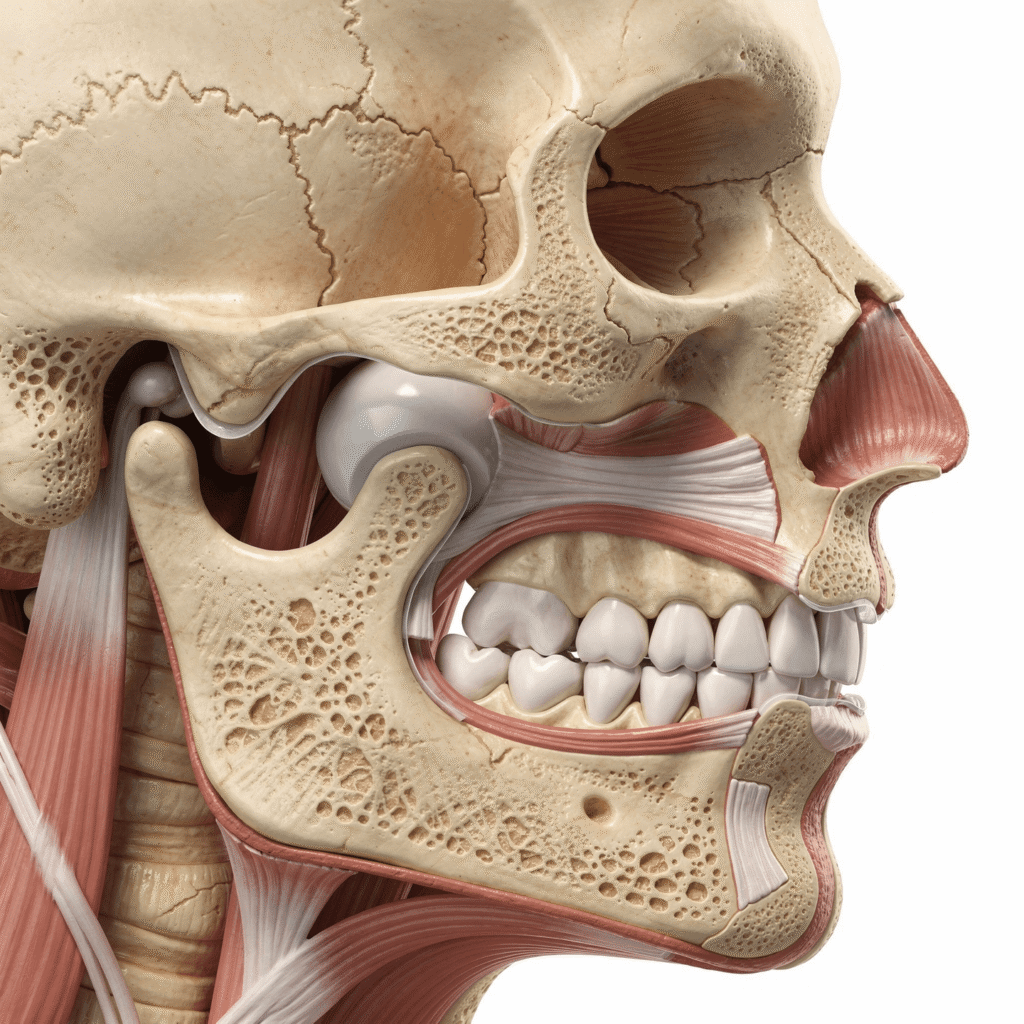
TMJ and Anxiety. You’re familiar with the physical ache in your jaw, the clicking when you yawn, the tension that seems to live permanently in your temples. You’ve tried exercises, changed your sleeping position, and maybe even bought a special pillow. But what if the root of your TMJ disorder isn’t just in your joint, but also in your mind? The connection between your jaw pain and your anxiety isn’t just a coincidence; it’s a powerful, scientifically-proven feedback loop that can turn occasional discomfort into a chronic condition. Understanding this “fear-pain loop” is the first step to finally breaking free.
The Vicious Cycle: How Anxiety and TMJ Feed Each Other
This isn’t just about being “stressed out.” The relationship between your mental state and your jaw pain is a tangible, physiological cycle.
1. The Brain’s Alarm System: The Fight-or-Flight Response
When you experience anxiety, your body activates its ancient “fight-or-flight” response. Stress hormones like cortisol and adrenaline flood your system, preparing your muscles for action . Your jaw muscles, particularly the powerful masseters, are primed to clench. This is an involuntary, primitive reaction meant to protect you from harm. The problem? In our modern world, this response is triggered not by physical danger, but by work deadlines, traffic, and daily worries .
2. The Science of Stress: An Overactive Stress Axis
Research has shown that people with TMJ disorders may have a chronically upregulated hypothalamic-pituitary-adrenal (HPA) axis—the body’s central stress response system. One study found that TMJ patients had significantly higher levels of cortisol in their saliva compared to healthy individuals, alongside significantly higher scores for anxiety and depression. This suggests that the physical stress system is in a state of high alert, constantly primed to react .
3. The Role of Catastrophizing and Central Sensitization
This is where the “fear-pain loop” really takes hold. When you experience pain, your brain naturally tries to understand it. However, anxiety can fuel a pattern of “pain catastrophizing”—which involves ruminating about the pain, magnifying its threat, and feeling helpless to control it . These catastrophic thoughts can actually change your brain. Chronic pain and anxiety can lead to “central sensitization,” a state where your central nervous system becomes hyper-reactive to pain signals. The “pain neuromatrix” in your brain becomes over-sensitized, meaning you feel pain more intensely and more frequently, even from minor stimuli . Essentially, your brain learns to expect pain, creating a self-fulfilling prophecy.
Spotting the Signs: How the Loop Manifests
How do you know if you’re caught in this cycle? Beyond your jaw pain, look for these signs:
- Daytime Clenching: Catching yourself with your teeth pressed together while driving, working, or concentrating is a classic sign of stress-induced tension. A simple check-in is to ask yourself, “Where are my teeth?” .
- Nighttime Grinding (Bruxism): Anxiety is a major contributor to sleep bruxism. Studies show that up to 37.3% of working adults with anxiety experience this, leading to worn teeth and morning jaw soreness .
- Morning Headaches and Facial Pain: Waking up with a dull headache or tender jaw muscles is a tell-tale sign that you’ve been clenching or grinding all night.
- Personality Factors: Research has long suggested that individuals with TMJ disorders may have personality traits that make them more vulnerable to stress, such as higher levels of neuroticism .
Breaking the Cycle: Practical Strategies for Mind and Jaw
The good news is that because the brain is “plastic,” this loop can be retrained . The most effective approach treats both the mind and the jaw simultaneously.
Immediate Relief for Jaw Tension
When you feel the anxiety rising and your jaw starting to tighten, try these techniques for quick relief:
- The Jaw Massage: Place your fingers on the muscles just below your cheekbones (in front of your ears). Apply gentle pressure in small, circular motions for 30-60 seconds. This helps release tension and improve blood flow to the overworked masseter muscles .
- Warm Compress: Apply a warm, moist compress to the sides of your face for 10-15 minutes. The heat increases circulation and helps relax contracted muscles .
- The “Fish Face” Stretch: Suck in your cheeks and lips to make a fish face. Hold for 5-10 seconds and repeat 5-10 times. This gently stretches the cheek and jaw muscles .
Daily Exercises for Long-Term Relief
Incorporate these into your routine to retrain your jaw muscles.
- Conscious Jaw Relaxation: Throughout the day, practice the “lips together, teeth apart” mantra. Your tongue should rest gently on the roof of your mouth, just behind your front teeth (the “N” position) .
- The Jaw Drop: Place your tongue on the roof of your mouth. Slowly open your mouth as wide as is comfortable, hold for 5-10 seconds, then close. Repeat 5-10 times to increase range of motion and stretch tight muscles .
- Side-to-Side Movement: Slowly move your lower jaw to the right, hold for 5 seconds, return to center, and repeat on the left. Do 5 repetitions on each side .
Calming the Anxious Mind
- Deep Breathing: Deep, diaphragmatic breathing (like the 4-7-8 technique) activates the parasympathetic nervous system (the “rest and digest” mode), directly counteracting the stress response and naturally relaxing the jaw .
- Progressive Muscle Relaxation (PMR): This technique involves tensing and then releasing different muscle groups. Start with your jaw: clench tightly for 5 seconds, then release completely and notice the difference. This helps retrain your nervous system .
- Audit Your Stimulants: Caffeine can raise cortisol levels, heighten tension, and worsen sleep. Try tapering your intake, especially in the afternoon .
- Mindfulness and Body Scans: Set aside 5-10 minutes daily to mentally scan your body for tension. Simply becoming aware of a clenched jaw is often the first step to releasing it .
When to Seek Professional Help
If self-help strategies aren’t enough, it’s crucial to seek professional support. This is a condition that benefits from a multidisciplinary approach .
- For Your Jaw: Consult a TMJ specialist or dentist to rule out joint issues and explore options like a custom-fitted night guard.
- For Your Mind: A therapist (specializing in CBT, ACT, or biofeedback) can provide powerful tools for managing anxiety, pain catastrophizing, and the stress response .
- For Your Body: A physical therapist can address postural issues and muscle imbalances that contribute to the cycle.
For more on managing the stress response, revisit our guide on TMJ and Stress: Breaking the Cycle of Jaw Tension.
Conclusion: Rewiring for Relief
The fear-pain loop is a powerful force, but it’s not unbreakable. By understanding the deep connection between your anxiety and your jaw pain, you’ve already taken the most important step. Relief doesn’t come from treating just one part of the cycle; it comes from a holistic approach that soothes the mind while relaxing the jaw. With consistent practice and the right support, you can rewire the loop, turning a cycle of pain into a path toward lasting calm and comfort.