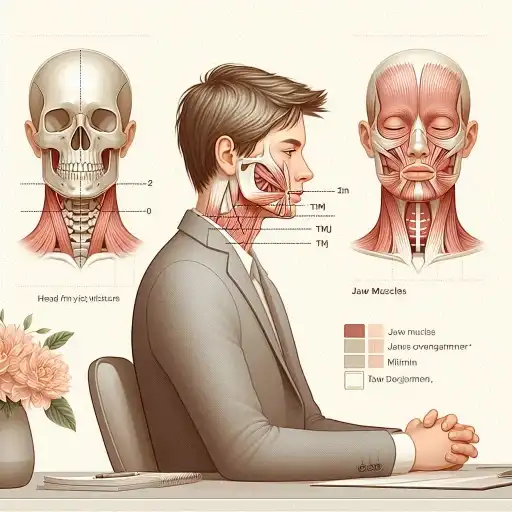
TMJ and Posture: Fix Your Alignment to Relieve Jaw Pain

connection between spinal alignment and jaw pain

TMJ and Posture. Do you find yourself constantly adjusting your sitting position, rolling your shoulders back, or rubbing your neck after long hours at a desk? What if that nagging postural discomfort wasn’t just causing back pain but was secretly fueling your TMJ symptoms? The connection between how you hold your body and jaw pain isn’t coincidental—it’s anatomical, and understanding it could be your missing piece to lasting relief.

The Surprising Connection: Why Your Posture Matters for TMJ

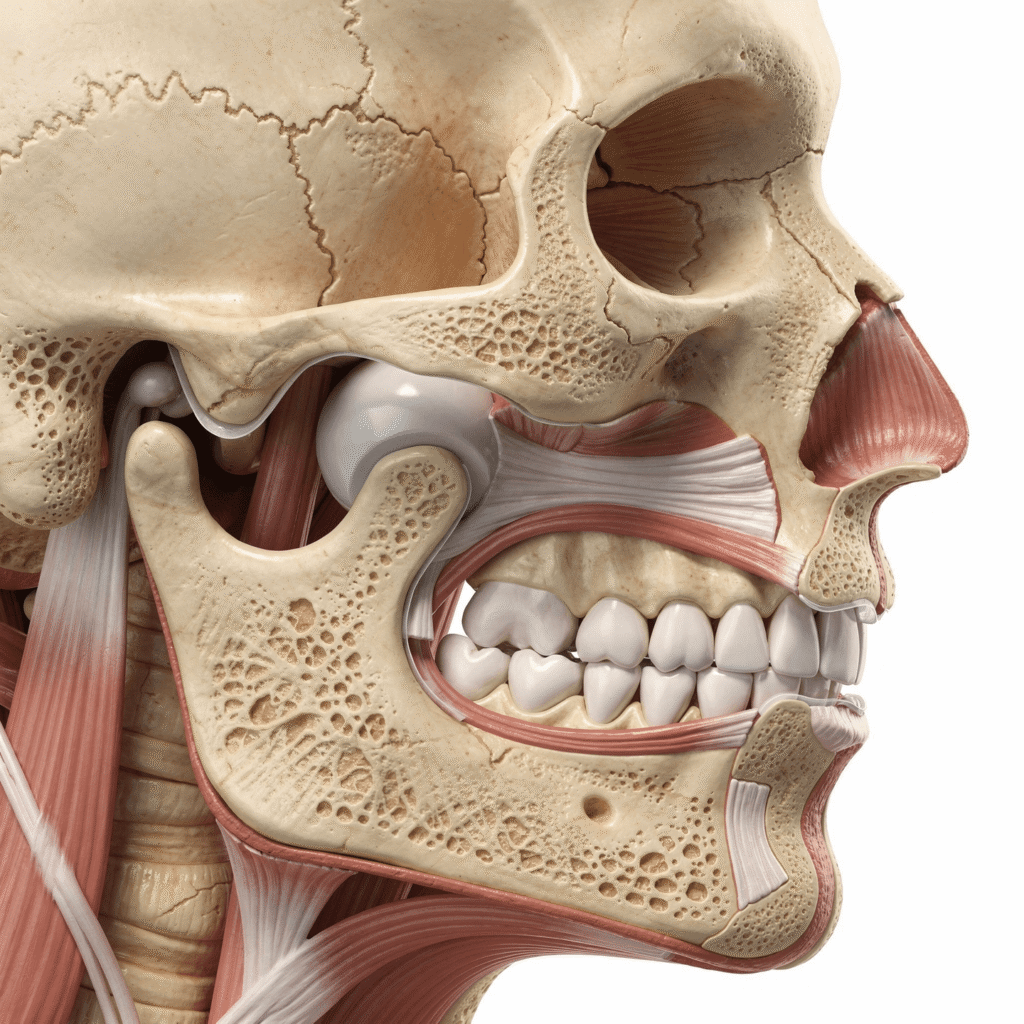
Your temporomandibular joint doesn’t exist in isolation. It’s part of a complex kinetic chain that starts at your feet and ends at the top of your head. When one link in this chain—like your neck or shoulder alignment—is out of position, the entire system compensates. Your jaw, being one of the most sensitive and finely tuned joints in your body, often bears the brunt of these compensations.

Here’s what happens: Forward head posture (the infamous “tech neck”) increases the weight on your cervical spine from 10-12 pounds to as much as 60 pounds. This excessive strain causes your suboccipital muscles—which connect your skull to your spine—to tighten. These muscles share fascial connections with those that control jaw movement. When they’re tense, they pull on the entire craniofacial structure, altering your bite, increasing clenching, and irritating the TMJ.

But here’s the good news: unlike many TMJ factors that feel outside your control, posture is something you can actively improve every single day. The strategies in this guide don’t require special equipment or expensive treatments—just awareness and consistent practice.

5 Warning Signs Your Posture Is Worsening Your TMJ

Before diving into solutions, recognize the signals your body is sending. You might be experiencing postural contributors to TMJ if:

1. Your Pain Follows a Daily Pattern

  • Jaw feels fine in the morning but worsens as the day progresses
  • Symptoms peak after long computer or phone sessions
  • Relief comes with lying down or specific position changes

2. You Have “Referred Pain” Patterns

  • Headaches that start at the base of your skull and radiate forward
  • Ear pain or fullness without infection
  • Shoulder tension that seems connected to jaw tightness

3. Your Bite Feels Different Throughout the Day

  • Teeth fit together differently morning vs. evening
  • Increased clenching or grinding during focused work
  • Awareness of jaw position becomes obsessive

4. You Exhibit Classic Postural Markers

  • Rounded shoulders when standing or sitting
  • Head protruding forward from shoulders (not stacked above)
  • Chin jutting forward rather than tucked slightly
  • Uneven shoulder height

5. Certain Activities Predictably Trigger Symptoms

  • Driving long distances
  • Working at a non-ergonomic workstation
  • Looking down at phones or tablets
  • Carrying heavy bags on one shoulder

If you recognize three or more of these patterns, postural correction should become a priority in your TMJ management plan.

The 4 Most Common Posture Mistakes (And How to Fix Them)

Mistake #1: Forward Head Posture (“Tech Neck”)

What it looks like: Ears positioned in front of shoulders rather than directly above.

Why it harms TMJ:

  • Increases tension in suboccipital muscles
  • Alters resting jaw position
  • Encourages mouth breathing (dries tissues, changes tongue posture)

Quick fix (do now):

  1. Sit or stand against a wall
  2. Gently press the back of your head against the wall
  3. Draw your chin slightly back and down (creating a “double chin”)
  4. Hold for 5 seconds, release
  5. Repeat 10 times, 3x daily

Long-term solution:

  • Raise computer monitors to eye level
  • Use phone at eye level rather than looking down
  • Set posture reminders every 30 minutes

Mistake #2: Rounded Shoulders

What it looks like: Shoulders rolling forward, chest collapsed inward.

Why it harms TMJ:

  • Tightens pectoral muscles, pulling shoulder girdle forward
  • Compresses nerves that serve jaw and facial muscles
  • Reduces diaphragmatic breathing, increasing tension

Quick fix (do now):

  1. Interlace fingers behind your back
  2. Squeeze shoulder blades together
  3. Lift hands slightly (without straining)
  4. Hold for 20-30 seconds
  5. Repeat throughout the day

Long-term solution:

  • Strengthen upper back muscles (rows, face pulls)
  • Stretch chest daily (doorway stretches)
  • Avoid carrying heavy bags on one shoulder

Mistake #3: Asymmetrical Weight Bearing

What it looks like: Leaning to one side, crossing legs consistently one way, uneven hip height.

Why it harms TMJ:

  • Creates spinal curvature that travels up to cervical spine
  • Causes muscular imbalances throughout kinetic chain
  • Can lead to uneven chewing patterns

Quick fix (do now):

  1. Stand with feet hip-width apart
  2. Distribute weight evenly between both feet
  3. Check if one hip is higher (use mirror)
  4. Consciously lower the elevated side
  5. Practice balanced standing for 2 minutes hourly

Long-term solution:

  • Address leg length discrepancies (if medical)
  • Alternate crossing legs
  • Use symmetrical bags (backpacks vs. one-shoulder)

Mistake #4: Improper Sitting Alignment

What it looks like: Slouched position, feet not supported, thighs at wrong angle.

Why it harms TMJ:

  • Whole-body misalignment starts at pelvis
  • Compromised breathing patterns increase sympathetic tone
  • Reduced circulation to head and neck muscles

Quick fix (do now):

  1. Sit at edge of chair
  2. Roll pelvis forward until you feel sitting bones
  3. Maintain slight arch in lower back
  4. Place feet flat on floor (use footrest if needed)
  5. Take 5 deep diaphragmatic breaths

Long-term solution:

  • Invest in ergonomic chair with lumbar support
  • Use adjustable workstation
  • Take standing/movement breaks every 30 minutes

Your 7-Minute Daily Posture Reset for TMJ Relief

Consistency beats intensity. This brief routine, done daily, can prevent postural degeneration from accumulating:

Minute 0-1: Awareness Check

  • Stand against wall (heels, glutes, shoulders, head touching)
  • Notice which areas don’t touch naturally
  • Breathe deeply for 30 seconds

Minute 1-3: Cervical Retraction

  • Perform chin tucks (10 repetitions)
  • Focus on lengthening back of neck
  • Move slowly, without pain

Minute 3-4: Shoulder Mobilization

  • Shoulder rolls forward (10) and backward (10)
  • Scapular squeezes (hold 5 seconds, 10 repetitions)
  • Arm circles small to large (10 each direction)

Minute 4-5: Thoracic Extension

  • Clasp hands behind head
  • Gently arch upper back over chair or foam roller
  • Hold 20 seconds, repeat twice

Minute 5-6: Jaw Position Reset

  • Teeth slightly apart, lips together
  • Tongue resting on roof of mouth
  • Gentle swallow to set position
  • Hold relaxed jaw for 60 seconds

Minute 6-7: Integration

  • Walk around room maintaining new alignment
  • Practice looking left/right with whole body rotation
  • Final deep breaths

Pro tip: Set phone reminder for same time daily—morning or before bed works best.

Workplace Ergonomics: Setting Up Your Space for TMJ Health

Since most of us spend hours at workstations, this environment deserves special attention:

Computer Setup Checklist:

  • Monitor height: Top of screen at or slightly below eye level
  • Monitor distance: Arm’s length away
  • Keyboard position: Elbows at 90-100 degrees, wrists straight
  • Mouse position: Close to keyboard, same height
  • Chair: Supports natural lumbar curve, allows feet flat
  • Document holder: At screen level if referencing papers

The 30-30 Rule:

Every 30 minutes, take 30 seconds to:

  1. Look away from screen (20 feet distance)
  2. Perform 3 chin tucks
  3. Take 5 deep breaths
  4. Reset sitting position

Phone and Tablet Use:

  • Never cradle phone between ear and shoulder
  • Use speakerphone or headphones for long calls
  • Hold devices at eye level when possible
  • Take regular breaks during extended use

5 Posture-Correcting Exercises That Specifically Help TMJ

These movements target the muscular imbalances most connected to jaw dysfunction:

1. Wall Angels

Benefits: Retrains shoulder positioning, opens chest
How-to:

  1. Stand with back against wall, feet 6 inches away
  2. Arms at 90 degrees (like “field goal” position)
  3. Slowly slide arms up wall, maintaining contact
  4. Return to start position
  5. 10 repetitions, daily

2. Chin Tucks with Resistance

Benefits: Strengthens deep neck flexors, counters forward head
How-to:

  1. Sit or stand with good posture
  2. Place finger on chin
  3. Gently press chin back against finger resistance
  4. Hold 5 seconds, release
  5. 10 repetitions, 2x daily

3. Scapular Retraction with Band

Benefits: Corrects rounded shoulders, improves upper back strength
How-to:

  1. Hold resistance band at chest height, arms extended
  2. Squeeze shoulder blades together while pulling band apart
  3. Keep elbows straight
  4. Hold 3 seconds, slowly return
  5. 15 repetitions, daily

4. Thoracic Rotation

Benefits: Improves spinal mobility, reduces compensatory neck movement
How-to:

  1. Sit on chair, cross arms over chest
  2. Rotate torso to one side, keeping hips facing forward
  3. Hold 20 seconds
  4. Repeat other side
  5. 3 rotations each side, daily

5. Jaw-Assisted Neck Release

Benefits: Releases tension between jaw and neck muscles
How-to:

  1. Place fingertips on tight neck muscles
  2. Slowly open and close mouth while applying gentle pressure
  3. Find tender spots, hold gentle pressure for 30 seconds
  4. Never press directly on spine
  5. Perform as needed throughout day

For more comprehensive exercise guidance, explore our 10 Simple TMJ Exercises You Can Do at Home Today.

Sleeping Positions That Support Postural Alignment

While we’ve covered optimal sleeping for TMJ in detail here, consider these postural specifics:

For Side Sleepers:

  • Use a pillow that fills space between ear and shoulder completely
  • Place pillow between knees to prevent hip rotation
  • Avoid folding forward (fetal position should be “loose”)
  • Consider a body pillow for full-length support

For Back Sleepers:

  • Use thinner pillow that supports cervical curve without pushing head forward
  • Consider cervical pillow with contour
  • Place small pillow under knees to reduce lumbar strain
  • Ensure head isn’t propped too high

Special Consideration: The Postural Pillow

While no pillow “fixes” posture overnight, certain features help:

  • Contoured design supports cervical lordosis
  • Adjustable loft allows customization
  • Firm edges prevent head rolling forward
  • Hypoallergenic materials reduce allergic mouth breathing

When to Seek Professional Help

While postural correction is largely self-manageable, certain situations warrant professional guidance:

See a Physical Therapist if:

  • You have chronic pain despite consistent self-care
  • Notice significant asymmetry you can’t correct
  • Experience neurological symptoms (numbness, tingling)
  • Have history of whiplash or spinal injury

See a Chiropractor if:

  • You have restricted spinal mobility
  • Want assessment of spinal alignment
  • Need guidance on specific adjustments (but avoid aggressive neck manipulation with TMJ)

See a Dentist or TMJ Specialist if:

  • Postural changes don’t improve jaw symptoms after 4-6 weeks
  • You suspect bite issues are primary problem
  • Need custom oral appliance for night-time positioning

Important: Always disclose your TMJ diagnosis to any healthcare provider before neck or spinal treatments.

Frequently Asked Questions (FAQ)

Q1: How long until I see improvement in my TMJ from postural correction?

A: Most people notice some reduction in muscle tension within 1-2 weeks. Significant jaw symptom improvement typically takes 4-8 weeks of consistent practice. Postural retraining is gradual—focus on progress, not perfection.

Q2: Can poor posture actually cause TMJ disorder, or just worsen it?

A: While rare as a sole cause, chronic poor posture can absolutely contribute to TMJ development, especially when combined with other risk factors. More commonly, it exacerbates existing TMJ issues and impedes recovery.

Q3: I work a physical job. Can I still improve my posture?

A: Absolutely. The principles remain: neutral spine, balanced weight distribution, proper body mechanics. Consider consulting an ergonomic specialist who can assess your specific work movements.

Q4: Are posture correctors or braces helpful for TMJ?

A: Use with caution. While they can provide temporary awareness, over-reliance can weaken supporting muscles. If used, limit to 1-2 hours daily while actively practicing proper positioning without the device.

Q5: My jaw pops when I correct my posture. Is this normal?

A: Occasional, painless popping during movement changes is common as joints realign. However, painful popping, locking, or increased discomfort warrants slowing down and possibly professional assessment.

Q6: Can children develop TMJ from poor posture?

A: Yes, especially with increased device usage. Encourage regular movement breaks, proper workstation setup, and awareness of positions during homework and screen time.

Q7: Does sleeping position override daytime posture efforts?

A: They’re equally important. 8 hours in poor alignment can undo daytime corrections. Strive for consistency across all 24 hours.

Q8: Are there specific yoga poses or stretches to avoid with TMJ?

A: Avoid poses that compress the jaw (like shoulder stand without proper support) or require extreme neck extension. Always inform yoga instructors about your TMJ condition.


Conclusion: Your Posture Journey Starts Today

The relationship between your posture and TMJ symptoms isn’t a life sentence—it’s a manageable connection that puts power back in your hands. Unlike many aspects of TMJ that feel mysterious or uncontrollable, how you hold your body is something you can influence with every conscious choice.

Start small: today, notice how you sit during your morning coffee. Tomorrow, add one posture check to your work routine. By next week, you might find that familiar jaw tension has begun to ease its grip.

Remember that improvement isn’t linear. Some days will feel easier than others. The goal isn’t perfect posture every moment, but increased awareness and consistent correction. Each time you roll your shoulders back, tuck your chin, or adjust your workstation, you’re not just sitting straighter—you’re actively reducing strain on one of your body’s most delicate joint systems.

Ready to take the next step? Combine your new postural awareness with our comprehensive TMJ Disorder Symptoms, Causes, and Treatment guide for a holistic approach to jaw health. And when nighttime comes, apply these principles to your Best Sleeping Positions for TMJ Relief.

Your jaw—and your entire body—will thank you for the attention.


Medical Disclaimer: The information provided in this article is for educational purposes only and is not intended as medical advice. Postural correction should be approached gradually and without pain. Consult with healthcare professionals for personalized guidance, especially if you have underlying spinal conditions or severe TMJ symptoms.

Leave a Comment

Your email address will not be published. Required fields are marked *

Scroll to Top