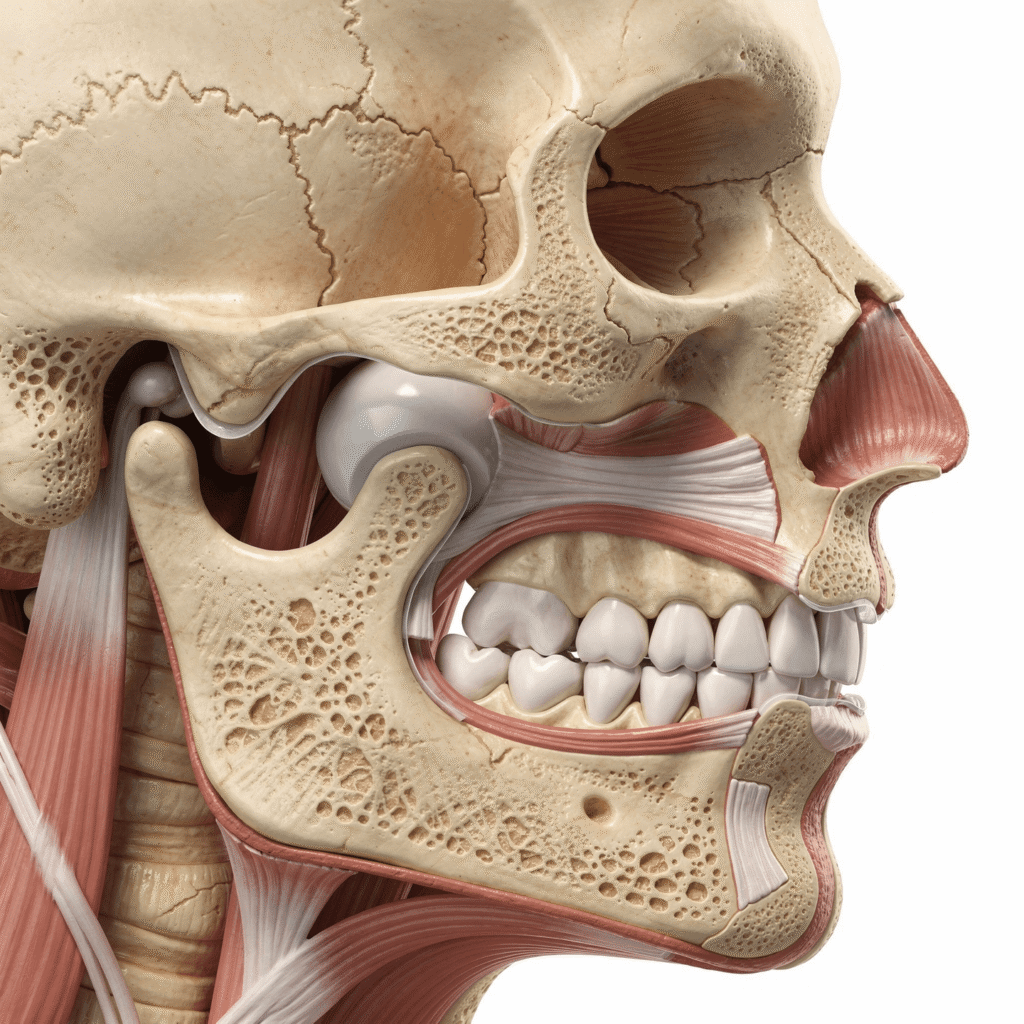
TMJ and Stress. Have you ever noticed your jaw clenching during a stressful work meeting or your teeth grinding after a tense day? You’re experiencing the powerful, often destructive, connection between stress and TMJ disorders. This relationship forms what experts call “the stress-TMJ cycle”—a self-perpetuating loop where stress causes jaw tension, which leads to pain, which creates more stress.
Understanding this cycle isn’t just academic—it’s the key to effective TMJ management. While exercises and dietary changes address the physical symptoms, stress management tackles one of the most common root causes. In this comprehensive guide, we’ll explore the science behind the stress-TMJ connection and provide practical, actionable techniques to interrupt this cycle at multiple points.
Whether you experience occasional jaw tension during busy periods or chronic TMJ pain exacerbated by stress, these evidence-based strategies can help you regain control and find lasting relief.
Section 1: The Science: How Stress Physically Affects Your Jaw
The Neuromuscular Response
When stressed, your body activates the “fight-or-flight” response, causing:
- Increased muscle tension throughout the body
- Elevated cortisol levels (stress hormone)
- Changes in breathing patterns (shallow chest breathing)
- Increased inflammation throughout the body
Specific Jaw Mechanisms
- Masseter Muscle Activation: Your primary chewing muscles tense
- Temporalis Contraction: Temple muscles tighten (often felt as headaches)
- Bruxism Trigger: Unconscious teeth grinding or clenching
- Reduced Blood Flow: Tensed muscles receive less oxygen
- Altered Posture: Stress often leads to forward head position
Stress → Muscle Tension → Jaw Pain → Poor Sleep → More Stress
↑ ↓
←←←←←←←←←←←←←←←←←←←←←←←←←←←←←←←←
Research Findings:
- 70-85% of TMJ patients report stress as a significant factor
- Stress can increase pain perception by up to 30%
- Cortisol directly increases inflammation in joints
Section 2: Recognizing Your Personal Stress-TMJ Patterns
Common Triggers to Identify:
- Work-Related Stress: Deadlines, meetings, difficult conversations
- Emotional Stress: Relationship issues, family conflicts, grief
- Physical Stress: Poor sleep, illness, overexertion
- Environmental Stress: Noise, clutter, uncomfortable temperatures
Body Awareness Exercise
The 5-Point Jaw Check (do this 3x daily):
- Teeth: Are they touching? (They shouldn’t be at rest)
- Tongue: Is it pressed against roof of mouth or teeth?
- Lips: Are they gently closed or pressed tightly?
- Shoulders: Are they raised toward ears?
- Breathing: Is it shallow chest breathing or deep diaphragmatic?
Keeping a Stress-Jaw Diary
Track for one week:
- Time of day
- Stress level (1-10 scale)
- Jaw tension level (1-10)
- Activity/trigger
- Notes on pain/discomfort
Patterns to look for: Specific times, activities, or people that consistently trigger jaw tension.
Section 3: Immediate Relief: 5 Techniques for Acute Stress Moments
Technique 1: The 4-7-8 Breathing Method
When to use: During stressful moments, before important conversations
Steps:
- Place tongue tip behind upper front teeth
- Exhale completely through mouth
- Inhale quietly through nose for 4 seconds
- Hold breath for 7 seconds
- Exhale completely through mouth for 8 seconds
- Repeat 4 times
TMJ benefit: Relaxes jaw muscles, reduces cortisol
Technique 2: Progressive Jaw Relaxation
When to use: When you notice clenching
Steps:
- Close eyes gently
- Clench jaw gently for 5 seconds (not forcefully)
- Release completely, feeling muscles soften
- Imagine jaw getting heavier and looser
- Repeat 3 times
Visualization: Picture warm honey melting through jaw muscles
Technique 3: The “Ahhh” Release
When to use: After prolonged talking or concentration
Steps:
- Drop jaw slightly (lips stay together)
- Take deep breath in through nose
- Exhale with soft “ahhh” sound
- Feel jaw drop naturally with exhale
- Repeat 5
Tip: Place fingers on TMJ joints to feel relaxation
Technique 4: Pressure Point Release
When to use: For tension headaches or temple pain
Steps:
- Locate masseter muscles (cheeks, near jaw angle)
- Apply gentle circular pressure with fingertips
- Move to temporalis muscles (temples)
- Apply gentle upward strokes
- Duration: 2 minutes
Caution: Never press on the TMJ joint itself
Technique 5: The 60-Second Reset
When to use: Any time, anywhere (desk, car, etc.)
Steps:
- Sit or stand with good posture
- Shoulders down and back
- Chin slightly tucked
- Soften gaze
- Breathe naturally for 60 seconds
Focus: Releasing jaw weight, not controlling it
Section 4: Daily Practices: Building Stress Resilience
Morning Routine (5-10 minutes):
- Jaw Check: Upon waking, assess tension
- Gentle Stretches: Neck and jaw range of motion
- Intention Setting: “Today, I will notice and release jaw tension”
- Hydration: Warm lemon water or herbal tea
Evening Wind-Down (15-20 minutes):
- Digital Detox: No screens 1 hour before bed
- Warm Compress: 10 minutes on jaw/neck
- Gentle Yoga: Forward folds, neck stretches
- Gratitude Practice: 3 things you’re grateful for
- Jaw Positioning: Practice relaxed jaw position in bed
Weekly Stress Maintenance:
- Movement: 150 minutes moderate exercise (walking counts!)
- Nature Time: 2+ hours weekly in green spaces
- Social Connection: Quality time with supportive people
- Creative Outlet: Art, music, writing (non-work related)
Section 5: Sleep and Stress: Protecting Your Jaw at Night
The Nighttime Challenge:
- 80% of teeth grinding occurs during sleep
- Stress dreams increase muscle activity
- Poor sleep quality lowers pain threshold
Pre-Sleep Ritual for TMJ:
- 8 PM: Begin winding down
- 9 PM: Warm shower or bath
- 9:30 PM: Gentle jaw massage
- 10 PM: In bed with book (not screen)
- 10:15 PM: 4-7-8 breathing exercise
- 10:30 PM: Sleep position check
Optimal Sleep Positions:
- Back Sleeping: Best for TMJ, use cervical pillow
- Side Sleeping: Use contoured pillow to support neck
- Avoid: Stomach sleeping (worst for neck and jaw)
Night Guard Considerations:
- Custom-fit from dentist works best
- Soft guards may encourage more chewing motion
- Hard acrylic guards provide better protection
- Important: Address stress alongside night guard use
Section 6: Workplace Strategies for TMJ Sufferers
Ergonomic Setup:
- Monitor Height: Top at or slightly below eye level
- Chair Position: Feet flat, knees at 90 degrees
- Keyboard/Mouse: Elbows at 90-100 degrees
- Phone: Headset instead of cradling
The 20-20-20 Rule for Jaw Health:
Every 20 minutes:
- Look 20 feet away for 20 seconds
- Perform 2 jaw releases (Technique 3)
- Take 2 deep diaphragmatic breaths
Meeting and Call Strategies:
- Before: 2-minute breathing exercise
- During: Keep water nearby, sip regularly
- After: 1-minute jaw relaxation
- Note Taking: Use voice recorder if extensive writing causes neck tension
Lunch Break Practices:
- Eat away from desk
- Choose TMJ-friendly foods
- 5-minute walk after eating
- 2-minute meditation before returning to work
Section 7: Mindfulness and Meditation Specifically for Jaw Tension
Body Scan for Jaw Awareness (10 minutes):
- Find comfortable seated position
- Start with feet, move upward slowly
- Spend extra time on jaw area (2-3 minutes)
- Notice without judgment: “My jaw feels tight”
- Imagine breathing into the tension
- Imagine exhaling the tension out
Loving-Kindness Meditation for Self-Compassion:
Many TMJ sufferers are hard on themselves. Try:
- “May I be free from pain and suffering”
- “May I be patient with my healing process”
- “May I accept what I cannot change today”
Mindful Eating Practice:
- Before eating: 3 conscious breaths
- First bite: Notice texture, temperature, flavor
- Chew slowly (20-30 times per bite)
- Put utensil down between bites
- Notice when full (prevokes overeating and extra chewing)
Apps and Resources:
- Insight Timer: Free meditations for pain and stress
- Calm: Sleep stories and relaxation exercises
- Breathe2Relax: Specifically for diaphragmatic breathing
- YouTube: Search “TMJ relaxation meditation”
Section 8: When to Seek Professional Help for Stress-Induced TMJ
Signs You Need Additional Support:
- Symptoms worsening despite self-care
- Depression or anxiety accompanying TMJ pain
- Inability to perform daily activities
- Sleep disruption lasting weeks
- Relationship strain due to pain/stress cycle
Types of Professionals Who Can Help:
- Therapist/Counselor: For stress management techniques
- Physical Therapist: For posture and muscle retraining
- TMJ Specialist: For comprehensive treatment plans
- Biofeedback Therapist: For learning to control muscle tension
- Acupuncturist: For some patients (evidence mixed but promising)
Cognitive Behavioral Therapy (CBT) for TMJ:
- What it is: Identifying and changing thought patterns
- Effectiveness: 60-80% improvement in pain-related distress
- Duration: Typically 8-12 sessions
- Focus: Breaking pain-fear-avoidance cycles
Biofeedback Therapy:
- Sensors measure muscle tension
- Learn to consciously relax muscles
- Can reduce clenching by 50-70%
- Often covered by insurance
Section 9: Creating Your Personalized Stress-TMJ Management Plan
Step 1: Assessment (Week 1)
- Complete stress-jaw diary
- Identify top 3 triggers
- Note most effective relief techniques
Step 2: Foundation (Week 2-3)
- Implement 1 morning and 1 evening practice
- Choose 2 immediate relief techniques to master
- Make 1 ergonomic adjustment at work
Step 3: Integration (Week 4-8)
- Add weekly stress maintenance activities
- Refine techniques based on what works
- Address sleep quality systematically
Step 4: Maintenance (Ongoing)
- Monthly check-in on progress
- Adjust as life circumstances change
- Celebrate small victories
Sample Plan Template:
Morning (7 AM):
- Jaw check + gentle stretches (3 min)
- Intention setting (1 min)
- Warm herbal tea
Workday:
- 20-20-20 rule every hour
- Lunch away from desk
- Afternoon breathing break (2 PM)
Evening (7 PM):
- Digital detox starts
- Warm compress (8 PM)
- Gentle yoga (8:15 PM)
- Reading (9 PM)
- 4-7-8 breathing in bed
Weekly:
- 3 walks in nature
- 1 social connection activity
- Sunday planning session
Section 10: Frequently Asked Questions
Q1: Can reducing stress completely eliminate TMJ pain?
A: For some people with primarily stress-induced TMJ, yes. For others with structural issues, stress management significantly reduces but may not eliminate pain.
Q2: How long until I see improvement from stress reduction?
A: Many notice some improvement within 2-4 weeks, with more significant changes after 2-3 months of consistent practice.
Q3: What if I don’t feel stressed but still have TMJ?
A: Stress can be subconscious. Also, consider other factors like posture, diet, or structural issues. Some people carry tension without recognizing it as “stress.”
Q4: Are there medications that help with stress-related TMJ?
A: Sometimes. Muscle relaxants, anti-anxiety medications, or low-dose antidepressants may be prescribed short-term, but they’re not long-term solutions.
Q5: Can meditation really change physical pain?
A: Yes. Meditation can reduce pain perception by 30-50% for some people by changing brain processing of pain signals.
Q6: What’s the most important stress reduction technique for TMJ?
A: Diaphragmatic breathing—it’s immediately accessible and directly counteracts the stress response.
Q7: How do I know if my TMJ is stress-related or structural?
A: A dentist or TMJ specialist can evaluate. Clues: If pain fluctuates with stress levels, improves with relaxation, and is worse in mornings, stress is likely a major factor.
Q8: Can stress cause TMJ or just worsen it?
A: Both. Chronic stress can contribute to developing TMJ disorders and definitely worsens existing conditions.
Q9: What about supplements for stress and TMJ?
A: Magnesium glycinate, L-theanine, and ashwagandha may help some people, but consult a healthcare provider first.
Q10: Is it normal to feel frustrated trying to manage stress and TMJ?
A: Completely normal. Healing isn’t linear. Be patient and compassionate with yourself. Celebrate small progress.
Breaking the stress-TMJ cycle is less about eliminating stress entirely (an impossible goal in modern life) and more about changing your relationship with stress and how your body responds to it. By incorporating even a few of these strategies consistently, you can significantly reduce the impact of stress on your jaw health.
Remember that managing stress-induced TMJ is a skill that improves with practice. Start with just one technique that resonates with you, master it, then add another. The goal isn’t perfection but progress—reducing both the frequency and intensity of TMJ flare-ups over time.
As you implement these strategies, you may notice benefits beyond your jaw health: improved sleep, better mood, increased energy, and greater resilience in facing life’s challenges. For continued support in your TMJ journey, explore our resources on exercises, nutrition, and sleep optimization.