Why Does My Jaw Click? You’re enjoying a quiet meal when suddenly—click. Or perhaps it’s that morning yawn that triggers an audible pop, leaving you wondering if something’s wrong. Jaw clicking is remarkably common, affecting millions of people worldwide. But what does it actually mean? Is it a sign of serious trouble, or just a harmless quirk of your anatomy? The answer, as with many things related to health, is: it depends.
The Anatomy of a Click: What’s Happening Inside Your Jaw
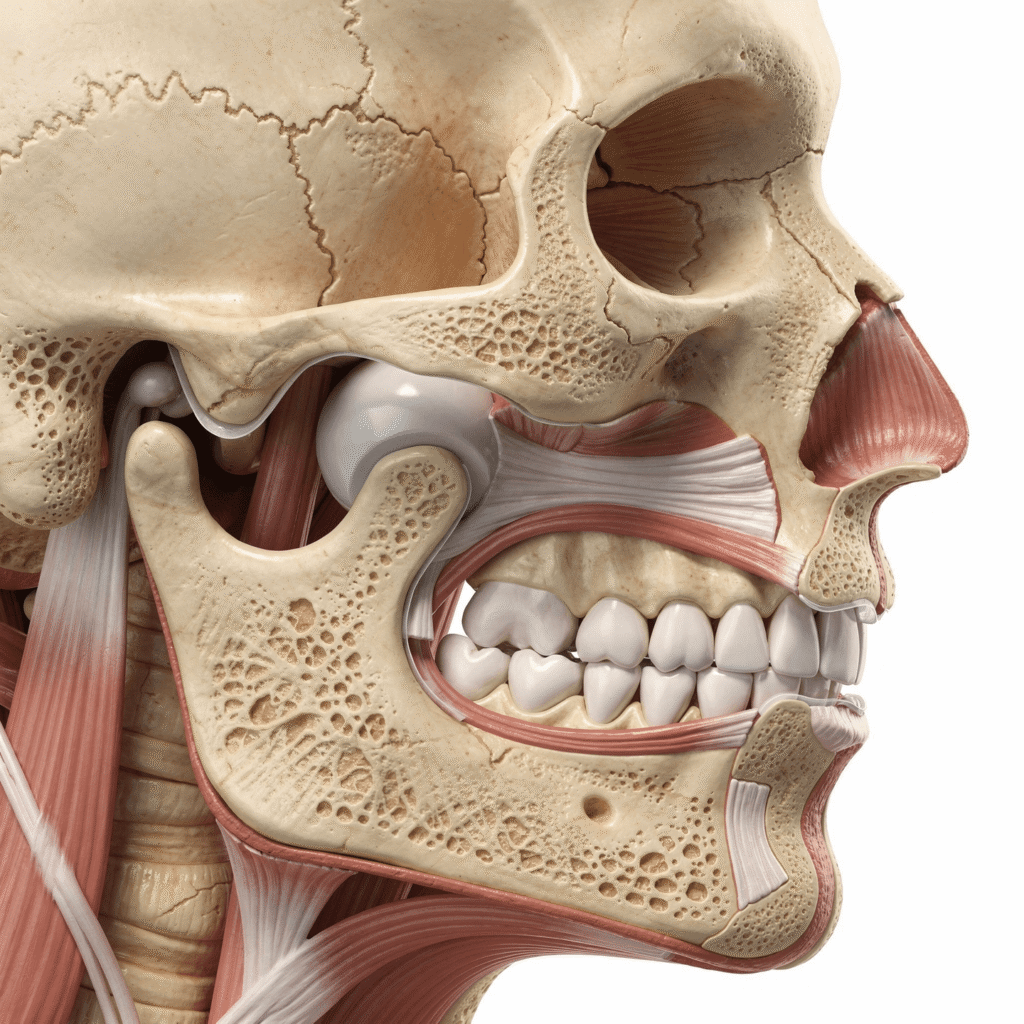
To understand why your jaw clicks, you first need to understand its remarkable design. Your temporomandibular joint (TMJ) is one of the most complex joints in your body—a sliding hinge that connects your jawbone to your skull . Between these bones sits a small disk of cartilage that acts as a cushion, allowing smooth movement as you talk, chew, and yawn.
When everything works perfectly, this disk glides seamlessly with each movement, and you never notice it.
When something goes slightly off, the disk can momentarily slip out of place. As you open your mouth, the jawbone slides over the disk’s edge and then snaps back into position, creating that clicking or popping sound you hear. This is technically called “disc displacement with reduction”—a mouthful of a term that simply means the disk moves but then returns to normal position .
How Common Is Jaw Clicking? (You’re Not Alone)
If your jaw clicks, you’re in good company. Research shows that jaw clicking is one of the most common signs of temporomandibular dysfunction (TMD), affecting a significant portion of the population .
- A study of 33 adolescent patients with TMJ issues found that 81.8% experienced clicking when opening their mouth widely .
- In a long-term study of Japanese children and adolescents, 48% of subjects showed TMJ clicking at some point during the observation period. Importantly, for most (42%), the clicking was temporary and resolved on its own .
- Research consistently shows that females are more frequently affected by TMJ disorders than males, with ratios ranging from 3.4:1 to as high as 9:1 in some studies .
- The clicking can be “reciprocal” (occurring both when opening and closing) or a single pop .
The takeaway? Jaw clicking is extremely common, and in many cases, it’s not a cause for alarm.
7 Common Causes of Jaw Clicking
1. Disc Displacement with Reduction (The Most Common Cause)
This is the classic “clicking jaw.” The articular disk slips forward, and when you open your mouth, the condyle (the ball part of the joint) moves forward and snaps back onto the disk, creating a click . This type of clicking is often painless and may not require treatment if it’s not bothering you.
2. General Joint Hypermobility (Ligament Laxity)
Some people are naturally “double-jointed” or have ligaments that are more flexible than average. This condition, called general joint hypermobility (GJH), affects the TMJ as well. Research has found a significant association between reciprocal clicking and GJH, with an odds ratio of 9.6—meaning people with hypermobility are nearly 10 times more likely to develop clicking . Local joint hypermobility (LJH) in the jaw itself carries an even higher risk (odds ratio of 38) .
3. Muscle Tension and Bruxism
Chronic stress often leads to unconscious teeth grinding or clenching, known as bruxism. This constant tension in the jaw muscles can alter the dynamics of the joint, pulling it slightly out of alignment and contributing to clicking .
4. Trauma or Injury
A direct blow to the jaw, whiplash from a car accident, or even prolonged dental work can damage the joint structures, leading to clicking that may persist long after the initial injury heals .
5. Arthritis
Both osteoarthritis (wear-and-tear arthritis) and rheumatoid arthritis (an inflammatory autoimmune condition) can affect the TMJ. As the cartilage breaks down or inflammation increases, the smooth gliding motion of the joint becomes rough, potentially causing crepitus (a grinding sound) or clicking .
6. Occlusal Issues (Bite Problems)
When your teeth don’t fit together properly (malocclusion), your jaw may shift to find a comfortable position, potentially straining the joint and leading to clicking sounds over time .
7. Rare Anatomical Variations
In rare cases, clicking may result from anatomical variations like a bifid mandibular condyle, where the head of the jawbone is duplicated. This condition affects only 0.31% to 1.82% of the population but can cause pain, clicking, and limited movement .
When Clicking Is Probably Harmless (Green Flags)
Not all jaw clicking requires intervention. In fact, almost 50% of TMD patients may not need any treatment at all, as symptoms often resolve within a year of onset . You’re likely in the “safe zone” if:
- The click is painless: No discomfort accompanies the sound
- No limitation: You can open and close your mouth fully
- Occasional occurrence: It doesn’t happen with every movement
- No locking: Your jaw never gets stuck open or closed
- No recent trauma: The clicking started gradually, not after an injury
Research on children and adolescents confirms that most clicking is temporary—in one study, 42% had clicking that resolved on its own, and only 5% had persistent clicking lasting throughout the observation period .
When Clicking Signals a Problem (Red Flags)
The clicking itself isn’t the problem—it’s what accompanies it. Seek professional evaluation if you experience:
- Pain with the click: Especially if it’s sharp or worsens over time
- Locking: Your jaw gets stuck open or closed and requires manipulation to move
- Limited opening: You can’t open your mouth as wide as before (less than 35-40mm is concerning)
- Crepitus: A grating or grinding sound, which may indicate arthritis
- Changes in bite: Your teeth don’t fit together the way they used to
- Facial swelling: Any visible swelling near the joint
- Persistent clicking: Especially if it’s getting worse, not better
In one study of 71 TMD patients, pain was the most frequent chief complaint, followed by limitation of movement. Many patients had multiple symptoms simultaneously .
Self-Care Strategies for Jaw Clicking
If your clicking falls into the “probably harmless” category but still bothers you, these conservative strategies may help:
1. The Soft Food Diet
Give your jaw a rest by avoiding hard, crunchy, or chewy foods for a few weeks. Think smoothies, soups, mashed potatoes, and scrambled eggs. This reduces mechanical stress on the joint .
2. Heat Therapy
Apply a warm, moist compress to the sides of your face for 10-15 minutes, especially before meals. Heat increases blood flow and relaxes tight muscles.
3. Jaw Exercises (Gentle!)
- The Goldfish Stretch: Place tongue on the roof of your mouth, open and close partially (6-8 times)
- Resisted Opening: Place thumb under chin, gently resist as you open (hold 3-5 seconds)
- Side-to-Side Glide: Slowly move jaw side to side (6-8 repetitions)
For a complete exercise guide, see our 10 Simple TMJ Exercises You Can Do at Home Today
4. Posture Awareness
Forward head posture strains the jaw. Practice sitting up straight with your ears aligned over your shoulders. Chin tucks are excellent for this .
Learn more in our guide on TMJ and Posture: Fix Your Alignment to Relieve Jaw Pain
5. Stress Management
Since stress drives bruxism and clenching, techniques like diaphragmatic breathing, meditation, or gentle yoga can indirectly reduce jaw tension .
Explore TMJ and Stress: Breaking the Cycle of Jaw Tension for more strategies
6. Avoid Parafunctional Habits
- Stop chewing gum entirely
- Don’t bite your nails or lips
- Avoid chewing on pens or pencils
- Don’t cradle the phone between ear and shoulder
Medical and Professional Treatments
If conservative measures fail or your symptoms include red flags, several professional treatments may help:
1. Physical Therapy
Manual therapy, mobilization techniques, and specific exercises prescribed by a trained therapist can be highly effective for TMD .
2. Oral Splints (Night Guards)
Custom-fitted appliances can reduce bruxism and take pressure off the joint. Over-the-counter guards are generally not recommended as they can worsen misalignment .
3. Medications
- NSAIDs (ibuprofen, naproxen) for pain and inflammation
- Muscle relaxants for short-term use during flare-ups
- Low-dose antidepressants for pain modulation
4. Arthrocentesis
For internal derangements that don’t respond to conservative treatment, arthrocentesis—a minimally invasive procedure where the joint is flushed with sterile fluid—has shown significant improvement in pain, mouth opening, and clicking .
5. Cognitive Behavioral Therapy (CBT)
Since stress and anxiety play such a large role in TMD, CBT can help patients develop coping strategies and break the pain-stress cycle .
FAQ: Your Jaw Clicking Questions Answered
Q1: Why does my jaw click only when I chew on one side?
A: This often indicates uneven pressure or muscle tension on that side. It could be related to your dominant chewing side, dental work on that side, or simply that you’re more aware of the sound when eating.
Q2: Can jaw clicking go away on its own?
A: Absolutely. Research shows that most clicking, especially in younger people, is temporary and resolves without treatment . In adults, about half of TMD cases resolve within one year with minimal intervention .
Q3: Is clicking related to tinnitus (ear ringing)?
A: There is a known connection. The TMJ is located very close to the ear, and tension in the jaw muscles can refer sensation to the ear, sometimes causing tinnitus-like symptoms .
Q4: Should I stop chewing gum?
A: Yes. Gum chewing is essentially a continuous workout for your jaw muscles. If you have clicking, it’s best to avoid gum entirely.
Q5: My jaw clicks but doesn’t hurt. Should I still see a doctor?
A: Not necessarily. Painless clicking with no other symptoms is generally considered benign. However, if it bothers you or you notice any changes, a consultation can provide peace of mind.
Q6: Can a night guard stop the clicking?
A: Night guards primarily address clenching and grinding, which can reduce muscle tension and may indirectly improve clicking. However, they don’t physically reposition the disk. For clicking specifically, results vary .
Q7: Is jaw clicking more common in women?
A: Yes, significantly. Studies consistently show that TMD affects women more frequently than men, with ratios ranging from 3:1 to 9:1 . Hormonal differences may play a role.
Q8: Can children have jaw clicking?
A: Yes, TMJ sounds are common even in young children. One study found a prevalence of 16.7% in preschool children . As with adults, most cases are benign and temporary .
Q9: What’s the difference between clicking and crepitus?
A: Clicking is typically a single, distinct pop or snap. Crepitus is a grating, grinding, or gravelly sensation, often associated with arthritis or disc perforation .
Q10: When should I see a specialist?
A: Consider a TMJ specialist or dentist if you have: pain accompanying the click, locking, difficulty opening, or if the clicking interferes with your quality of life. Most TMD responds well to conservative therapy, but persistent symptoms warrant evaluation .
Conclusion: Listen to Your Jaw, But Don’t Fear It
That click when you yawn or chew can be unsettling, but for most people, it’s simply your jaw’s way of communicating—not a cry for help. The vast majority of jaw clicking is harmless, often temporary, and rarely progresses to more serious problems.
The key is to listen to what your jaw is telling you. If the click is painless and occasional, consider it a quirk of your anatomy and focus on good self-care: soft foods when needed, stress management, and gentle exercises. If pain, locking, or limitation join the chorus, that’s your signal to seek professional guidance.
Your jaw has carried you through countless meals, conversations, and yawns. A little click now and then doesn’t diminish its remarkable design—it just reminds you that even the most complex machinery sometimes makes a little noise.
For comprehensive TMJ care, explore our complete library at NaturalWellness30.com
Medical Disclaimer: This article provides educational information about jaw clicking and is not medical advice. Always consult with qualified healthcare professionals for proper diagnosis and treatment.