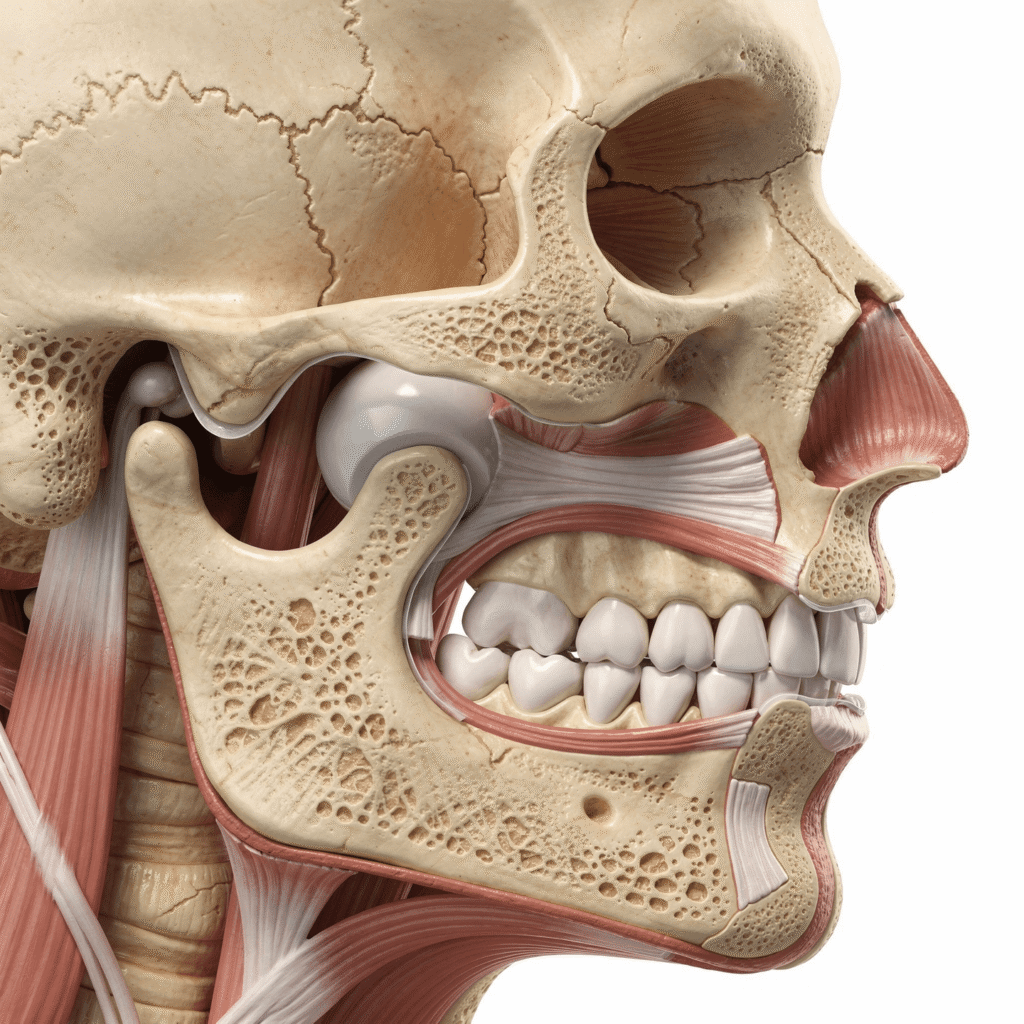
Does your jaw hurt the moment you wake up? Do you hear clicking sounds every time you chew? Have you tried what feels like everything, and the pain still won’t fully go away?
Here’s a perspective that’s often missed: TMJ discomfort is rarely just an isolated jaw problem. It’s frequently connected to your posture, stress levels, sleep, and overall muscle tension — which is why treating the jaw alone sometimes isn’t enough.
This guide walks through 7 natural areas that, combined, tend to make the biggest difference for people managing TMJ symptoms at home — alongside, not instead of, professional care when it’s needed.
| ℹ️ Disclosure: This post contains affiliate links. If you purchase through them, we may earn a small commission at no extra cost to you. We only link products we’d genuinely consider ourselves. |
⏰ Read time: 10 minutes
👇 Get Your Free TMJ Relief Checklist
Want this organized as a daily/weekly tracker to print? [Download the free checklist at the end of the article 👇] — it includes a morning jaw routine, anti-inflammatory food ideas, sleep position tips, and an evening relaxation protocol.
🎯Quick Self-Check
Try this before reading on:
Place two fingers (index + middle) in front of your ears, on your jaw joints. Open and close your mouth slowly. Notice if you feel:
- Clicking or popping
- Uneven movement side to side
- Pain or tenderness
- Limited opening
If you noticed one or more of these, it’s worth reading on — and worth mentioning to a dentist or doctor at your next checkup even if symptoms are mild.
❌ Why Treating the Jaw Alone Often Isn’t Enough
Standard TMJ treatments each solve part of the puzzle, but not always the whole thing:
| Treatment | What it does | What it can miss |
|---|---|---|
| Pain medication | Reduces pain short-term | Doesn’t address why you’re clenching |
| Night guard | Protects teeth from grinding damage | Doesn’t stop the underlying tension |
| Muscle relaxants | Eases muscle tightness temporarily | Doesn’t touch the stress trigger |
| Surgery | Addresses structural issues | Doesn’t change daily habits that caused strain |
None of these are wrong — they’re often genuinely necessary. But a lot of people find they get more complete, lasting relief when they also address the lifestyle factors behind the tension: stress, posture, sleep, diet, and breathing habits.
🌿 The 7 Areas Worth Addressing
Think of these as complementary angles, not a strict checklist you have to complete perfectly. Even improving two or three tends to help.
🏃 Physical: Exercises & Self-Massage
Your jaw muscles are often overworked and tight. A short daily routine can help build range of motion and release tension.
A good mat makes daily floor stretches and jaw work more comfortable:
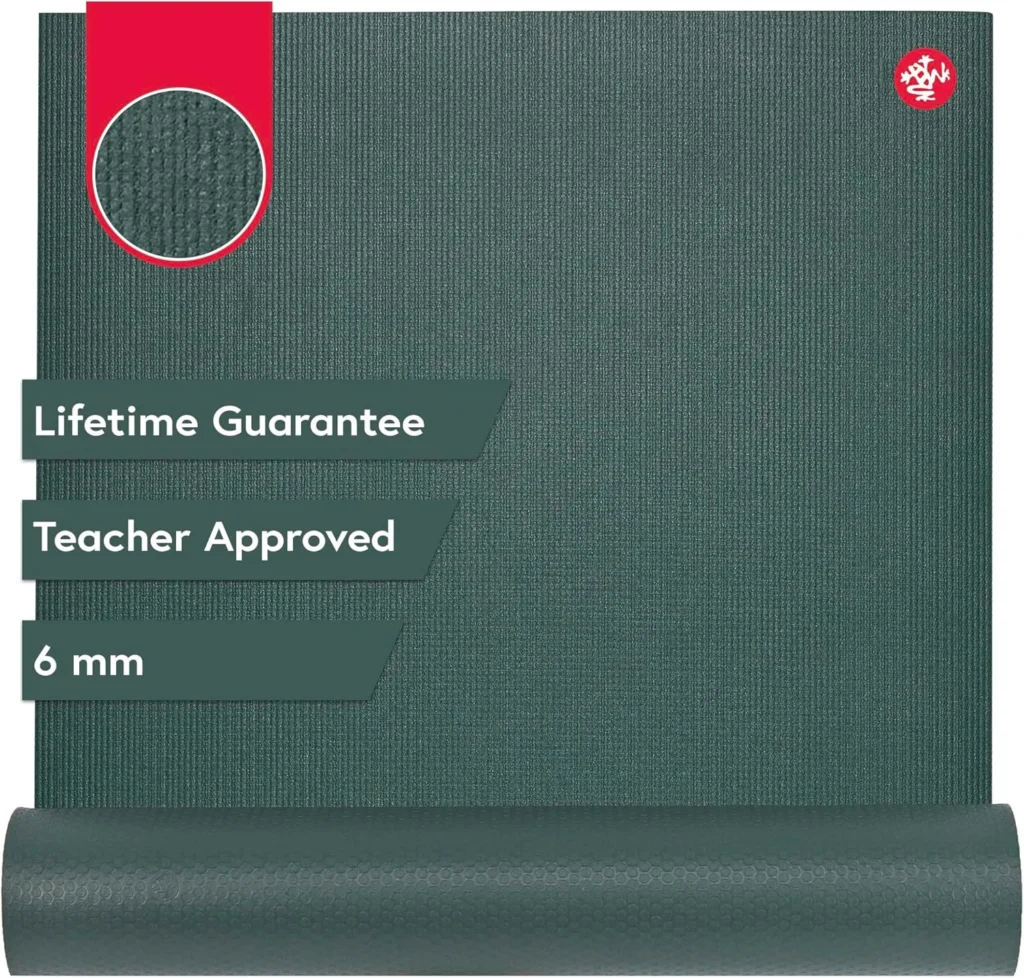
Manduka PRO Yoga Mat
★★★★★
4.6/5
- Lifetime guarantee
- Dense cushioning (joint support!)
- 6mm thick
YOGA MATS FOR TMJ EXERCISES

Gaiam Yoga Mat
★★★★★
4.7/5
- Extra thick (6mm
- Non-slip texture
- They are for the cushioning your joints need
YOGA MATS FOR TMJ EXERCISES
5-minute routine, 2–3x daily:
Relaxed jaw breathing (1 min): Tongue on the roof of the mouth, teeth slightly apart, lips closed. Breathe slowly through the nose, focusing on releasing jaw tension.
Goldfish partial opening (1 min): Tongue on the roof of the mouth, one finger in front of the ear, one on the chin. Drop the jaw halfway, then close. Repeat 10 times.
Chin tucks (1 min): Sit or stand straight, pull your chin straight back (“double chin” motion), hold 5 seconds, repeat 10 times. Helps correct forward head posture, a common contributor to jaw strain.
Side-to-side resistance (1 min): Hand on the side of your jaw, gently push your jaw sideways against it, hold 5 seconds, repeat 5x each side
Tongue-up stretch (1 min): Tongue on the roof of the mouth, slowly open until you feel a gentle stretch (not pain), hold 5 seconds, repeat 5–10 times.
Stop if: you feel sharp pain or hear loud popping — that’s worth mentioning to a professional rather than pushing through.
Self-massage (5–10 min, evening): Warm compress (2 min) → masseter massage in small circles (clench your teeth to find the muscle, 2–3 min each side) → temple massage (1–2 min) → neck release where it meets the skull (2–3 min).
🌡️ Physical: Targeted Relief & Self-Massage Your jaw muscles are often overworked, tight, and inflamed. While targeted exercises help build long-term mobility, your immediate priority when facing an acute flare-up is reducing localized inflammation and soothing the nervous system. A specialized, hands-free facial compress makes managing daily jaw pain significantly easier and more comfortable than holding a standard ice pack against your face.
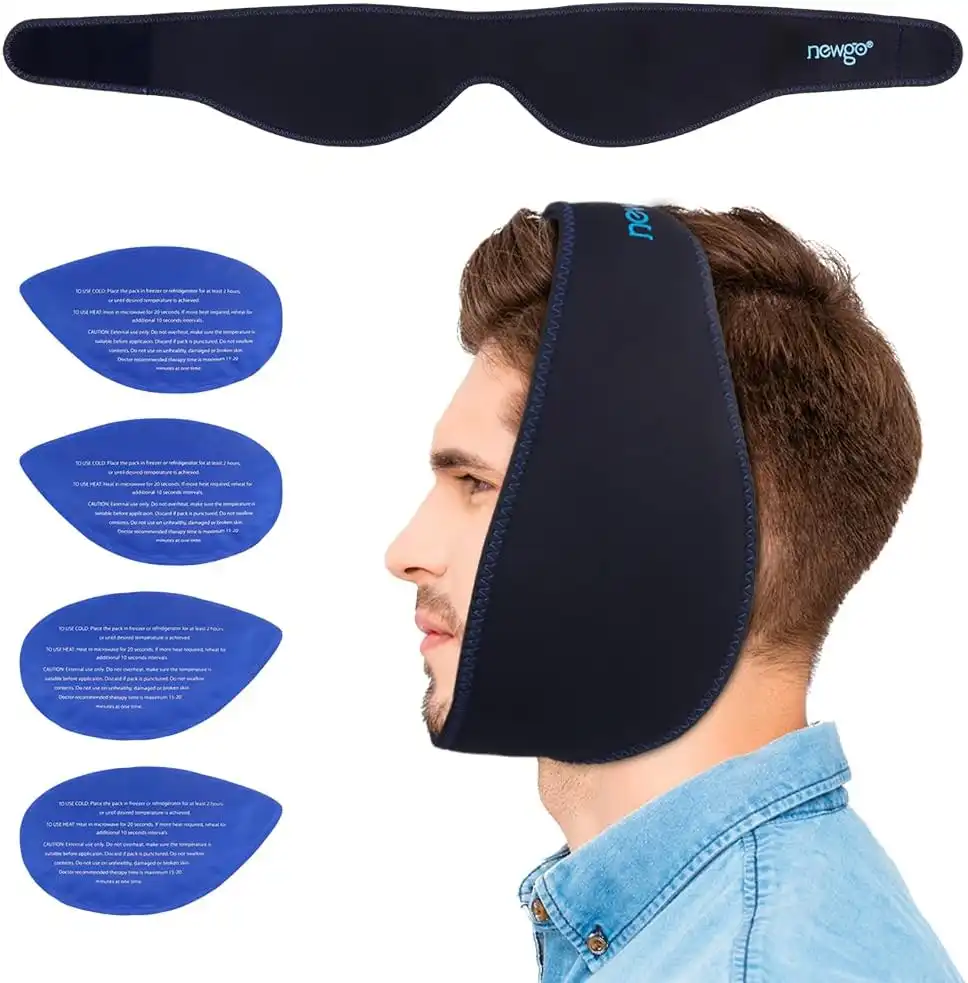
Teeth Ice Pack Head
★★★★★
4.6/5
FACIAL COMPRESS FOR IMMEDIATE TMJ RELIEF
- Hands-Free Design: Adjustable Velcro strap wraps securely around your head so you can rest, work, or read.
- Dual Therapy: Includes reusable gel packs that can be frozen for cold therapy (to reduce acute swelling) or microwaved for deep heat therapy (to relax stiff masseter muscles).
- Targeted Coverage: Perfectly shaped to hug both sides of your jaw joints and temples simultaneously.
**How to use it for maximum relief:**
**Morning Stiff Jaw: Microwave the gel packs for 10-15 seconds. Apply comfortable heat to your jaw for 5 minutes *before* starting your morning stretching routine to loosen tight connective tissues.
**Evening Throb/Post-Chewing Pain: Freeze the packs for at least 2 hours. Apply cold therapy for 10-15 minutes after dinner to numb sharp pain and stop the inflammation cycle before bed.
🍎 Nutritional: Anti-Inflammatory Eating
TMJ discomfort often has an inflammatory component, so diet can play a supporting role.
Foods to lean on:
| Food | Why |
|---|---|
| Fatty fish (salmon, sardines) | Omega-3s, generally anti-inflammatory |
| Leafy greens | Magnesium |
| Berries | Antioxidants |
| Turmeric | Contains curcumin |
| Walnuts | Omega-3s + magnesium |
| Green tea | Contains EGCG |
| Avocado, sweet potato, beans, olive oil | Healthy fats, fiber, minerals |
Foods that tend to make things worse: added sugar, refined carbs, trans fats, heavily processed foods, excess caffeine, and alcohol — plus, separately, anything hard, chewy, or crunchy (carrots, ice, gum, steak, chips) that puts direct mechanical stress on the joint regardless of inflammation.
A sample day, favoring soft textures and anti-inflammatory ingredients: scrambled eggs with spinach and turmeric for breakfast; mashed/flaked salmon with quinoa and steamed broccoli for lunch; ground turkey with mashed sweet potato and sautéed greens for dinner; Greek yogurt with berries or a smoothie for snacks.
Supplements people commonly use:
| Supplement | Typical dose | Why |
|---|---|---|
| Magnesium glycinate | ~400mg/day | Muscle relaxation |
| Omega-3 (fish oil) | 2-3g/day | Anti-inflammatory |
| Vitamin D | 2000-4000 IU | Often low in the general population — worth testing |
| Turmeric/curcumin | 500-1000mg | Anti-inflammatory |

Nordic Naturals Ultimate Omega
★★★★★
4.7/5
BEST OMEGA-3 SUPPLEMENTS FOR TMJ:
High-quality fish oil reduces inflammation by up to 55%
- 1280mg Omega-3 per serving
- Molecularly distilled (removes mercury)
- Lemon-flavored (no fishy burps!)
- Friend of the Sea certified

Sports Research Omega-3 + Vitamin D3 + K2
★★★★★
4.8/5
Why this combo rocks: Vitamin D deficiency is common in TMJ patients.
Timeline: 4-6 weeks for full anti-inflammatory effect
- Triple Strength Omega-3 (1250mg EPA & DHA)
- BONUS: Vitamin D3 + K2 included (perfect for TMJ!)
- Burpless formula (no fishy aftertaste)
🧘 Mental: Stress & Tension
A large share of jaw clenching is an unconscious stress response — you can do everything else right and still struggle if stress isn’t addressed.
Box breathing (5 min, 3x daily): Inhale 4 counts, hold 4, exhale 4, hold 4. Repeat 10 cycles. Helps activate the body’s relaxation response.
Jaw-focused meditation (10 min daily): Sit comfortably, scan your body for tension with extra attention on the jaw, consciously release it, breathe naturally. Apps like Headspace, Calm, or Insight Timer can guide this.
Progressive muscle relaxation (15 min, before bed): Tense and release each muscle group for 5 seconds, working from feet up to the jaw and face — spend extra time consciously releasing the jaw completely.
Hourly jaw checks: Set a phone reminder each hour asking “is your jaw clenched?” If so, relax it, reset your tongue to the roof of your mouth, and take a few deep breaths. Many people find this simple habit alone reduces unconscious clenching over time.
💤 Sleep: Position & Routine
Best position: back sleeping — avoids lateral pressure on the jaw. Use a cervical support pillow, arms relaxed at your sides.
Workable: side sleeping — use a contoured pillow that doesn’t compress the jaw, and alternate sides.
Worst: stomach sleeping — puts sustained, direct pressure on the joint all night.
A simple wind-down routine: screens off 30 min before bed → warm compress and jaw stretches (5 min each) → 4-7-8 breathing (inhale 4, hold 7, exhale 8, repeat 8x) → settle into your sleep position with tongue on the roof of the mouth, teeth slightly apart.
Other sleep basics that help: a dark, cool room (roughly 65–68°F), no caffeine after early afternoon, avoiding heavy meals close to bedtime, and a consistent sleep schedule.
🌬️ Breathing: Nasal vs. Mouth
Chronic mouth breathing tends to correlate with jaw and posture issues, since it changes tongue position and how your jaw muscles work throughout the day. Nasal breathing generally supports better tongue posture (resting on the roof of the mouth) and more relaxed facial muscles.
Worth trying: noticing whether you breathe through your mouth during the day or while working, practicing conscious nasal breathing, and keeping your tongue resting on the roof of your mouth as a default position. If mouth breathing at night is a concern, that’s worth discussing with a doctor rather than self-treating.
⚖️ Structural: Posture
Forward head posture (common with phone and computer use) shifts how your jaw sits and can add meaningful strain over a day.
Workspace basics: monitor at eye level, elbows near 90° at the keyboard, feet flat on the floor, phone held at eye level rather than looking down. Standing and stretching briefly every 30 minutes helps too.
Wall angels (1 min, 3x daily): Stand against a wall with your back, head, and shoulders touching it. Raise your arms overhead slowly while keeping contact with the wall, 10 reps.
Chin tucks: worth repeating here — 10 reps, 3x daily.
🌡️ Lifestyle: Daily Habits
Small consistent habits tend to add up more than any single big intervention:
Morning: warm compress, gentle stretches, an anti-inflammatory breakfast, a posture check. Through the day: hourly jaw awareness, nasal breathing, avoiding hard/chewy foods, staying hydrated, an ergonomic workspace. Evening: self-massage, meditation, the pre-sleep routine, sleeping on your back.
📅 Your 4-Week Approach
A reasonable way to phase things in rather than overhauling everything at once:
Week 1 — Foundation: exercise routine (2-3x/day), anti-inflammatory meals, magnesium supplement, hourly jaw checks, heat therapy.
Week 2 — Expansion: add daily meditation, the pre-sleep ritual, nasal breathing practice, an omega-3 supplement.
Week 3 — Optimization: add nightly self-massage, posture exercises, workspace ergonomics fixes, sleep position correction.
Week 4 — Integration: add breathing exercises and progressive muscle relaxation, so all 7 areas are active together.
Month 2+: keep whatever’s genuinely helping as an ongoing habit, and don’t worry about maintaining anything that didn’t make a noticeable difference for you.
Progress varies a lot from person to person — some people notice change within a couple of weeks, others take longer or need to combine this with professional treatment. There’s no universal timeline.
Tracking Your Progress
A simple weekly log can help you see patterns:
| Week | Morning Pain (1-10) | Evening Pain (1-10) | Jaw Mobility | Notes |
|---|---|---|---|---|
| 1 | ___ | ___ | Limited/Good/Great | ___ |
| 2 | ___ | ___ | Limited/Good/Great | ___ |
| 3 | ___ | ___ | Limited/Good/Great | ___ |
| 4 | ___ | ___ | Limited/Good/Great | ___ |
🧑⚕️When to Seek Professional Help
See a doctor or TMJ specialist if:
- There’s no improvement after several weeks of consistently trying this approach
- Pain is severe
- Your jaw locks frequently
- You can’t open your mouth fully
- Pain radiates to your ears, neck, or head
- Symptoms interfere with eating or talking
You might need physical therapy, a dental appliance, imaging, or a specialist evaluation — natural approaches are a good starting point for a lot of people, but they’re not a substitute for professional care when it’s needed.
👇Get Your Free TMJ Relief Checklist
Want this laid out as a printable daily/weekly tracker? [Download the free checklist 👇 ] — covers a morning jaw routine, anti-inflammatory food ideas, sleep position tips, and an evening wind-down protocol.
📥 FREE DOWNLOAD: Complete TMJ Wellness Toolkit
Get your FREE toolkit with:
✅ Printable 4-week roadmap
✅ Daily tracking sheets
✅ Exercise guide with photos
✅ Meal plans + recipes
✅ Meditation audio guide
💬 Final Thoughts
TMJ often isn’t just a jaw problem — it’s frequently connected to how your whole body handles stress, movement, and rest. Addressing physical, nutritional, mental, sleep, breathing, structural, and lifestyle factors together tends to give more complete relief than focusing on the jaw in isolation.
🔗 CONTINUE YOUR TMJ HEALING JOURNEY:
Read next:
→ TMJ Natural Remedies: Evidence-Based Approaches
→ Sleep Wellness: Natural Solutions for Better Rest
→ Holistic Mind-Body TMJ Treatment
Questions about the wellness approach? Drop a comment below! 💬
I read and respond to every single one.
Medical Disclaimer: This article is for informational purposes only and does not constitute medical advice. Always consult a qualified healthcare provider before making changes to your health regimen, especially if you have underlying medical conditions or take medications.