You’ve tried the classic advice: warm baths, switching off screens, and perfecting your evening routine. Yet, sleep remains elusive. If you’re over 30, you’ve likely noticed that a restful night isn’t as guaranteed as it once was—and science backs you up, as our natural hormone production begins to shift. Enter melatonin, the body’s ‘vampire hormone’ and one of the most talked-about supplements today. But is it the magic fix it’s claimed to be? In this guide, we’ll break down the benefits, safe dosage, and the essential facts you need to know before your next dose.
| ℹ️ Disclosure: This post contains affiliate links. If you purchase through them, we may earn a small commission at no extra cost to you. We only link products we’d genuinely consider ourselves. |
Melatonin Comparison Table
| Product | Form / Feature | Best For | Dosage per Serving | Key Advantage |
| Nature’s Bounty Melatonin Quick Dissolve | Fast-Melting Tablet | Fast sleep onset (On-the-go) | 1 mg | Dissolves in 30 seconds under the tongue—no water needed. |
| Nature Made Melatonin | Standard Tablet | Budget choice & Basic sleep onset | 3 mg | USP Verified for purity; reliable, no-frills standard option. |
| NOW Foods Liquid Melatonin | Liquid | Precision dosing & Fast absorption | 0.5 mg to 3 mg (Fully adjustable) | Perfect for custom doses and those who hate swallowing pills. |
| Natrol Melatonin Time Release | Bi-layer Tablet | Staying asleep (Preventing 3 AM wake-ups) | 3 mg (1mg immediate + 2mg slow-release) | Dual-layer tech covers both falling & staying asleep. |
| Life Extension Melatonin | Low-Dose Capsule | The MIT Protocol & No grogginess | 300 mcg (0.3 mg) | Mimics natural body levels without receptor desensitization. |
What Is Melatonin? The Body’s Natural Sleep Signal
Melatonin is often misunderstood. Contrary to popular belief, it isn’t a sedative or a “knockout pill” that forces you into unconsciousness. Instead, it is a vital hormone produced by the pineal gland—a tiny, pea-sized structure nestled deep within your brain.
Think of melatonin as your internal “nighttime messenger.” Its primary job isn’t to make you sleep, but to signal to every system in your body that the window for sleep is now open.
The Light-Dark Cycle
Our biology is deeply tied to the sun. Here is how melatonin manages your internal clock:
- As Darkness Falls: Your brain begins to ramp up production, causing melatonin levels to surge. This is why it’s often nicknamed the “Vampire Hormone”—it only emerges to do its work once the lights go out.
- As Morning Light Appears: The moment light hits your eyes, your brain sends a signal to “shut off” the supply. Levels drop sharply, helping you shake off grogginess and wake up naturally.
Understanding this distinction is crucial: Melatonin doesn’t flip a switch to turn your brain off; it simply prepares the environment for rest to happen.
📌 Key Facts You Need to Know
Pro Tip: Understanding these four pillars will help you master your sleep-wake cycle and get the most out of your rest.
- 🔔 It’s a Signal, Not a Sedative Melatonin doesn’t “knock you out” like a sleeping pill. Think of it as the official signal that tells your brain the “sleep window” is open. It prepares the body for rest rather than forcing it.
- ⏳ The Age Factor Natural production is at its highest during childhood. Unfortunately, as we cross the 30 and 40-year milestones, our pineal gland begins to produce less, which is why sleep often becomes more fragmented as we age.
- 📱 The “Blue Light” Saboteur Modern life is melatonin’s worst enemy. The blue light emitted by smartphones and laptops mimics sunlight, tricking your brain into thinking it’s midday and suppressing the natural release of your sleep hormone.
- ✈️ Modern Disruptors It’s not just light. High-stress levels (cortisol), night shifts, and international travel (jet lag) can completely desynchronize your internal clock, making supplemental melatonin a helpful tool for “resetting” your rhythm.
The Biology of Aging: Why Sleep Changes After 30
If you’ve noticed that a restful night is harder to come by than it used to be, you aren’t imagining it. There is a clear biological reason behind the shift.
Research indicates that melatonin production naturally peaks in early childhood and begins a steady decline as we move through adulthood. By the time we hit our 30s and 40s, this drop becomes significant enough to disrupt our internal clock.
The “Age-Gap” in Sleep Quality
This natural decline often manifests in four specific ways that can drain your daily energy:
- 🌑 The “Tossing and Turning” Phase: Taking longer than 30 minutes to fall asleep.
- 🕒 Fragmented Rest: Waking up multiple times throughout the night for no clear reason.
- 🌅 Early Bird Syndrome: Finding yourself wide awake at 4:00 AM or 5:00 AM, unable to drift back to sleep.
- 📉 The Depth Deficit: Spending less time in Deep Sleep (REM), leaving you feeling groggy even after 8 hours in bed.
Why it matters: This decline is the primary reason why melatonin has transitioned from a niche supplement to a staple in the wellness routines of high-performing adults over 30.
🌟 The Proven Benefits: More Than Just a “Sleep Aid”
While many think of melatonin as a light switch for the brain, its benefits are much more nuanced. Here is how it actually helps your body:
1. Mastering Your Internal Clock (Circadian Rhythm)
Melatonin is the world’s best tool for “resetting” your biological timer. It is particularly effective for:
- ✈️ Jet Lag: Quickly resetting your sleep-wake cycle after crossing multiple time zones.
- 🌙 Shift Work: Helping night-shift heroes find deep rest during daylight hours.
- 🦉 The “Night Owl” Syndrome: Clinically known as Delayed Sleep Phase, helping those who naturally can’t drift off until the early morning.
2. Falling Asleep Faster
Research consistently shows that melatonin reduces Sleep Latency (the time it takes to go from wide awake to sound asleep).
The 7-Minute Rule: Studies show melatonin reduces sleep onset by an average of 7 minutes. While that sounds modest, for someone tossing and turning for an hour, those 7 minutes are the difference between a restful night and a stressful one.
3. The “Hidden” Antioxidant Power 🛡️
Beyond sleep, melatonin is a powerhouse molecule that supports:
- Eye Health: Protecting the retina against age-related decline.
- Immune Support: Helping your body’s defense system stay sharp.
- Brain Protection: Emerging research suggests potential neuroprotective effects.
⚖️ Melatonin vs. Prescription Sleep Aids
Many people over 30 reach for heavy sedatives, but how do they compare to melatonin?
| Feature | Melatonin | Prescription Aids |
| Mechanism | Signals “Time to Sleep” | Forcefully Sedates the Brain |
| Dependency Risk | Very Low | Moderate to High |
| Next-Day Fog | Rare | Very Common |
| Habit-Forming | No | Often Yes |
| Availability | Over-the-counter | Prescription Only |
📏 Finding Your Perfect Dosage: “Less is Often More”
One of the biggest mistakes people make is thinking that a higher dose equals better sleep. With melatonin, too much can actually keep you awake.
The “Less Is More” Principle
Taking excessive doses (like 10mg) can backfire by causing vivid nightmares, next-day grogginess, or even disrupting your body’s natural production.
Quick Dosage Guide
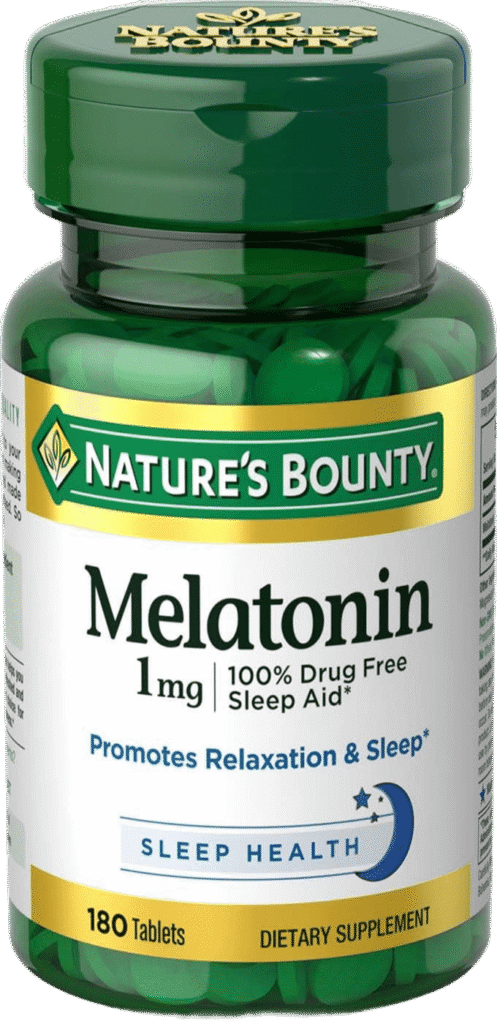
Nature’s Bounty Melatonin 1mg Quick Dissolve
★★★★★
4.6/5
BEST FOR BEGINNERS: If you’ve never taken melatonin before, THIS is where you start:
Why it’s perfect for first-timers:
- Take ONE tablet 60 minutes before bed
- Let dissolve on tongue (don’t chew or swallow)
- Works in 20-30 minutes
- Give it 3-5 nights to see full effect
- First-time melatonin users
- Those who dislike swallowing pills
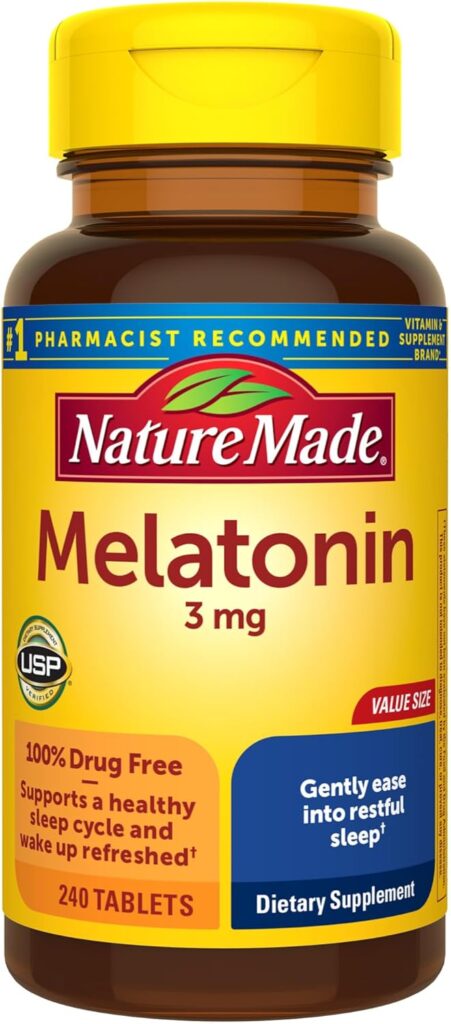
Nature Made Melatonin 3mg
★★★★★
4.7/5
STANDARD DOSE: If 1mg isn’t enough after trying it for a week, step up to this trusted mid-dose option:
PRO TIP:** Take with a small snack (banana, handful of nuts) to enhance absorption and prevent potential nausea.
- Start: Take 1 tablet (3mg) 60-90 minutes before bed
- Adjust: Can break in half for 1.5mg if 3mg feels too strong
- Max: Don’t exceed 2 tablets (6mg) without doctor approval
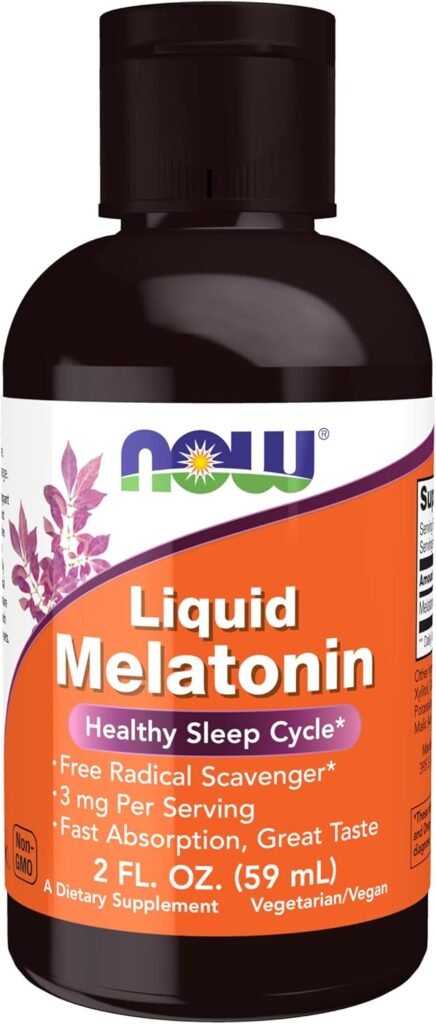
NOW Foods Liquid Melatonin 3mg
★★★★★
4.4/5
Perfect for those who want complete dose control or struggle with swallowing pills. It allows you to customize your intake from ultra-low doses up to a full serving.
- Precision Dosing: Easily adjust from 0.5mg to 3mg using the dropper to find your perfect amount.
- Fast Absorption: Liquid form enters your system quicker than traditional tablets.
- MIT Protocol Friendly: Ideal for testing the highly effective ultra-low dose method (0.3mg – 0.5mg).
- Great Taste & Formula: Natural citrus flavor, vegan, non-GMO, and kosher.
- How to use: Shake well, mix your desired dose into water or juice, and drink 60-90 minutes before bed.
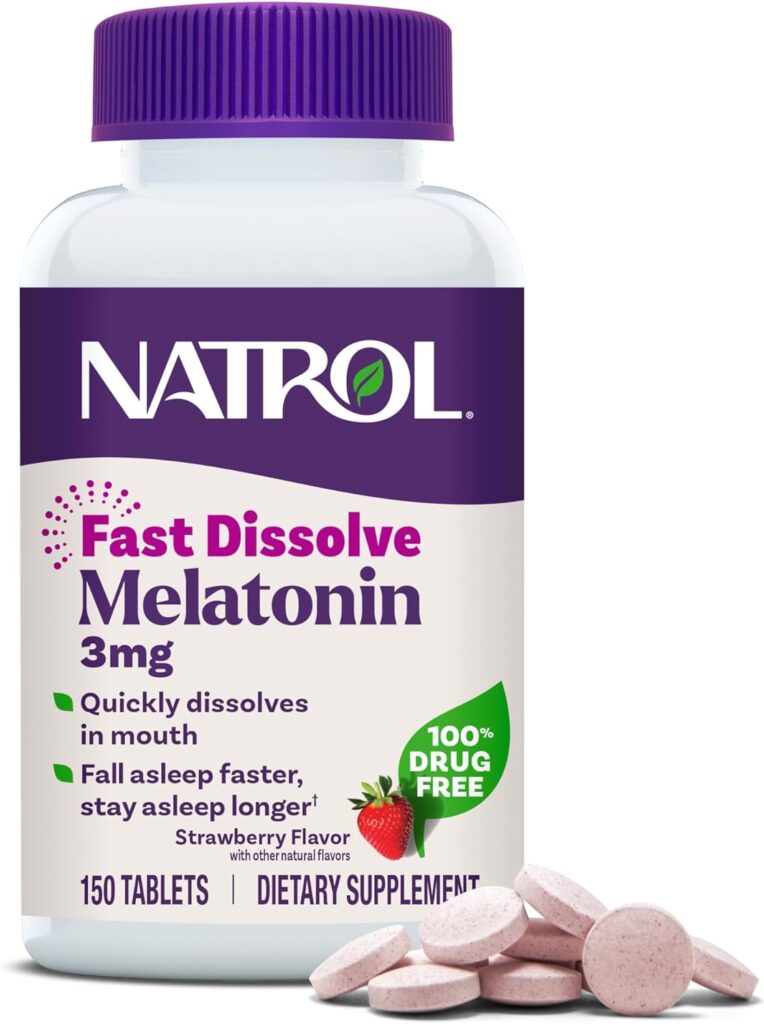
Natrol Melatonin Time Release 3mg
★★★★★
4.7/5
Perfect for those who can fall asleep but wake up in the middle of the night (around 2 AM to 4 AM) and struggle to go back to sleep.
The tablet has a special coating that releases melatonin in two phases:
Phase 1 (Immediate): 1mg releases quickly (30 min) to help you fall asleep
Phase 2 (Extended): 2mg releases slowly over 6 hours to keep you asleep
- Dual-Layer Technology: Releases 1mg immediately to help you drift off, and 2mg slowly over 6 to 8 hours.
- Extended Support: Sustains melatonin levels throughout the night to prevent midnight waking.
- Great Value: Contains 150 tablets (a 3+ month supply).
- How to use: Take 1 tablet 60 to 90 minutes before bedtime.
| Group | Starting Dose | Max Recommended |
| Adults (30-65) | 0.5 mg – 1 mg | 5 mg |
| Seniors (65+) | 0.3 mg – 1 mg | 2 mg |
| Travelers (Jet Lag) | 0.5 mg – 3 mg | 5 mg |
💡 Pro Tip: Start low and go slow. Begin with 0.5 mg about 60 minutes before bed. If you don’t feel a difference after a few nights, increase slightly.
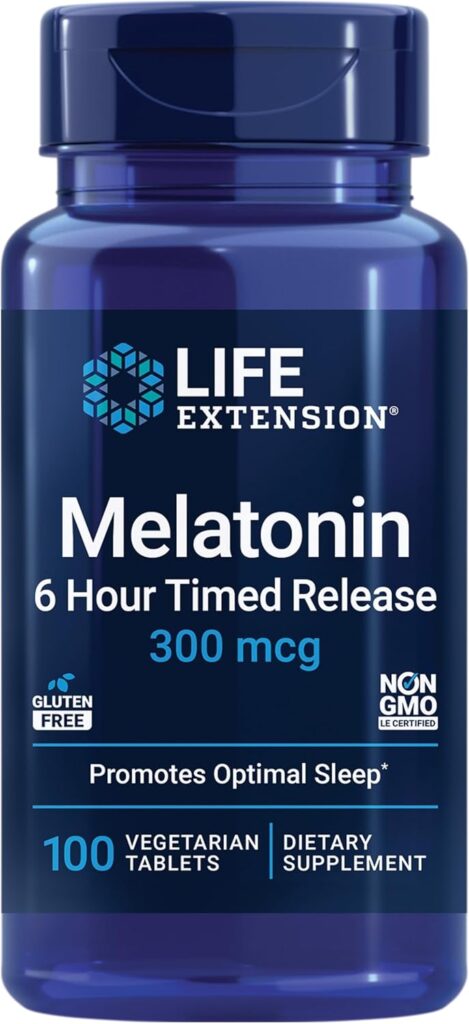
Life Extension Melatonin 300mcg
★★★★★
4.4/5
Perfect for those looking to follow the MIT Protocol using a science-backed, ultra-low dose that mimics the body’s natural nighttime melatonin production.
- Physiological Dose: Matches the exact amount (~0.3mg) your body naturally produces, preventing receptor desensitization.
- No Side Effects: Eliminates common issues caused by high doses, such as morning grogginess, vivid dreams, or tolerance buildup.
- Evidence-Based: Formulated according to MIT sleep research where less is often more effective.
- Great Value: Includes 100 capsules, providing a 3-month supply of clean sleep support.
- How to use: Take 1 capsule 60 to 90 minutes before bed. Give it 5 to 7 nights to see the full, natural results.
⚠️ Side Effects & Who Should Be Careful
Even natural supplements require caution. While generally safe, some may experience:
- 🤕 Common: Mild headache, dizziness, or nausea.
- 😴 Dosage-Related: Daytime drowsiness (usually a sign your dose is too high).
- 🌈 Rare: Vivid dreams or temporary irritability.
Who should consult a doctor first?
👶 Children & Teens: Melatonin dosing for children is different from adults and should only be used under a pediatrician’s guidance — this article is written for adults.
- 🤰 Pregnant/Breastfeeding: Insufficient safety data.
- 🛡️ Autoimmune Disorders: Melatonin can stimulate immune activity.
- 💊 On Medication: Specifically blood thinners, diabetes meds, or birth control.
🌿 The Natural Boost: 5 Ways to Help Your Body Without Pills
Before reaching for the bottle, try these lifestyle hacks to prime your pineal gland:
- 🌅 Morning Sunlight: Get 15 minutes of sun within an hour of waking up. This “sets” your timer for 16 hours later.
- 📱 The Digital Sunset: Dim your lights and use blue-light filters 2 hours before bed. Blue light is the “off switch” for melatonin.
- 🍒 Sleep-Friendly Foods: Snack on tart cherries, walnuts, or bananas—all contain natural precursors to sleep hormones.
- 🧘 Stress Management: High cortisol (stress) kills melatonin. Try a 5-minute breathing exercise before bed.
- 🌡️ Cool Your Environment: A drop in body temperature signals your brain to release more melatonin.
❓ FAQ: Your Top Questions Answered
Q: Can I take it every night? A: Short-term use (up to 3 months) is considered safe for most. For long-term use, it’s best to consult a professional to ensure there isn’t an underlying issue.
Q: Is it habit-forming? A: No. Unlike sedatives, melatonin doesn’t create a physical “craving,” though some people may develop a psychological preference for it.
Q: Why do some bottles sell 10mg if it’s too much? A: Marketing. High numbers sell, but science shows that for sleep, the “sweet spot” is usually under 3mg.
🎁Maximizing Melatonin: The Complete Protocol
Want the BEST results? Combine supplementation with these strategies:
THE 4-WEEK MELATONIN OPTIMIZATION PLAN
WEEK 1: Establish Baseline
Lifestyle:
- Dim lights 2 hours before bed
- No screens 1 hour before bed
- Room temperature 65-68°F
Track:
- Time to fall asleep
- Number of night wakings
- Morning grogginess (yes/no)
Expected: Subtle improvement, getting used to routine
WEEK 2: Optimize Timing
Supplement:
- Continue 1mg OR upgrade to 3mg if no effect
- Timing experiment: Try taking 90 minutes before bed instead of 60
Add:
- 15 minutes morning sunlight (sets circadian rhythm)
- No caffeine after 2 PM
Expected: Better sleep onset, establishing rhythm
WEEK 3: Address Sleep Maintenance
If still waking at night:
- Switch to Time Release 3mg [LINK]
If sleeping well:
- Continue current dose
Add:
- Magnesium 400mg (separate or combo) Magnesium for Sleep and Relaxation
- Cool shower 90 minutes before bed (lowers body temp)
Expected: Sleeping through the night, waking refreshed
WEEK 4: Fine-Tune & Sustain
Assess:
- Working perfectly? Keep going!
- Building tolerance? Step down to 0.3mg
- Need extra support? Add combo formula
Long-term strategy:
- Take 5 nights/week (2 nights off to prevent tolerance)
- OR cycle: 3 weeks on, 1 week off
- Continue lifestyle habits (these are 80% of results!)
⚠️ WHAT TO AVOID:
DON’T combine melatonin with:
- ❌ Alcohol (cancels out effectiveness)
- ❌ Prescription sleep meds (without doctor approval)
- ❌ High doses of both melatonin AND sedating herbs (valerian, etc)
DO combine with:
- ✅ Magnesium
- ✅ L-Theanine
- ✅ Glycine
- ✅ CBD (check with doctor)
🏁 Conclusion: A Tool, Not a Magic Bullet
Melatonin is a remarkable tool, especially for those of us over 30 navigating a high-stress, high-screen world. However, it works best when paired with good sleep hygiene. Think of it as a nudge in the right direction, not a shove. Start with a low dose, manage your evening light, and listen to your body’s natural rhythms.
Medical Disclaimer: This article provides educational information about melatonin and is not medical advice. Always consult with a healthcare professional before starting any new supplement, especially if you have underlying health conditions or take medications.
## 🔗 Continue Your Sleep Journey
**Related Resources:**
📖 **Magnesium for Sleep and Relaxation: The Ultimate Guide Learn why so many adults fall short on magnesium — and how it affects sleep quality. The perfect companion to melatonin!
📖 **Sleep Wellness: Natural Solutions for Better Rest Complete sleep optimization guide including bedroom setup, sleep position, and supplement protocols.
📖 **TMJ and Sleep: Breaking the Jaw Tension Cycle Discover how jaw clenching disrupts sleep and how melatonin + magnesium can help reduce nighttime grinding.