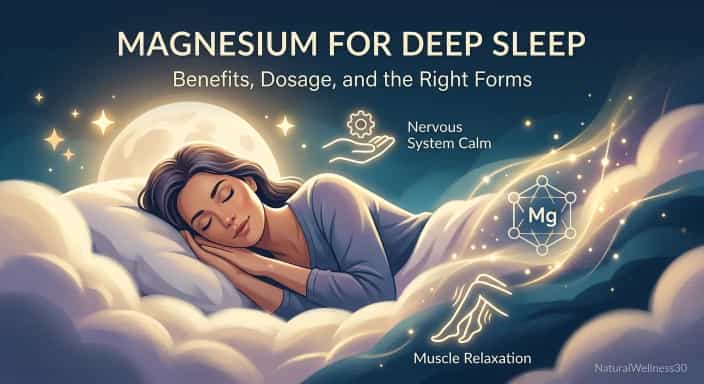
You’ve tried every trick in the book—melatonin supplements, soothing lavender teas, and white noise machines. Yet, deep, restorative sleep remains frustratingly out of reach. If you constantly feel like your mind simply refuses to “shut off” the moment your head hits the pillow, you are not alone.
What if the missing piece to your restless nights is something far more fundamental to your biology?
Magnesium for sleep and relaxation is often the overlooked hero of overnight recovery. As an essential mineral involved in over 300 biochemical reactions, it serves as the ultimate natural tool that calms your nervous system. Research suggests that a significant percentage of adults do not meet their daily magnesium requirements, creating a widespread nutritional gap that directly fuels our modern sleep crisis.
In this ultimate guide, you will discover how this powerful mineral regulates your sleep cycle, how to identify deficiency signs, and exactly how to choose the right form—including advanced options like Magnesium Threonate—to finally achieve the deep sleep your body deserves.
🧠 Quick Summary: How Magnesium Fixes Your Sleep
Before diving into the full guide, here is how this mineral actively calms your body:
- Regulates GABA: It binds to neurotransmitters responsible for quieting down nerve activity, helping your brain transition from “fight-or-flight” into a peaceful state.
- Relaxes Muscle Fibers: Magnesium acts as a natural calcium blocker, allowing tight muscles (including your shoulders and jaw) to fully unwind.
- Lowers Cortisol: It keeps stress hormones in check, preventing those frustrating midnight awakenings.
| ℹ️Disclosure: This post contains affiliate links. If you purchase through them, we may earn a small commission at no extra cost to you. We only link products we’d genuinely consider ourselves. |
🧠 The Deep Science: How Magnesium Actually “Fixes” Sleep
Magnesium is often called “nature’s relaxant,” but it doesn’t just make you tired. It chemically prepares your nervous system for rest through a complex biological dance.
1. The GABA “Off-Switch”
Magnesium’s most vital role is its interaction with GABA (Gamma-Aminobutyric Acid). GABA is the primary inhibitory neurotransmitter in your brain. Think of it as the “brake pedal” for your nervous system.
- Without Magnesium: Your neural pathways stay “fired up,” leading to racing thoughts at 2 AM.
- With Magnesium: The mineral binds to GABA receptors, helping your brain calm down and transition into a sleep-ready state.
2. Cortisol Regulation and Stress Response
When you are stressed, your body dumps magnesium into your urine. This creates a vicious cycle: stress depletes magnesium, and low magnesium makes you more reactive to stress. By supplementing, you help regulate the HPA axis (Hypothalamic-Pituitary-Adrenal), keeping cortisol—the “alertness hormone”—low during the night.
3. The Connection with TMJ and Muscle Tension
For many of our readers dealing with TMJ (Temporomandibular Joint) pain, magnesium is a game-changer.
- Calcium causes muscle fibers to contract (clenching).
- Magnesium pushes calcium out of the muscle cells, allowing them to relax. Addressing a magnesium deficiency can significantly reduce nighttime teeth grinding (bruxism) and morning jaw soreness.
⚠️ 7 Warning Signs of Magnesium Deficiency
If you identify with more than three of these, your body is likely crying out for this master mineral:
- Sleep Fragmentation: You fall asleep but wake up multiple times feeling “alert.”
- Muscle Fasciculations: Small twitches in your eyelids or leg cramps at night.
- Restless Leg Syndrome (RLS): An irresistible urge to move your legs when lying down.
- Jaw Tightness: Waking up with a stiff jaw or a tension headache.
- Palpitations: A feeling that your heart is “skipping a beat” during periods of rest.
- Sugar Cravings: Specifically for chocolate (which is naturally high in magnesium).
- Anxiety & Irritability: Feeling “wired but tired” throughout the day.
🏆 The Buyer’s Guide: Which Magnesium Should You Choose?
Not all magnesium supplements are created equal. If you buy the wrong one, you’ll likely end up with digestive upset rather than better sleep.
1. Magnesium Glycinate (The Gold Standard)

Nature Made Magnesium Glycinate 200mg
★★★★★
4.6/5
This is our #1 choice for sleep and relaxation. Perfect for: Magnesium beginners, people with TMJ/muscle tension, anyone having trouble falling asleep or waking up in the middle of the night
Dosage for sleep: Take 2 capsules (400mg total) 60 minutes before bed. Start with 1 capsule (200mg) if you’re sensitive.
- USP Verified (tested for purity & potency)
- Gentle on stomach (no digestive upset)
- Optimal absorption (chelated glycinate form)
- Clean ingredients (no artificial colors/flavors)
💡QUICK TIP: Take with a small snack containing healthy fats (a handful of nuts, avocado) to further enhance absorption!
This is the version we most recommend for sleep. Because it is bound to Glycine—an amino acid known for its calming effects and ability to lower core body temperature—it offers a double punch of relaxation. It has the highest absorption rate and is very gentle on the stomach.

Doctor’s Best High Absorption Magnesium (Glycinate & Lysinate Chelate)
★★★★★
4.6/5
High Absorption Magnesium Want the absolute BEST absorption? This chelated form uses patented TRAACS® technology:
Dosage: 2 tablets (200mg elemental magnesium) before bed
- Buffered with lysine (even gentler than standard glycinate)
- 100% chelated (not blended with cheaper forms)
- Non-GMO, vegan, gluten-free
The science: TRAACS® (The Real Amino Acid Chelate System) binds magnesium to amino acids, creating a molecular “shield” that protects it from degradation in your digestive tract. Translation: More magnesium reaches your cells = better results.
Best for: Biohackers, people with digestive issues (IBS, Crohn’s), anyone who didn’t get results from standard supplements.
2. Magnesium Threonate (The “Brain” Mineral)
f your main issue is “brain fog,” racing thoughts, or high anxiety, Magnesium L-Threonate is the gold standard. While most forms of magnesium focus on your muscles and digestion, this specific compound is a breakthrough for cognitive health.
Why is Magnesium Threonate Unique?
The secret lies in its biochemistry. Magnesium L-Threonate is the only form of magnesium that can effectively cross the blood-brain barrier. Developed by researchers at MIT, this specialized mineral directly increases magnesium levels in the brain, enhancing synaptic plasticity—the brain’s ability to adapt, learn, and grow.
Key Benefits for TMJ and Anxiety:
- Reduces Sympathetic Tone: By calming the central nervous system, it helps stop the unconscious nighttime clenching and daytime teeth grinding associated with stress.
- Clears Brain Fog: It supports memory, focus, and overall cognitive function.
- Improves Sleep Quality: It regulates neurotransmitters like GABA, helping your brain transition into deep, restorative sleep.
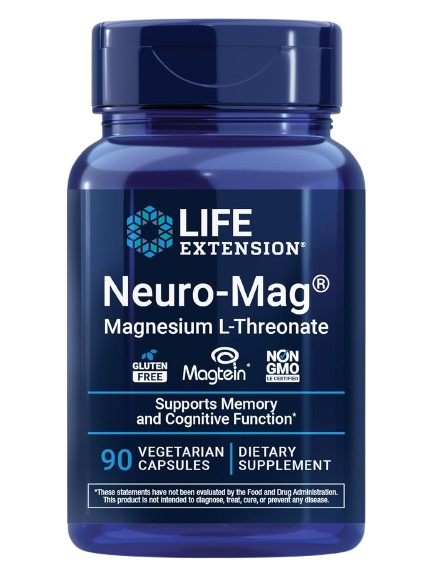
Life Extension Neuro-Mag Magnesium L-Threonate
★★★★★
4.6/5
BEST FOR COGNITIVE SUPPORT: If anxiety and “brain fog” are disrupting your sleep more than physical tension.
- Crosses blood-brain barrier (only form that does this effectively)
- Clinically studied (MIT-patented Magtein®)
- Cognitive benefits (memory, focus, learning)
- Calms racing thoughts (perfect for “mind won’t shut off”)
- Non-GMO, gluten-free
Best for: High-achievers, people with anxiety-driven insomnia, anyone over 50 concerned about brain health, students/professionals with mental fatigue.
The Premium Choice for Brain Health
Because of its advanced absorption rate, it is more investment-grade compared to other forms. However, for those seeking targeted relief from anxiety-induced jaw tension and mental fatigue, its effectiveness is unmatched.
🌿 Our Recommended Choice: If you want a clean, science-backed formula, we highly recommend the Life Extension Neuro-Mag Magnesium L-Threonate. It is the most trusted, ultra-absorbable option on the market to support your brain health and calm your nervous system.
3. Magnesium Citrate (The Digestive Helper)
Highly absorbable but has a “laxative effect.” It’s great if you also struggle with constipation, but start with a low dose to avoid middle-of-the-night trips to the bathroom.
❌ What to Avoid: Magnesium Oxide
You will see this in cheap supermarket supplements. Avoid it. Your body only absorbs about 4% of it. It is mostly used as a stool softener and will do almost nothing for your sleep quality.
📊 Dosage Strategy: How Much Do You Really Need?
| Age Group | Men’s Daily Need | Women’s Daily Need |
| 19–30 years | 400 mg | 310 mg |
| 31–50 years | 420 mg | 320 mg |
| 51+ years | 420 mg | 320 mg |
The “Step-Up” Protocol for Sleep
To avoid digestive issues, follow this simple routine:
- Week 1: Take 150mg of Magnesium Glycinate 1 hour before bed.
- Week 2: Increase to 300mg.
- The Goal: Most therapeutic studies for sleep use between 300mg and 450mg.
🥑 Magnesium-Rich Foods: Your Nutritional Foundation
While supplements bridge the gap, these foods should be in your daily rotation:
- Pumpkin Seeds: A true superfood, providing nearly 40% of your daily need in one handful.
- Dark Chocolate (85% cocoa): Contains magnesium and polyphenols that lower blood pressure.
- Leafy Greens (Spinach/Chard): Aim for one cup of cooked greens daily.
- Fatty Fish (Salmon/Mackerel): Provides magnesium plus Vitamin D, which helps with absorption.
🧪 Synergistic Pairings: Boosting the Effects
Want to get more out of your supplement? Consider these combinations:
- Magnesium + Vitamin B6: B6 acts as a “carrier,” helping magnesium enter your cells more efficiently.
- Magnesium + Melatonin: Take Magnesium 2 hours before bed to relax muscles, and Melatonin 30 minutes before bed to signal the brain.
- Magnesium + Zinc: Often sold as ZMA, this combo is excellent for hormone regulation and deep REM sleep.

Ancient Minerals Magnesium Oil Spray
★★★★★
4.5/5
Not all magnesium needs to be swallowed! Topical application bypasses the digestive system entirely.
Not all magnesium needs to be swallowed! Topical application bypasses the digestive system entirely. When sprayed on skin, magnesium chloride absorbs directly into cells. Perfect for localized muscle tension (jaw, neck, shoulders). For TMJ/jaw tension: Spray on jaw/neck area, massage gently. Many users report relief from nighttime clenching.
⚠️ Note: May cause slight tingling on first use (normal!). Dilute with water if sensitive.
Best for: People with digestive issues (IBS, sensitive stomach), athletes with muscle soreness, TMJ sufferers, anyone who can’t tolerate oral magnesium.
- Spray 5-10 times on clean skin (inner arms, stomach, legs)
- Rub in gently
- Leave on 20-30 minutes, then shower if desired
- Apply before bed for sleep support
❓ FAQ: Expert Answers for Better Rest
Q: Will magnesium make me feel groggy in the morning?
A: Unlikely. Unlike sedatives, magnesium doesn’t “knock you out” — it supports your body’s natural relaxation process, so most people wake up feeling refreshed rather than groggy. A small number of people are more sensitive and notice mild drowsiness, especially at higher doses, so it’s worth starting low and seeing how you personally respond.
Q: How long does it take to work?
A: Some feel the muscle-relaxing effects on night one. However, for chronic deficiency, it may take 2 to 4 weeks of consistent use to see a total shift in sleep architecture.
Q: Can I take it if I have kidney issues, or am on medication?
A: People with kidney disease should always consult a doctor before taking magnesium, since the kidneys filter excess minerals. Magnesium can also interact with certain antibiotics (like tetracyclines and quinolones), bisphosphonates (used for bone density), and diuretics — if you take any of these regularly, check with your doctor or pharmacist about timing and dosage before adding a magnesium supplement.
The Ultimate Magnesium Protocol for Sleep
Want maximum results? Follow this science-backed protocol:
WEEK 1-2: Foundation Phase
Supplement:
- Nature Made Magnesium Glycinate 200mg
- Take 1 capsule 60 min before bed
Food:
- Add 1 handful pumpkin seeds daily
- 1 cup cooked spinach or chard
- 2 squares 85% dark chocolate (evening)
Expected: Subtle muscle relaxation, slightly easier sleep onset
WEEK 3-4: Optimization Phase
Supplement:
- Increase to 400mg Glycinate (2 capsules)
- Add: Natural Vitality CALM (½ tsp in warm water, 30 min before bed)
Why both: Glycinate for deep cellular support, CALM for the soothing ritual
Expected: Noticeable improvement in sleep quality, reduced night waking
WEEK 5+: Advanced Phase
For brain-fog/anxiety sufferers:
- Add Life Extension Neuro-Mag 144mg (morning or early afternoon)
- Continue 400mg Glycinate at night
For TMJ/muscle tension:
⚠️ A note on stacking: If you’re combining multiple magnesium products (oral capsules + topical spray, or Glycinate + Threonate), keep your total supplemental magnesium under 350mg/day unless a doctor tells you otherwise — this is the standard upper limit for magnesium from supplements (magnesium from food doesn’t count toward this, since your body regulates it naturally). Going over this mainly causes diarrhea or stomach upset in most people, not something dangerous, but it’s still worth tracking so you know what you’re actually taking.
- Continue 400mg Glycinate oral
- Add Ancient Minerals Spray on jaw/neck before bed
Expected: Comprehensive nervous system support, waking refreshed
MAINTENANCE (Long-term)
Minimum: 300-400mg Glycinate nightly
Optimal:
- 200mg Glycinate (morning)
- 200-300mg Glycinate (night)
- CALM powder ritual 2-3x/week
- Topical spray as needed
🔬 TRACKING YOUR PROGRESS:
Keep a simple sleep journal:
| Week | Magnesium Dose | Sleep Quality (1-10) | Woke Up # Times | Morning Jaw Tension |
|---|---|---|---|---|
| 1 | 200mg | _ | _ | _ |
| 2 | 400mg | _ | _ | _ |
| 3 | 400mg + CALM | _ | _ | _ |
Most people see measurable improvement by Week 3!
🔗 Continue Your Sleep Optimization Journey
Related Guides:
📖 Melatonin for Sleep: Benefits, Dosage, and What You Need to Know
Learn how to combine melatonin with magnesium for maximum sleep support.
📖 Sleep Wellness: Natural Solutions for Better Rest
Complete protocol including sleep position, bedroom optimization, and supplements.
📖 TMJ and Stress: Breaking the Cycle of Jaw Tension
Discover how magnesium reduces nighttime teeth grinding and morning jaw pain.
📖 TMJ Natural Remedies: Evidence-Based Approaches
15 science-backed remedies for TMJ relief (magnesium is #1!).
🏁 Conclusion: Reclaiming Your Rest
Magnesium is a fundamental building block of human health. In our high-stress, caffeinated world, it is the first mineral we lose and the last one we think to replace.
By addressing this deficiency, you aren’t just “fixing” a sleep problem—you are nourishing your nervous system, protecting your heart, and giving your body the peace it deserves.
Explore More: Ready to optimize your evening? Read our guides on TMJ vs. Toothache: How to Tell the Difference (and Why It Matters or Why Does My Jaw Click? Causes, Concerns, and When to Worry.
Medical Disclaimer: This article provides educational information about magnesium and is not medical advice. Always consult with a healthcare professional before starting any new supplement, especially if you have underlying health conditions or take medications.